I was walking back to my car after a late study session and saw a rat sprint across the campus sidewalk like it owned the place. For some reason, my first thought was not “gross,” but “someone in the engineering lab is probably already building a sensor for that.”
The short answer is this: students in Dallas are pushing smarter rodent control by mixing cheap hardware, simple code, social media, and campus organizing. They are building low-cost sensors, running mapping projects, starting student-led startups, and even changing how city departments think about data and community reporting. If you care about rodent control Dallas, a lot of the interesting experiments are quietly happening around campuses and student neighborhoods, not only inside city hall or pest control firms.
How did rodents become a student project in the first place?
Rodents used to feel like one of those boring, adult-only topics. Landlords, city inspectors, pest control companies. Not something students choose as a passion project.
That is slowly changing in Dallas for a few reasons:
Students are treating rats and mice as a data problem, a design problem, and a social problem at the same time, not just as a pest problem.
Here is what kicked things off in a lot of places:
- More off-campus housing near older buildings with gaps, open trash, and easy food sources
- Growing interest in public health, especially after COVID made everyone think more about air, surfaces, and hygiene
- Cheap sensors, Raspberry Pi boards, and easy online tutorials for building basic detection tools
- Professors looking for real-world capstone projects that are not just another abstract app idea
Rodents are frustrating, but they are also measurable. You can count them, track them, build systems around them. That makes them perfect for student projects that cross engineering, public health, design, and business.
Student-built tech that quietly tracks rats and mice
If you spend time around engineering labs or maker spaces in Dallas, you start hearing about “smart traps” or “IoT bait stations” in casual conversation. It sounds bigger than it really is. Most of this is simple, hacked-together hardware that students test around campus apartments or nearby alleys.
Low-cost sensors on regular traps
The basic idea is simple:
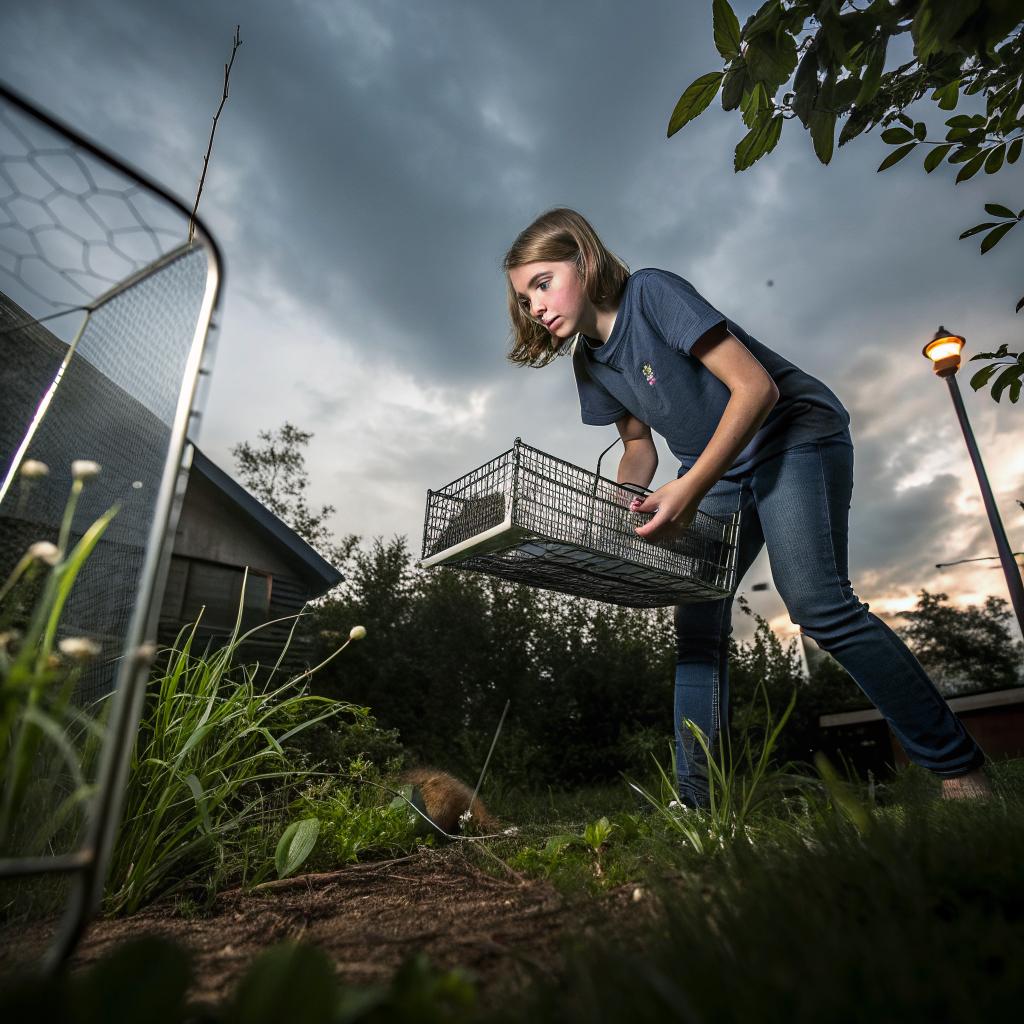
Take a normal snap trap or box trap, add a cheap sensor and a tiny internet-connected board, and you now have a trap that pings your phone when it is triggered.
A common setup looks like this:
| Part | Role | Typical student choice |
|---|---|---|
| Microcontroller | Brain that sends data | ESP8266 or ESP32 board |
| Sensor | Detects trap trigger | Magnetic reed switch, tilt switch, or small pressure sensor |
| Power | Keeps it running | AA batteries or rechargeable pack |
| Connectivity | Sends alert | WiFi in apartments or LoRa modules for outdoor tests |
| Software | Handles alerts | Simple script sending email, text, or logging to Google Sheets |
Nothing about this is fancy. A weekend hackathon is sometimes enough to get a basic prototype running.
But this small tweak solves a boring but real problem. People forget to check traps. Dead rodents sit for days. Or traps get triggered by debris and sit useless. An alert system helps maintenance staff, landlords, or residents actually respond.
Noise and motion listening posts
Some projects go beyond traps and try to spot rodent patterns.
Students have tested:
- Low-power microphones that listen at night for scratching or squeaks in shared walls
- Small infrared motion sensors placed along baseboards to count movement
- Thermal camera modules, sometimes borrowed from research labs, to see activity in dark storage areas
To be honest, these are not perfect. A furnace fan can sound like scratching. A falling object triggers motion sensors. Data is messy.
But pattern over perfection matters here. If a sensor in a laundry room records sudden spikes in movement at 2 am for three nights straight, you do not need perfect accuracy to guess something is off.
Students building dashboards, not just gadgets
One difference with current student projects is they rarely stop at the hardware. Many groups also build simple dashboards:
- Maps that show which traps trigger most often across a building
- Timeline charts showing activity before and after someone seals gaps or fixes trash storage
- Overlays of sensor data with weather or construction work nearby
Students care less about selling devices and more about seeing patterns, sharing those patterns, and arguing for better prevention.
This is where it starts touching campus policy and, slowly, city policy.
Mapping projects: students turning rat sightings into shared data
Hardware is one side. The other side is simple: get people to report what they see.
Many students live in the same blocks, shop at the same grocery stores, walk the same alleys. Rodent sightings are not rare. They are just unlogged.
Informal reporting that grows into a shared map
Some clubs start small. A biology club or public health group might begin with a Google Form:
– Where did you see a rodent?
– What time?
– Was food waste nearby?
– Was it inside or outside?
They then connect that to a Google Sheet and a basic online map. After a few weeks, you start seeing clusters. Near dumpsters. Behind a specific restaurant. Along certain parking lots.
Students then bring that map to:
- Campus housing offices
- Local neighborhood associations
- Small business owners near campus
Sometimes the map is rough. Locations are vague. Some reports are jokes. But the bigger pattern is still visible.
From public-facing maps to “back office” tools
As projects mature, they grow up a bit:
– Forms add a “verified by trained volunteer” flag
– Some reports get checked by students who coordinate with maintenance staff
– Data is shared with one or two trusted partners, not just thrown on a public website
A typical flow ends up like this:
| Step | Who is involved | What happens |
|---|---|---|
| Report submitted | Any student or nearby resident | Online form or QR code poster is used |
| Initial filter | Student volunteers | Remove spam, group similar reports |
| Verification | Volunteer or building staff | Spot check the site if feasible |
| Action request | Landlord, campus maintenance, or local council office | Get a short report with map and suggested fixes |
| Feedback loop | All parties | Record what was done and track follow up sightings |
Nothing in that table needs fancy software. Students glue together free tools, and yet the result feels more organized than the usual “complain to the landlord by text and hope.”
Tension between open data and privacy
One honest issue: do you really want your exact building pinned on a public rat map?
Some students are very open about this. Others do not want their address, or their favorite coffee shop, labeled as a rat hotspot.
So many groups move to:
– Street-level or block-level dots, instead of exact door numbers
– Aggregated weekly or monthly views
– Internal maps for staff, and public heatmaps for awareness
This kind of tradeoff is normal in student projects. They are still learning. Some early versions overshare, then get pulled back. That learning process actually helps everyone think more clearly about how to share health-related data in a way that is useful but not harmful.
Student startups focusing on smarter rodent control
Some students do not stop at class projects. They turn their ideas into early-stage businesses focused on Dallas neighborhoods, small landlords, or small commercial buildings.
The projects are still young, and not all of them will survive. That is fine. The point is that the area is no longer seen as “too boring” for a startup.
Service-first, tech-second business models
One pattern shows up a lot: instead of selling hardware, students offer a service that combines:
- Site survey with detailed notes and photos
- Setup of smart traps or alert systems
- Regular reports showing activity trends and recommendations
They might not even design their own traps at first. They buy off-the-shelf traps and add open-source monitoring modules.
Revenue often comes from:
– Monthly subscription for ongoing monitoring
– One-time “rodent audit” of a property
– Partnerships with existing pest control services that want data to show clients
From a client perspective, this can be more attractive than buying gadgets. They do not have to think about configuration or data. Someone shows up, sets up sensors, and sends reports.
Using student status to reach tricky spaces
There is a strange advantage students have here.
Small business owners or older residents might be suspicious of a sales pitch from a large pest control company. A small student team, clearly just starting out, can feel softer and more approachable.
Plus:
Students are often walking the same streets and living in the same types of buildings as their early customers, so they speak from direct daily experience, not from distant theory.
This does not magically fix trust gaps, but it helps open a door.
Collaborating instead of trying to replace existing services
I think the smarter student founders do not say “we will replace professional pest control.” That is unrealistic and also a bit naive.
Instead they position their work like this:
– “We bring sensors and data to your existing workflow.”
– “We help you show customers what is changing over time.”
– “We fill the gap between visits so you know where to focus.”
Some teams have built simple dashboards that pest control techs can pull up on a phone. Nothing fancy, just:
– Last trap trigger events
– Photos tagged by students or residents
– Notes about recurring access points or open trash issues
That kind of data can guide where to seal, where to educate tenants, and where to adjust bait.
Campus projects that shape student behavior, not only tech
Hardware and startups get attention, but behavior changes matter more for long-term rodent control.
Students are figuring out how to nudge habits in dorms, co-ops, and shared apartments.
Low-tech habits that make a big difference
Simple habits reduce rodents:
- Closing food containers and not leaving bags open on the floor
- Taking out trash at night instead of letting it sit in rooms or hallways
- Rinsing cans and containers that go into recycling
- Not feeding outdoor cats or birds in open bowls that attract rodents later
The problem is not that people do not know this. The problem is that people forget, or they do not feel any link between their own small mess and the rat they see three weeks later.
Student groups handle this with:
– Before-and-after photos of rodent hotspots after trash habits changed
– Small signs in kitchens with clear, direct language instead of long policy text
– Friendly call-outs in group chats when problems repeat
Some co-ops have simple rules like:
– “If you cook late, you take trash out that same night.”
– “Shared snack drawers are closed bins, not open shelves.”
Rules like that sound strict at first, but once people see fewer droppings or less scratching in walls, they usually accept them.
Social pressure and humor
There is a surprising amount of humor around this topic on campuses. Meme pages share:
– Rat “mascots” with joke names
– Photos of bad trash setups in student apartments
– Cartoons about roommates who refuse to clean
This can be a bit childish, but it also helps normalize talking about the problem. Instead of silence and shame, you get “ok, this is real, and everyone deals with it.”
Some groups even use this kind of humor to recruit volunteers or testers for their sensor projects. It is much easier to get signups when you say:
“Help us track our unofficial campus rats”
than
“Participate in a rodent control data collection exercise.”
Language matters.
Working with, not against, Dallas city departments
At some point, any serious rodent control effort touches public services. Trash collection schedules, construction permits, public alley maintenance, code enforcement, and so on.
Students are starting to interact with those systems, even if at first they feel clumsy about it.
From complaints to structured reports
A random call to a city line saying “I saw a rat somewhere near the laundromat” is not very useful.
Student groups try to move from pure complaint to more structured reporting, such as:
- Exact location with a photo that shows context, not just the rat
- Notes on conditions: overflowing trash, broken lids, open holes in walls
- Frequency: one-time sighting or something that happens every week
They sometimes share a small, one-page summary with a council office or a community liaison. Something like:
– “We collected 40 reports from this block in 2 months.”
– “Half involve this specific dumpster behind X building.”
– “Trash is often unbagged or lids are broken.”
That kind of document is more actionable for city staff than scattered rants.
Student data as a testbed for new policies
Because students tend to experiment freely, city staff sometimes watch their projects like a lab.
If a sensor array placed in an alley shows that one building’s trash habits cause repeated spikes in rodent activity, that can inform:
– New guidance for dumpster placement
– Extra inspections for certain types of businesses
– Public communication campaigns around food waste
No one wants city policy to depend only on student projects. But these early tests can highlight patterns that official systems have not picked up yet, or had no data for.
Limitations that students are honest about
Student-led efforts are not magic. Most groups are very clear about their limits:
They do not claim to replace professional pest control or city inspections; they see their role as adding visibility and pressure where things get ignored.
Constraints include:
- Short student cycles: people graduate and projects risk fading
- Uneven funding: some semesters have grant money, others do not
- Partial coverage: focus on campus areas, not the entire city
The honest groups document their methods, share open-source code, and try to hand off data to more stable partners when they move on.
What students are learning about “smart” solutions the hard way
Not all exciting tech ideas work in messy buildings or alleys. Many students find that out the hard way, which is actually useful.
Why many “smart” traps stay in boxes
Some teams try to create very advanced traps, with:
– Complex sensors
– Onboard machine learning
– Fancy companion apps
Then they hit problems:
- Building WiFi is weak or nonexistent where traps need to be placed
- Batteries die faster than expected
- Maintenance staff do not want to manage pairing or updates
- Installers put devices in spots that seem “safe” for devices, not effective for trapping
So traps stay unused, or people quietly go back to simple methods.
The lesson that keeps coming up is:
A simple, sturdy trap that sends one reliable message can be more useful than an “intelligent” system that fails in real buildings.
Students are re-learning an old truth: reliability and ease of use beat complexity in pest control.
Big data is less helpful than small, clear patterns
It is tempting to talk about “big data” and predictive modeling. In practice, for a single dorm or apartment block, you do not need fancy algorithms.
You need to see:
– Which floor or side of the building has most activity
– Rough time-of-day patterns
– Changes before and after a repair or cleaning change
No one in a hallway cares about a complex heatmap if all they want to know is, “Did cleaning the trash room on Fridays reduce sightings?”
Students are slowly shifting from “collect everything” to “collect what people can act on.”
Balancing tech pride with human behavior
There is also a subtle ego thing. It feels more impressive to say “We built an IoT rat monitoring network” than “We convinced 30 apartments to stop leaving food out overnight.”
But the second result often has more impact.
Some groups now use tech mainly as feedback, not as the main solution:
– Use sensors to show how habits changed the environment
– Use charts to convince people that their behavior matters
– Use alerts to support maintenance schedules, not replace them
Tech becomes a support system, not the star of the show. This is not as glamorous, but it is more real.
How you, as a student or recent grad, can get involved
If you are in Dallas or a similar city, you do not need to be an engineer or public health major to help.
Roles beyond the obvious “coder” or “builder”
Rodent control projects need:
- Designers to make clear signs, forms, and dashboards that people actually read
- Writers to explain projects in plain words to neighbors and local officials
- Organizers to schedule meetings with landlords, campus offices, and city staff
- Data-curious students to clean messy logs and make sense of them
- Residents who are willing to host sensors, report sightings, and give real feedback
If you live in a shared apartment, you can start small by:
– Tracking your own sightings
– Taking photos of problem spots
– Talking with neighbors about simple changes
– Reaching out to local student clubs already working on environment or public health projects
Questions to ask before starting a project
Before you jump in with a new app or device, it helps to ask:
- Who will maintain this after I graduate?
- Who actually benefits from the data we collect?
- Will the people who live with the problem every day have a say?
- Could this embarrass or harm anyone if the data becomes public?
- Is there a simpler fix that does not need tech?
If your honest answers are weak, it might be better to join an existing effort or adjust your concept.
A quick Q&A to ground all this
Is student-led rodent control in Dallas really “smarter” or just trendy?
It is both more thoughtful and a bit trendy. Some projects are shallow and fade fast. Others bring clear improvements by focusing on prevention, habit change, and data. The “smarter” part comes when students keep things simple, listen to residents, and support existing services instead of pretending to replace them overnight.
Do students actually reduce rodent problems, or just create dashboards?
Both happen. There are projects that stop at nice dashboards and academic posters. But in buildings where students combine tracking with real fixes sealing gaps, changing trash routines, and working with landlords complaints often drop. The impact is very local, not citywide, but it is real for the people in those spaces.
What is the biggest mistake student groups make with rodent control projects?
Trying to build something flashy before talking to the people who live with the problem every day. Also, assuming that more sensors and more data will automatically lead to better outcomes. Often, the real blockers are basic: broken trash lids, slow building management, or residents who feel ignored. Tech without that human side ends up unused.
If you had to choose one simple step for a student building owner partnership, what would it be?
Agree on a 3-month pilot in one building with these pieces: clear trash rules, a few monitored traps, a shared reporting form, and a short monthly report that everyone can read. Keep the scope small, track changes, and only add complexity if people actually find the first version useful. Would you rather chase a huge system that no one uses, or a small one that actually keeps your kitchen cleaner?