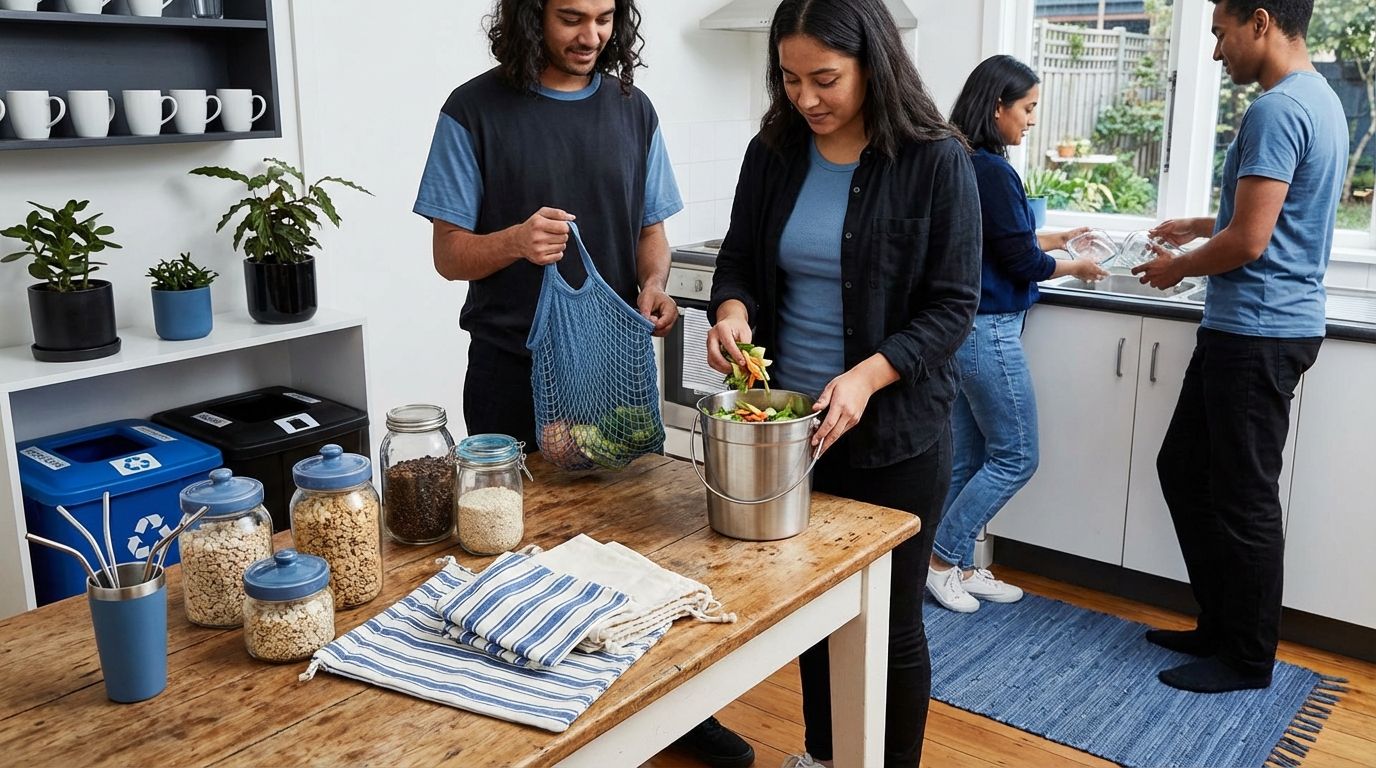
I caught myself staring at our kitchen bin at 1 a.m. last week, wondering how four students could produce that much trash in 24 hours. It felt less like a house and more like a tiny landfill with Wi‑Fi.
Here is the blunt answer: if you want an eco‑friendlier shared house, you have to make it stupidly easy for everyone to waste less. That means clear systems, shared rules, and cheap habits that survive exam weeks, hangovers, and group projects.
Why shared houses are secretly waste factories
The weird thing about student houses is that nobody is fully in charge, but everyone creates waste. That combo is dangerous.
You probably know this script:
– One person cares about the planet.
– Two people say they care, but never read the recycling poster.
– One person is just trying to pass their exams and not burn pasta.
The result is overfull bins, mystery smells, and a vague guilt about “the environment” that changes nothing.
If the system in your house relies on everyone caring all the time, it will fail.
You need a setup that works even when people are tired, stressed, or late to a 9 a.m. lab. Eco‑friendly living in a shared house is less about moral purity and more about good logistics.
Here are the pillars that actually matter:
- Reduce what comes into the house in the first place.
- Make sorting and reusing easier than throwing things away.
- Share habits and tasks so one person is not the unpaid “eco manager.”
- Use simple rules, not vague vibes about being “green.”
Step 1: Audit your waste like a low-budget scientist
I realized during a lecture on systems thinking that our house had zero data and a lot of opinions. People argued about recycling, but no one knew what we actually threw away.
So we ran a one‑week “trash audit,” which sounds dramatic but is just structured snooping.
How to do a one‑week trash audit without grossing everyone out
You do not need lab coats:
- Pick 1 week where everyone is mostly home.
- Use 3 bags or bins: “Landfill,” “Recycling,” “Food / compost.”
- Label them clearly with big, readable words.
- At the end of each day, take a photo of each bin from above.
- At the end of the week, review the photos for patterns.
You are not doing hardcore measurement. You are spotting repeated offenders.
Typical patterns:
- Food packaging from the same supermarket every day.
- Takeaway containers piling up on weekends.
- Half-eaten food in the bin on Sundays.
- Cans and bottles in the general waste bin.
You cannot reduce what you have not actually noticed.
Once you see the patterns, you can target specific things instead of trying to “be more sustainable” in a vague way.
Turn the audit into a non‑awkward house chat
House meetings are awkward if they feel like an intervention. Make it practical:
– Show 3 to 4 of the most shocking photos.
– Ask: “What annoys you most about our bins right now?”
– Ask: “What looks easiest to change here?”
Focus on easy wins first. If everyone is annoyed by overflowing packaging, focus there before preaching about microplastics.
Step 2: Tackle the big four waste streams
Most shared houses leak waste in four main areas: food, packaging, single‑use stuff, and energy/cleaning. You do not need perfection; you need less chaos.
1. Food waste: stop binning your rent money
Food waste in shared houses is usually about poor planning, bad communication, and fridge chaos.
Food waste is not just an environmental issue; it is literally you throwing part of your rent allowance into the bin.
Shared house food rules that actually work
Here are practical systems that students actually keep up with:
- Label shelves by person, not by food type.
Everyone gets a fridge shelf and a cupboard section. No mystery ownership. - Use a shared “Eat me first” box.
One box in the fridge with things that go off soon. Anyone can eat from it. No permission needed. Label it clearly. - Do a weekly “what do we already have” check.
Before big shops, spend 3 minutes checking the fridge and cupboards. Make it part of Sunday cleaning. - Agree on a realistic shopping style.
If everyone buys loads of fresh vegetables but half the house eats on campus most days, go for smaller, more frequent shops. - Share bulky basics.
Oil, salt, rice, pasta, spices. One set, shared, instead of 4 half‑used bottles of the same thing.
Simple cooking habits that cut waste
You do not need to become a chef:
- Use the freezer aggressively. Bread, leftovers, half a portion of sauce. Future you will be grateful during exam season.
- Plan “leftover nights” once a week. Everyone heats up what they have already cooked or uses up open ingredients.
- Cook in pairs when possible. It reduces half-used ingredients and makes cooking more social.
- Measure dry foods like rice and pasta. A small mug or cup can be your portion guide.
2. Packaging: where student houses drown in plastic
Most student bins are dominated by packaging: plastic trays, bags, wrappers, cans, bottles, cardboard. The goal is not zero packaging. The goal is less and smarter.
Strategies to reduce packaging without going “zero waste hero”
- Pick one supermarket and learn its low‑packaging options.
Refill stations, loose fruit and vegetables, bigger packs for shared basics. - Switch from lots of small packs to one large shared pack for staples.
Rice, oats, detergent. It usually saves money as well. - Buy plain versions of snacks in bulk.
For example, one big bag of nuts instead of 10 mini bags. - Keep a small stash of jars and containers.
For leftovers, bulk buys, and storing open packets. Clean jars from pasta sauce work fine.
Convenience food is not the enemy. Unthinking repetition of high‑waste choices is.
3. Single‑use items: invisible waste in your daily routines
This is the subtle stuff: coffee cups, plastic cutlery, paper towels, plastic bags, cling film, bathroom items.
You do not need to go fully reusable for every single item. Focus on high‑frequency habits.
High-impact swaps that survive student life
- Reusable coffee cups and water bottles.
Leave one by the door or in your backpack. If you keep forgetting, leave a note on your desk or by your keys. - One set of shared containers.
Great for freezing extra food and carrying leftovers to campus. Buy cheap, stackable ones or reuse takeaway containers. - Cloths instead of paper towels (most of the time).
Keep a small pile of washable cloths for wiping surfaces. Save paper for really gross tasks. - Rechargeable batteries for remotes and small devices.
One charger, shared batteries. Less trash, cheaper long term.
4. Cleaning and bathroom products
These items create loads of plastic and chemical waste. You do not need to make all your own products from scratch, but small changes help.
Simple cleaning changes that do not feel weird
- Shared multi‑purpose cleaner.
One bottle that works for kitchen and bathroom surfaces instead of five different products. - Concentrated refills where possible.
Tablets or refills for dish soap, laundry detergent, or surface spray reduce plastic. - Bulk buy toilet paper.
One big order, shared cost. Less packaging per roll, fewer emergency runs. - Reuse old T‑shirts as cleaning rags.
Better than throwing them away and buying disposable wipes.
Step 3: Make recycling and composting idiot‑proof
During a chemistry lab, I realized our recycling system at home broke the first rule of good design: it was confusing. Tiny labels, vague rules, and one bin hidden under the sink. So everyone ignored it.
Recycling will only work if it is obvious and low effort.
Designing a recycling station that people actually use
The goal: it takes less effort to recycle correctly than to mess it up.
| Element | What to do | Why it helps |
|---|---|---|
| Location | Put recycling bins right next to the main trash bin, not in another room. | People do not walk across the house just to recycle a can. |
| Number of bins | Match your local recycling rules: usually “paper/card”, “plastic/metal”, “glass”, “general waste”. | Fewer categories than the city uses creates contamination. |
| Labels | Big text + simple icons + common examples. | Guests and half‑awake housemates can still get it right. |
| Overflow | Recycling bin size should match or exceed general waste. | If recycling is always full, people default to the trash. |
If people have to guess “Which bin does this go in?”, you will lose the recycling battle.
Turn local rules into a 1‑page cheat sheet
Municipal recycling guides are often long and confusing. Translate them for your house:
- Visit your city or campus waste website.
- Write a single A4 sheet with 3 sections: “Yes”, “No”, “Tricky items”.
- Use bullet points, not paragraphs.
- Stick it above the bins.
Add real examples like:
– YES: Clean tins, rinsed plastic bottles, flattened cardboard.
– NO: Food‑covered containers, plastic film, greasy pizza boxes.
– TRICKY: Batteries (take to campus collection point), electronics (e‑waste events), clothes (donation bins).
Composting in a student house
Compost feels like a big leap, but in many places your city already collects food waste.
Check for three things:
- Does your building or house have a food waste bin from the city or campus?
- Are compostable liners allowed or required?
- Where is the outdoor bin located, and how often is it collected?
Then set up a simple routine:
- Small countertop bin or container with a lid in the kitchen.
- Use compostable bags if your city accepts them, or empty it daily into the outdoor bin.
- Rotate whose job it is to empty food waste, like you rotate cleaning tasks.
If your city does not collect food waste, consider a shared worm bin or bokashi system only if at least two housemates actually want to manage it. If nobody is into it, forcing it will fail and just create smells.
Step 4: Set house rules that survive exam season
House rules sound boring, but without them, one person ends up playing eco‑police, which ruins friendships.
During a group project, I noticed we worked better when responsibilities were clear and light. The same logic works at home.
Build a small “waste charter” for the house
Keep it short, visible, and realistic. For example:
Our house waste rules:
1) We separate recycling and food waste properly.
2) We share bulk basics to reduce packaging.
3) We aim to finish food before buying more.
4) We keep one reusable bottle and cup each.
5) We rotate bin duty weekly.
Print it, stick it on the fridge. That way, when someone forgets, you are pointing to shared rules, not personal preferences.
Rotate responsibilities so one person does not burn out
Typical rotational jobs:
- Empty general waste.
- Empty recycling.
- Empty food waste / compost.
- Check cleaning products and basics like toilet roll.
Make a simple chart:
| Week | General waste | Recycling | Food waste | Supplies check |
|---|---|---|---|---|
| 1 | You | Housemate A | Housemate B | Housemate C |
| 2 | Housemate C | You | Housemate A | Housemate B |
| 3 | Housemate B | Housemate C | You | Housemate A |
This avoids the classic situation where one person always ends up dragging bins out at midnight before collection day.
Handling conflicts without starting a house war
You will not all care equally. That is normal. Some people will treat your eco‑plans as optional. Instead of getting passive‑aggressive, try these approaches:
- Use “we” language, not “you”:
“We agreed to separate glass. Can we fix the labels so it is clearer?” instead of “You never recycle properly.” - Highlight shared benefits:
Less smell, fewer bin bags to buy, cleaner kitchen. - Offer the easy option:
“If recycling rules feel confusing, can I print a one‑page cheat sheet and stick it above the bin?”
If someone really does not care, accept that you cannot control every item they throw away. Focus on building systems that catch most waste from most people.
Step 5: Shopping hacks that cut waste and save money
Reducing waste is much easier when you stop bringing so much of it into the house. The supermarket is where most of the battle is lost.
Plan around “house staples” and “personal extras”
The worst setup is everyone buying everything for themselves. It doubles or triples packaging, and things go off.
Instead, divide things mentally:
- House staples (shared): rice, pasta, oil, salt, pepper, some spices, sugar, tea, coffee, toilet roll, cleaning products, trash bags.
- Personal extras: special snacks, specific cereal, dietary items, fancy sauces.
Then:
- Make a simple list on the fridge for house staples: when something is close to running out, someone writes it down.
- One person buys the shared items each week and uploads the receipt to your group chat.
- Use a simple split app or manual calculation once a month.
This cuts duplicate packaging and can lower costs for everyone.
Smart packaging choices at the store
Some choices are easy once you notice them:
- Choose pasta in cardboard boxes over plastic bags when prices are similar.
- Choose loose vegetables in a net bag instead of pre‑packed ones on trays.
- Prefer big tubs of yoghurt shared in the house over lots of tiny pots.
- Buy bread from the bakery section in paper bags and freeze slices.
If your campus has a refill store:
- Fill containers with dry goods like rice, oats, lentils.
- Refill washing‑up liquid and laundry detergent.
- Make bulk trips monthly instead of weekly.
Step 6: Technology and apps that actually help
Sometimes tech is just more clutter, but a few tools really help with shared house waste.
Useful digital tools for shared houses
- Shared calendar:
Add reminders for bin collection day, bulk shopping trips, and “leftover night.” Sync across the house. - Shared notes app:
Use one note for “Things running low” and one for “House rules / recycling guide.” - Bill‑splitting app:
Track shared purchases like bulk food, cleaning supplies, or refill store trips.
Tech should reduce arguments and confusion, not create a second job for the most organized person in the house.
Smart devices and small gadgets
Not essential, but sometimes useful:
- Smart plugs for power‑hungry devices that nobody remembers to turn off.
- LED bulbs if your house still has old ones. Fewer replacements, less packaging waste.
- A small kitchen scale for portion control to reduce food waste when cooking.
Keep it simple. If a gadget needs constant updates or complicated setup, it will end up in a drawer.
Step 7: Social life without trash mountains
Parties, game nights, and study sessions tend to explode your waste volume in a single evening. The trick is planning before people even arrive.
Hosting with less waste but no weird vibes
You do not need to hand guests a manifesto at the door. Quiet changes can work fine:
- Use real cups, plates, and cutlery where possible.
If you lack enough, mix real items with paper or compostable ones, not plastic. - Put visible bins in social spaces.
One for recycling, one for trash, clearly labeled. People are more likely to sort if it is easy. - Buy big bottles instead of lots of tiny ones.
2‑liter bottles or large juice cartons create less packaging than many single servings. - Snack in bulk.
Big sharing bags and bowls instead of loads of individually wrapped items.
After the event, turn music back on, set a 10‑minute timer, and everyone in the house does a blitz clean. Less pain, fewer forgotten cups that go moldy behind the sofa.
Step 8: When your landlord or building is not helpful
Sometimes the waste problem is structural. No food waste collection. Limited recycling. Tiny bin space. You cannot fix everything, but you are not powerless.
Working around external limits
- If there is no recycling collection:
– Ask if your campus has recycling points for students.
– Check if nearby supermarkets take back specific items (like soft plastics or batteries).
– Combine trips with other errands to keep it manageable. - If bin storage is limited:
– Flatten cardboard and crush bottles and cans to save space.
– Avoid bulky packaging when shopping.
– Organize your bin area so it is easy to reach the right containers.
If your landlord is open to suggestions, ask for:
- A second recycling bin if the council allows it.
- Clearer labeling on existing bins.
- Basic repairs that stop leaks and mold, which often cause food to spoil faster.
Do not expect miracles, but more landlords are responsive when you link things to property condition and cleanliness, not just environmental values.
Step 9: Measuring progress so it does not feel fake
You can easily talk about living eco‑friendly while changing very little. To avoid that, track a few simple things.
Mini metrics for your shared house
Pick 2 or 3 that feel meaningful and not too nerdy:
- How often you take out general waste versus recycling (per week).
- How many bin bags of food waste you produce each week.
- How many takeaway containers you throw out per month.
- Rough count of shared items bought in bulk versus single‑use.
You do not need perfect data. You just want signals that your efforts are doing something.
Progress in a shared house is not about hitting zero waste; it is about moving from “we do not care” to “we pay attention.”
One small habit I like is a whiteboard in the kitchen where we write small wins:
– “Reduced general waste from 4 bags to 3 this week.”
– “Finished all vegetables before they went off.”
– “House used reusables at coffee shop 5 times this week.”
It sounds slightly nerdy, but it keeps the topic visible without long speeches.
Step 10: Make it part of your student life, not a separate hobby
My own turning point was realizing that eco‑friendly living in a shared house works best when it is baked into the normal rhythm:
– You shop slightly differently, not obsessively.
– You cook with a bit more awareness, not perfection.
– You set up environments where the lazy option is also the lower‑waste option.
You do not need to become “the eco person” in your friendship group. You just need to design your shared space so that wasting less feels normal, not heroic.
If you can walk into your kitchen at 1 a.m., look at the bin, and see less trash and more systems quietly doing their job, then your shared house is already doing better than most.