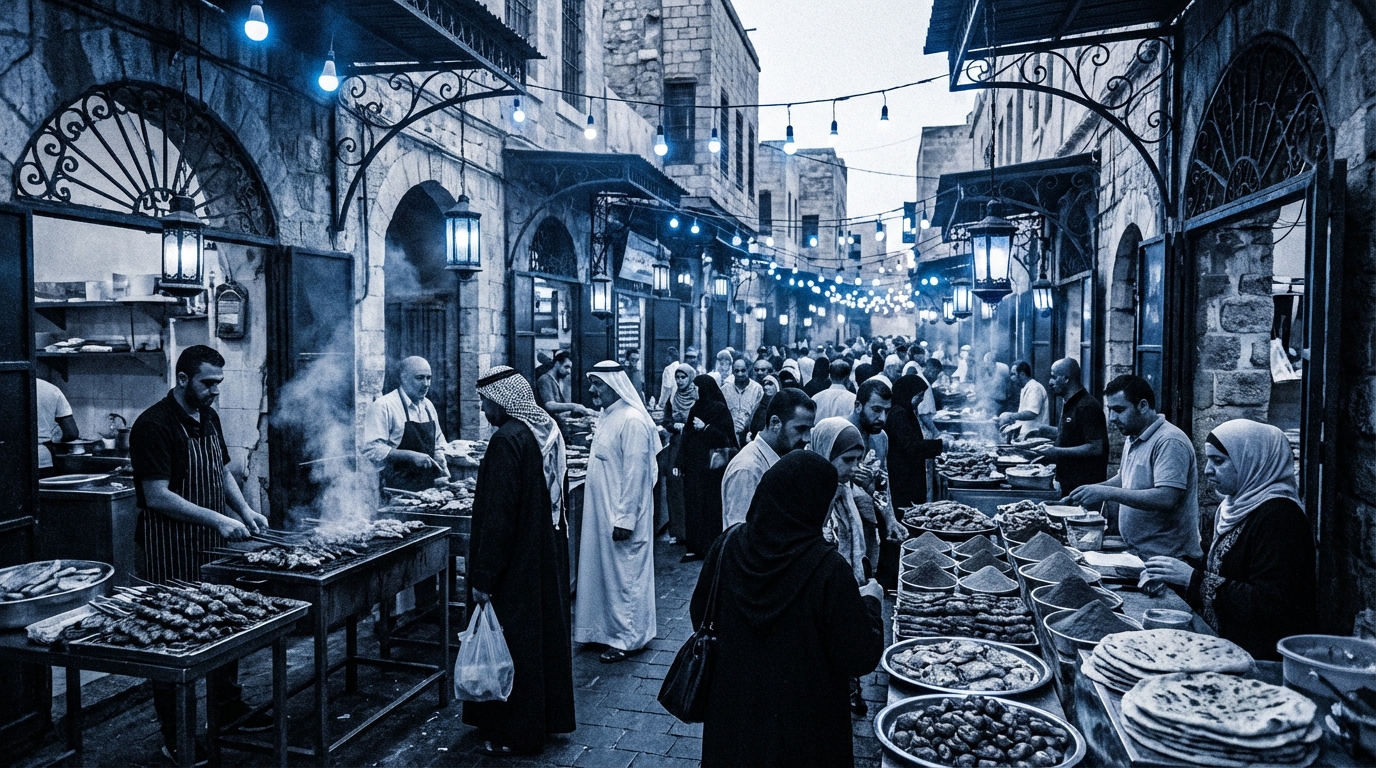
I had this strange moment walking back from a late-night study session: my notes were full of supply-and-demand graphs, but my brain was replaying the shawarma stand outside the library. Why do certain street food spots feel more like classrooms than the actual lecture hall?
Here is the quick answer: the best street food markets in the Middle East are not just about cheap food. They are living case studies in branding, pricing, logistics, and culture, all crammed into narrow streets and crowded squares. If you want to understand student startups, product testing, and trend spotting, hanging out in these markets is almost as useful as any entrepreneurship course.
If you want to understand how people really make decisions around money, taste, and trust, skip the mall and watch a busy street food market for one hour.
Why Street Food Markets Matter For Student Builders
I realized during a marketing lecture that most examples were about huge companies with media budgets the size of a university’s library renovation. It felt abstract. Then I visited a food market in Amman and watched one falafel stall outsell ten others in the same row. Same product. Same street. Different line length. Why?
Street food markets in the Middle East are perfect for students who like to connect theory with practice because they are:
- Cheap to explore (a food “tour” can cost less than one textbook chapter in your time)
- Full of experiments in pricing, product design, and branding
- Constantly pressured by real constraints: rent, heat, competition, and picky customers
- Great places to test your own ideas, from pop-ups to mini food brands
Every stall is a startup: small team, low budget, intense competition, and direct feedback in the form of “line or no line”.
Before going city by city, here is a quick table so your brain can map the territory.
| City | Market / Area | Signature Street Foods | Best Time | Student Vibe |
|---|---|---|---|---|
| Istanbul (Turkey) | Karaköy & Eminönü waterfront | Balık ekmek, simit, midye dolma | Late afternoon to late night | Strong, lots of young crowds |
| Beirut (Lebanon) | Hamra Street & Mar Mikhael | Manakish, shawarma, kaak, falafel | Evening to late night | Packed with students and artists |
| Amman (Jordan) | Downtown (Al-Balad) | Falafel, knafeh, hummus, shawarma | Evening | Budget-friendly student magnet |
| Cairo (Egypt) | Downtown & Al-Muizz Street | Koshary, taameya, liver sandwiches | Night | Huge, chaotic, energetic |
| Dubai (UAE) | Al Karama & Deira street hubs | Shawarma, South Asian snacks, grills | Evening to late night | Hyper-global, migrant-heavy |
| Riyadh (Saudi Arabia) | Tahlia Street & food truck zones | Burgers, kebabs, fusion bites | Night | Modern, polished, car-centric |
| Tehran (Iran) | Tajrish Bazaar & Valiasr corners | Sambuseh, ash reshteh, kebabs | Afternoon & evening | Strong local crowd, student-heavy |
| Marrakesh (Morocco) | Jemaa el-Fnaa | Tagine, harira, snail soup, kebabs | Night | Tourist + local mix, intense energy |
Istanbul: Simit, Sea, And Street Experiments
Istanbul is probably the best live lab for street food in the region if you like to think about traffic flow, branding, and pricing.
Karaköy & Galata: Startup Alley In Food Form
Karaköy feels like a district where old port life collides with hip cafes and design studios. For students, it is ideal because it mixes classic carts with new-wave food stalls.
What to look for:
- Simit carts: Circular sesame breads sold from iconic red carts. Watch:
- How sellers stack simit to show freshness
- How pricing changes near tourist routes vs side streets
- How fast they add tea as an “upsell”
- Kokoreç stands: Grilled stuffed intestines in bread. This is where trust beats marketing. People go where locals are standing, not where the sign looks the nicest.
- Midye dolma vendors: Stuffed mussels sold piece by piece. Each bite is tiny, which makes it perfect to study impulse buys.
Karaköy is what happens when a food market gets rebranded without losing its cheap, fast core. It is like a “Series B” startup that still remembers its first customer.
Student takeaways:
- Pricing can be invisible. Customers rarely ask the price of one simit; they just know. That “mental price list” is power.
- Physical design matters. Carts with bright, consistent colors signal reliability.
- Location is a silent tax. Count how many simit carts you see between a tram stop and a busy office block.
Eminönü Waterfront: High Volume, Low Margin Masterclass
Just below the New Mosque area, the waterfront is full of:
- Balık ekmek boats: Fish sandwiches grilled on rocking boats.
- Corn and chestnut carts: Seasonal sellers that explode during cold evenings.
- Pickle juice stalls: Bright jars of pickled vegetables, photogenic and cheap.
Why this matters for student founders:
- You can see real-time batching: how many sandwiches are prepped vs made-to-order.
- You can watch how sellers pull in tourists with quick scripts, eye contact, and humor.
- You can study crowd herding: one long queue pulls more people like gravity.
Beirut: Late-Night Food And Long Conversations
Beirut feels like a city where food stands double as philosophy corners. You hear debates about politics, art, and business while someone wraps your shawarma.
Hamra Street: Student Artery Of Beirut
Hamra is surrounded by universities, so it behaves like one giant after-class corridor that happens to sell perfect snacks.
Key street foods:
- Manakish: Flatbreads topped with zaatar, cheese, or both. Many bakeries sell them by the slice at the counter.
- Falafel sandwiches: Crunchy, cheap, and perfect for quick meals between lectures.
- Kaak bread carts: Oval breads with a hole at one end, sold with cheese or thyme spreads.
What is interesting from a student perspective:
- There is intense price sensitivity. Students compare halves of a dollar.
- Stores use late-night deals instead of fancy loyalty apps.
- Cash flow looks like an exam schedule: flat in the morning, heavy spikes after 8 pm.
If you want to interview your target users for any campus product, bring manakish to a table in Hamra. People talk more honestly when they are holding food in one hand.
Mar Mikhael & Gemmayzeh: Street Food Meets Nightlife
This area used to be mostly industrial. Now it is packed with bars, snack windows, and carts.
Look for:
- Shawarma and taouk stands: High late-night demand. Watch how they speed up without breaking quality.
- Street saj: Dough stretched and baked on a convex metal dome, topped and folded.
- Cheap dessert carts: Cotton candy, corn in a cup, simple pastries.
Student lessons here:
- Night-time food caters to people who are tired, social, and often slightly impulsive. Menus are shorter and easier to read.
- Lighting does half the marketing. A bright, clean stand pulls more photos and more customers.
- Some vendors partner with nearby bars: custom deals, shared delivery boys, or cross-promotion.
Amman: Downtown Al-Balad And The Art Of One Perfect Item
Amman has this steep, layered look, and then you drop into Downtown (Al-Balad) where sounds, car horns, and food smells mix into one block of sensory overload.
Downtown Amman (Al-Balad): Precision In Specialization
You will notice that many famous spots focus on one core item.
Examples:
- Falafel stands: Some are known only for tiny, ultra-crispy falafel balls.
- Knafeh shops: Sweet, cheesy dessert cut into squares from huge trays.
- Hummus and foul breakfast spots: Huge metal bowls, fast turnover.
A lot of these places feel like “single-feature apps” that people install on their daily routine and never delete.
Why this is useful if you are building something:
- Specialization builds brand: “the falafel place” is easier to remember than “the place that sells 12 random things”.
- Speed is almost sacred. The line moves fast, which lowers friction for repeat visits.
- Quality control is easier with one star item, but expectations are higher too.
Watch for:
- How they handle very short, intense rushes after prayer times.
- How they use small visual signals, like a worker constantly frying in sight of the door.
- How prices stay student-friendly even very close to tourist footpaths.
Cairo: Street Food At Massive Scale
Cairo is like a mini-economy for food. Everything repeats, but in ten times the volume.
Downtown Cairo: Koshary And Student Budgets
If you have sat through a microeconomics lecture and felt numb, go watch a koshary place at peak hour.
Koshary is a mix of pasta, rice, lentils, chickpeas, fried onions, and sauce. The process looks chaotic, but there is hidden structure.
Smart things to observe:
- Assembly lines: One person handles pasta, another handles sauce, another does topping. Little talking, almost pure muscle memory.
- Portion sizing: Small, medium, large portions that match predictable segments: solo students, couples, families.
- Ticket systems: Pay first, give the ticket to the server. That cuts payment delay during rushes.
A busy koshary shop is Lean Operations 101 with better smells.
Al-Muizz And Side Streets: Micro Ventures On Wheels
Around historic streets you will see carts and tiny storefronts selling:
- Taameya (Egyptian falafel made from fava beans)
- Liver sandwiches in small rolls
- Sugarcane juice pressed fresh
Entrepreneurial insights:
- Many of these carts require low starting capital compared to formal restaurants.
- Product concepts are simple but packaged in different ways: bread type, sauces, portion size.
- Some stands function almost as “franchises” without a legal franchise: multiple carts copying one successful model.
For students, Cairo shows how scale and density influence everything. If you ever want to test a mass-market food product, watching street operators here will save you months of guesses.
Dubai: Street Food In A Hyper-Global City
Dubai is strange in a good way. The “Middle Eastern” street food scene here is deeply mixed with South Asian, Filipino, African, and Central Asian flavors. It feels like multiple countries in one block.
Al Karama: Affordable Food Hub For Residents
Karama is less polished than the big malls, which makes it more interesting if you care about how regular people eat.
What you find:
- Shawarma stands on sidewalks and next to laundries.
- South Asian snack windows selling chaat, samosas, vada pav.
- Juice bars with handwritten menus full of fruit mixes.
Why it matters:
- Customers do not care about “concept”; they care about speed, taste, and price.
- Headlines on the board often highlight combos: “Shawarma + juice” at a slightly lower price.
- Street food here caters to workers with tight breaks. That changes menu design compared to tourist-heavy places.
Deira: Old Dubai, New Experiments
Near the Gold Souk and Al Ras, you find:
- Grill stands with kebabs, tikka, and flatbreads.
- Regional snacks from Iran, Pakistan, and the Levant in a single row.
- Night-time tea stalls around corners where workers gather.
Because so many customers are migrants, food stalls double as tiny cultural embassies, each serving a taste of “home” for a specific community.
Student lessons:
- You are looking at niche targeting in real life. One stall focuses on Pakistani construction workers, another on Arab office staff, another on tourists.
- Language on signs changes by target group. Arabic, Urdu, English swap positions.
- Some stalls use delivery platforms to reach farther neighborhoods, combining old and new channels.
Riyadh: Food Trucks, Boulevards, And New Regulations
Riyadh has changed very fast. Old-style street carts are less common in central zones, but food trucks and regulated food streets have taken over as the main “street” scene.
Tahlia Street & Boulevard Areas: Food As Social Event
Instead of narrow alleys, you get:
- Food trucks that look like branded websites on wheels.
- Outdoor food courts with burgers, sliders, and modern takes on kabsa and kebabs.
- Dessert kiosks with crepes, waffles, and iced drinks.
What is interesting for a student builder:
- Design is heavily curated. Many trucks invest in logos, color schemes, and Instagram-friendly presentation.
- Menus often focus on fusion: local tastes plus global fast food logic.
- There is heavy use of social media to announce location, specials, and limited-time items.
Here, the “street” part is less about chaos and more about controlled experience. It feels closer to a startup accelerator for food brands.
You can study:
- Permit rules and how they shape what is possible.
- Why so many stalls go for the same burger-fry-milkshake combo.
- How queues become social signals in a culture that values family outings.
Tehran: Bazaars, Sidewalks, And Comfort Food
Tehran combines huge traditional bazaars with long, busy avenues where street food thrives in smaller pockets.
Tajrish Bazaar: Traditional Setting, Modern Behavior
At the northern end of the city, Tajrish Bazaar mixes grocery stalls with snack spots.
Look for:
- Sambuseh: Fried pastry pockets with potato or meat fillings.
- Ash reshteh: Thick noodle and herb soup sold by the bowl.
- Fruit roll-ups and nuts: Quick snacks that students often grab on commutes.
Student observations:
- Vendors play with portion sizes to match pocket money budgets.
- Packaging is very basic but still distinct enough to identify regulars.
- Many stalls are family operations, which affects labor decisions and hours.
Valiasr Street: Longest Avenue, Many Micro Hubs
Valiasr runs down the city like a spine, and along it you can spot:
- Corn in a cup sellers who add spices and butter on the spot.
- Sandwich shops with schnitzel, kebab, and sausage.
- Ice cream stands selling saffron or rosewater flavors.
Because Valiasr connects multiple universities, it behaves like a distributed campus cafeteria broken into many tiny private ventures.
Here you can study:
- How proximity to a bus stop can double a stall’s sales.
- How menus adapt by neighborhood along the same street.
- How inflation pressures show up in portion sizes rather than official price jumps.
Marrakesh: Jemaa el-Fnaa As A Night-Time Case Study
Even if your focus is startups and not travel blogs, Marrakesh’s main square, Jemaa el-Fnaa, is hard to ignore. It behaves like an open-air lab where dozens of stalls launch the same product at the same time.
Jemaa el-Fnaa Night Food Stalls: Competition In Pure Form
After sunset, gas lamps come on and the square fills with:
- Kebab grills with clouds of smoke.
- Tagine stalls with conical clay pots lined up.
- Harira soup vendors and snail soup stands.
- Fresh juice sellers arranging oranges in pyramids.
Key patterns to watch:
- Stalls shout out numbers rather than brand names. Numbers become brands.
- Competition is immediate: twenty stalls sell versions of the same skewers within meters of each other.
- Vendors use very direct sales techniques, calling out to you, offering small tastes, and referencing other tourists who “just ate here”.
Jemaa el-Fnaa teaches more about customer acquisition tactics than many marketing chapters, if you can handle the sensory overload.
For a student, this square raises sharp questions:
- How do you differentiate when your product is nearly identical?
- How much does storytelling influence a random tourist’s choice?
- What is the long-term cost of aggressive selling versus calmer, trust-based approaches?
How To “Study” A Street Food Market Like A Startup Lab
If you go to these markets just to eat, you will already enjoy them. If you go with a builder mindset, you get a second layer of value.
Bring A Simple Observation Checklist
You do not need fancy tools. Just a notes app or a small notebook.
Watch for:
- Lines and clusters: Where are people naturally gathering?
- Menu structure: How many items? Are there combos, “specials”, or clear bestsellers?
- Pricing psychology: Rounded numbers, charm prices (like 9.5), or bundled deals?
- Physical layout: Can people approach from multiple sides or just one?
- Trust signals: Cleanliness, uniforms, visible cooking, or word-of-mouth lines.
If you can map a food stall’s customer flow with a pen, you can start mapping your own product’s user journey with fewer blind spots.
Talk To Vendors (Carefully And Respectfully)
Many vendors are happy to talk when they are not slammed with customers.
Questions that are useful and respectful:
- “What time of day is usually your busiest?”
- “What do students usually order?”
- “Did you always sell this item or did you change your menu over time?”
- “How did you decide on your prices?”
This is not about using them for a class project and walking away. It is about understanding the logic behind real micro-business decisions.
Compare Two Stalls Selling The Same Thing
This is the cleanest experiment the street gives you for free.
Pick two falafel stands on the same street, or two shawarma stalls facing each other.
Compare:
- Visual: sign, lighting, menu design.
- Speed: how long it takes one customer to be served.
- Extras: sauces, pickles, side dishes.
- Customer type: locals, tourists, families, students.
You will start seeing patterns that apply directly to apps, services, student clubs, and small ventures.
What Street Food Markets Teach About Student Startups
If this all feels far removed from laptops and pitch decks, here is a clearer connection.
Idea Validation
Vendors validate ideas faster than many student teams.
- They test a new sandwich by adding a small sign and watching orders.
- If it does not sell, they remove it next week. No drama.
- They listen to what regulars ask for rather than what they want to push.
This mindset is healthy for campus projects. Try:
- Launching a simple MVP inside your club first.
- Charging a small price instead of giving everything for free.
- Dropping features that nobody uses even if you like them personally.
Branding Without Buzzwords
A lot of stall owners do not talk about “brand”, but they live it every day.
Things to notice:
- Color repetition across carts and signs.
- Signature phrasing like “the original” or “since 1980”.
- Consistent plating or wrapping style that becomes recognizable on the street.
You can borrow this for your own projects:
- Pick a simple color and stick to it on posters, slides, and social media.
- Use consistent naming for events or product features.
- Create one signature element, like a specific email style or a default layout.
Unit Economics You Can Actually Touch
During lectures, “unit economics” can feel like abstract math. On the street, it is the difference between staying open and going home.
You can practice:
- Estimating a stall’s margin: rough guess of ingredient cost vs price.
- Guessing daily break-even: rent, workers, gas, ingredients.
- Thinking about peak-time dependence: what if that two-hour window disappears?
Once you train this muscle, your own project budgets start to feel less imaginary.
Practical Tips For Students Visiting These Markets
Before you treat these markets as your unofficial classroom, a few practical notes.
Health, Safety, And Respect
- Watch where locals eat. It is usually a good sign for both price and hygiene.
- Check how food is stored and whether it is cooked fresh in front of you.
- Be respectful taking photos. Some vendors do not like cameras pointed at them without permission.
- Carry small bills. It smooths transactions and reduces awkward moments.
Budgeting Like A Student
Street food markets tempt you to buy twelve things at once.
A simple structure:
- Set a spending cap before you enter, like “equivalent of 10 USD”.
- Limit yourself to 3 or 4 items so you can remember each one clearly.
- Note price vs satisfaction right after you eat, while the memory is fresh.
This is low-stakes training for product pricing decisions later.
Using Markets For Student Projects
If you are working on a project related to food, retail, or urban life, these markets can move you past lazy assumptions.
Project ideas grounded in reality:
- A map of student-friendly food routes between campuses and markets.
- A lightweight app for rating stalls that focuses on useful filters like “fast”, “quiet corner”, or “vegetarian” rather than vague stars.
- A mini-report comparing pricing strategies for one food type across several cities.
You might be tempted to over-theorize everything you see. Resist that. Talk to people, taste things, and keep your models flexible. The street does not follow classroom rules exactly, and that is what makes it valuable to study.