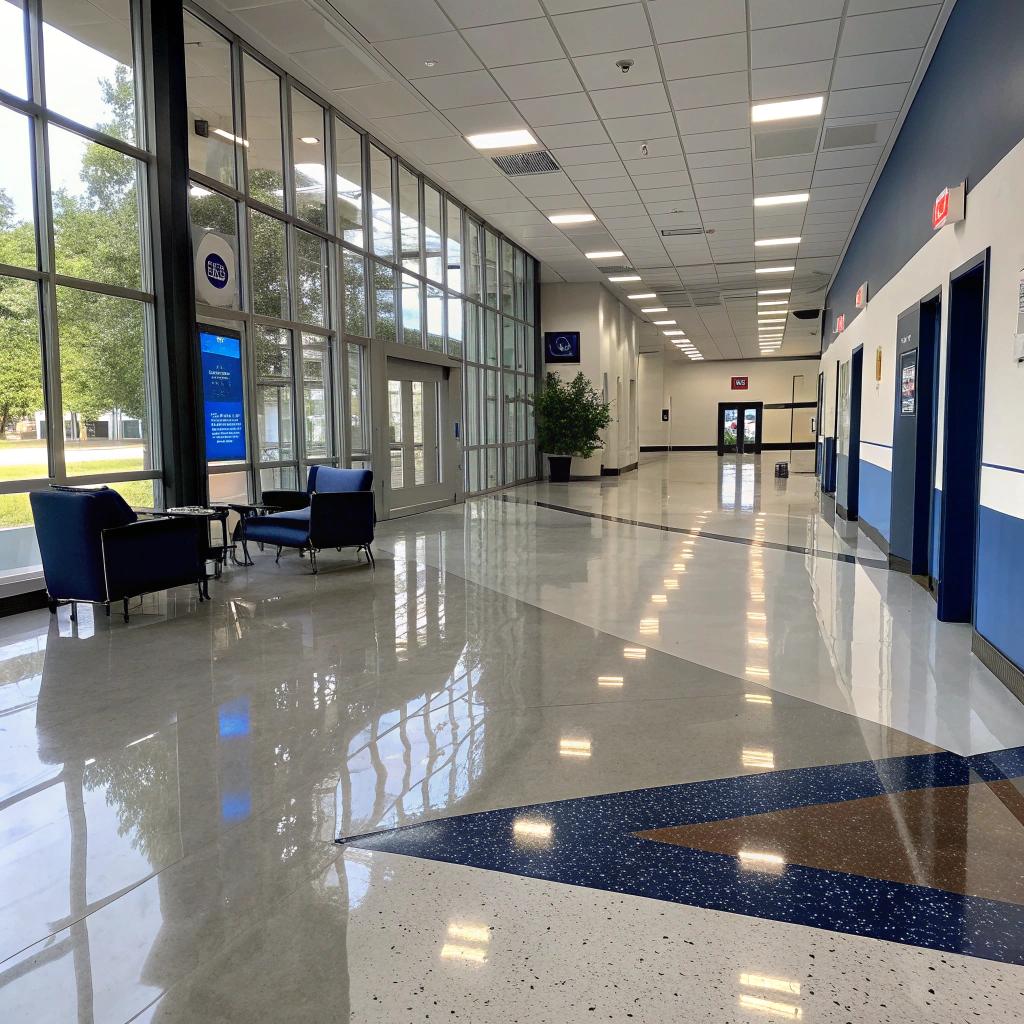
I remember walking into a student-run makerspace one afternoon and thinking the same thing you probably have: why do all these new startup labs have such shiny, polished floors? It felt almost excessive for a group that still borrows extension cords from the engineering department.
The simple answer is that campus startups are betting on floor epoxy because it protects their space, cuts long term costs, looks professional for investors, and handles the abuse from hardware builds, coffee spills, and 3D printer accidents. It is one of those boring, unglamorous choices that actually shapes how a space works every single day.
Why student founders care about the floor at all
At first glance, worrying about the floor sounds like the opposite of startup thinking. You have pitch decks, code, legal documents, user interviews. And then there is the concrete under your feet.
But if you walk through campus labs and startup garages long enough, you start to notice a pattern. The teams that treat their space like a real workplace, not a temporary college project, usually have a few things in common:
- Clear work zones instead of random clutter
- Defined storage areas
- Clean lines and surfaces that are easy to wipe, mop, or repair
- Some kind of thought put into the floor, walls, and lighting
The floor is where almost everything touches: carts, chairs, solder drips, scooter tires, snacks, tools, and people. If that surface breaks down fast, the whole lab starts to feel tired and chaotic.
A durable floor is not about looks first. It is about reducing friction for work, cleaning, and movement so your team can spend more time building things and less time dealing with mess.
So when campus startups upgrade, many of them now pick epoxy rather than sticking with raw concrete or cheap vinyl.
What floor epoxy actually is (and what it is not)
Epoxy is a resin and hardener mix that cures on top of a base surface, usually concrete. Once it sets, it forms a solid layer that bonds to the floor.
Some quick points so we are on the same page:
- It is not paint, even though it sometimes looks like paint at first.
- It cures into a hard, plastic-like surface that can be glossy or matte.
- It can include color chips, pigments, or clear coat on top.
- It usually needs a prepared, cleaned concrete floor underneath.
Students sometimes assume it is fragile. In practice, a well done epoxy job can handle carts, light machinery, rolling chairs, and constant foot traffic much better than bare concrete or stick-on tiles.
Is it perfect? No. It can peel if the floor is not prepped well, bubble if moisture is trapped, or scratch if people drag heavy metal things on it. But compared to other options in a student-heavy environment, it handles chaos surprisingly well.
How epoxy compares to other campus floor options
Here is a simple comparison that matches what many campus startups actually face when they move into an empty room or old lab.
| Floor type | Upfront cost | Durability in student use | Maintenance effort | Look and feel |
|---|---|---|---|---|
| Raw concrete | Low | Cracks, dust, stains easily | Frequent sweeping, hard to mop | Industrial, but often dirty |
| Vinyl tiles / laminate | Low to medium | Peels, tears, water damage risk | Can be hard to repair small areas | Office-like, but wears fast |
| Ceramic tile | Medium to high | Strong surface, but grout stains | Cleaning grout is annoying | Clean, but cold and rigid |
| Rubber flooring | Medium to high | Good for impact, not for chemicals | Easy to clean, may wear with wheels | Gym-like feel |
| Epoxy coating | Medium | Very strong if installed right | Easy to mop, occasional touch ups | Polished, lab or workshop style |
Once people see this kind of comparison on a whiteboard, epoxy stops looking like a luxury and starts looking like a practical choice that sits in the middle: not cheap and flimsy, not overly fancy, but strong enough to survive groups of students who do not always treat equipment gently.
The quiet financial logic behind epoxy floors
Most student founders hate talking about carpet specs or concrete densities. They like to talk about runways, grants, or seed rounds.
The twist is that a basic facilities decision like floor choice actually affects long term costs in a few ways that are pretty direct.
1. Lower repair and replacement over time
Carpet tiles and vinyl always sound cheap until coffee, flux, paint, and energy drinks spill on them over and over. With heavy student use, you usually see:
- Edges peeling up
- Dirty patches that never feel fully clean
- Sections that need replacement every year or two
Repairing those small areas takes time and money. And usually someone waits too long, so the space just feels worn.
Epoxy is not magic, but it tends to:
- Resist stains better
- Handle rolling chairs and carts without denting
- Need rare, not constant, patching
So the higher upfront cost spreads out over more years. You can argue the math either way, but students who run makerspaces often notice that they stop talking about floor repairs once epoxy is in place.
If you plan to use a space hard for more than one or two years, a stronger floor usually costs less than a cheap floor that keeps failing.
2. Less cleaning drama
Cleaning is a hidden budget line for many campus projects. Someone pays for hours, equipment, and supplies. Or student teams end up doing it themselves late at night.
Epoxy helps here because:
- Dust and dirt do not sink into pores like they do in raw concrete
- Most spills wipe up with simple mopping
- There are no grout lines or seams that trap grime
That means fewer deep cleans and less scrubbing. You still have to care about safety and chemicals, but the day to day cleaning is simpler.
3. Better use of every square meter
Strangely, the floor affects how people use space.
If the floor feels fragile, teams tend to keep heavy builds in one corner. They baby the area near power tools. They worry about wheels and vibrations.
If the floor feels solid, they spread out more. They roll carts where they need them. They run cables, test rigs, and robots across more of the space.
That increases the usable area without renting more rooms. For a campus startup with limited square footage, that has real value, even if it is hard to assign a number to it.
Epoxy and the “this is a real company” effect
Campus startups live in a strange middle place. Half student club, half potential company. On some days you are building serious products, on others you are borrowing tables from the student union.
Visual signals matter. When a mentor, investor, or potential partner walks into your workspace, they do not only see your prototype. They see:
- Whether the space looks cared for
- Whether tools have a place
- Whether the room feels safe and intentional
Epoxy floors help with that visual story in a quiet way:
Clean lines, simple reflection, clear zones
Most epoxy finishes have a clean, reflective surface. You can mark zones with paint on top or with color changes during installation. That makes it easy to define:
- Build areas
- Storage zones
- Walkways for visitors
- “Do not cross” regions near machines
So a visitor can read the room quickly. It feels more like a proper lab than a converted classroom.
Students often underestimate how much a neat, intentional space influences trust, especially when they are asking someone to write a check or sign a pilot agreement.
Photos, videos, and content
If your team posts on social platforms or sends pitch materials, the floor quietly shows up everywhere. Screenshots, demo videos, investor decks.
A stained, patchy surface in the background drags the scene down. A clean, uniform floor lets prototypes stand out.
Some founders notice this only after their first photo shoot. They see mismatched tiles and tape lines and realize that future media will look like that for years. Epoxy does not fix bad lighting or clutter, but it gives you a neutral base that rarely distracts from the story you want to tell.
Safety, compliance, and not getting your space shut down
There is a blunt, practical side here. If you run any sort of hardware, chemistry, or manufacturing project on campus, safety staff will have opinions about your floor.
Slip resistance and spills
A common worry with epoxy is slipperiness. People see glossy photos and imagine ice rink conditions. That can happen with the wrong finish, especially if the floor gets wet.
Good installation teams know how to balance this:
- Add texture using flakes or aggregate in high risk zones
- Use top coats with better grip
- Plan for where water or coolant might pool
If your team builds robots or scooters, or works with liquids, you can ask for surfaces near entryways and sinks with higher traction.
Epoxy also handles chemical and oil spills better than many other floors. It does not mean you can ignore safety rules, but it reduces long term damage from small accidents.
Fire codes and lab standards
Most campuses have building rules that cover:
- Surface flammability
- Cleaning requirements
- Durability under certain conditions
Epoxy systems used in labs and light industrial spaces usually meet or exceed those rules. That makes it easier to get approval for new equipment or a new layout.
If your space looks like an improvised garage with peeling flooring, it is harder to convince facilities to let you store batteries, solvents, or heavy rigs. If it looks like a real lab with a sealed, cleanable floor, the conversation tends to go smoother.
Different types of epoxy setups students actually use
Epoxy is not one single product. There are many ways to do it. Some are more realistic for campus startups than others.
Here are a few that show up often.
Thin coat epoxy for light use
This is a basic coating over cleaned concrete. It is often:
- Cheaper
- Quicker to install
- Good for office-style use with some rolling chairs and carts
Weak points:
- Less impact resistance
- Can show cracks from the slab underneath
- Shorter life in heavy maker environments
This is common in startup offices that only need light durability and want a clean look fast.
Thicker epoxy systems for shops and labs
Here you see:
- Multiple layers, including primer and body coats
- Optional flakes or quartz for texture
- Top coat for chemical resistance
This works better for:
- Hardware labs
- Manufacturing prototypes
- Shared makerspaces
The cost and install time are higher, but the floor usually survives many years of carts, dropped tools, and daily use.
Antistatic or special purpose systems
Some student groups build:
- Electronics with sensitive components
- Medical devices
- AI hardware clusters with high density racks
These setups sometimes need antistatic or conductive floors. Certain epoxy systems support that. They cost more and need careful planning with campus facilities, but they can unlock approvals for projects that might otherwise stay in a cardboard prototype stage.
Real world stories from campus spaces
It can feel theoretical until you hear how this plays out in real rooms with real students.
The makerspace that outgrew its tiles
One engineering college built a student makerspace on a budget. They used basic vinyl tiles over old concrete. The first year was fine. Then:
- 3D printer carts left grooves in the tile
- Laser cutter condensation dripped and stained corners
- Students dragged machines when they were too lazy to find dollies
By year three, whole sections had cracked or peeled. They kept patching tiles, but the floor looked like a map of scars.
When they finally did a renovation, they went with a thicker epoxy system, added flakes in high traffic zones, and used color bands for walkways.
The next few years, staff reported fewer complaints about slippery conditions, easier cleaning, and no major floor repairs. Students commented that the space felt “more real” and less like a temporary club room.
The robotics team that learned from battery leaks
A student robotics club stored lithium battery packs on a raw concrete floor in a storage room. Minor leaks and residue left stains and rough spots. It never felt clean, and safety officers were not pleased.
They upgraded the room with an epoxy coat and built a simple raised storage rack. Spills still happened, but cleanup was faster. The safety team was less worried about chemical absorption into the concrete.
Was epoxy the whole solution? No. Better storage and training mattered too. But the coated floor removed one variable that kept dragging them into trouble.
Planning epoxy for a campus startup space
If you are thinking about this for your own workspace, your first question is probably: “Is this overkill?” Sometimes it is, sometimes it is not.
Here is a simple way to think through it.
Questions to ask your team
- How long do we plan to use this space? One semester or many years?
- What kind of work will we do? Laptops only, or hardware and fabrication?
- How likely are spills, dropped tools, or heavy carts?
- Do we host visitors, sponsors, or press in this space?
- Does the existing floor already cause problems?
If you only plan a short project with light use, a cheaper solution might make sense. If you are building a hub for the next five years, the calculation shifts.
Working with campus facilities
Many students skip this step and then get blocked later. Your school likely has:
- Approved product lists
- Preferred installers
- Rules about surface prep and air quality during installation
It is better to bring facilities into the conversation early, even if it slows things down a bit. They can tell you:
- What has worked in other labs on campus
- Which areas of your building already use epoxy
- Timing constraints for noisy or smelly work
You might find that your building already had epoxy in a basement lab for decades without you noticing.
DIY vs professional installation
Some student founders are tempted to order a kit and do it themselves over a weekend. It feels like a fun project.
This can work in small, low risk rooms, but there are tradeoffs:
- Surface prep is hard to get right without experience
- Moisture in the concrete can wreck the bond
- Uneven application looks rough and may wear fast
Professional installers cost more, but they bring grinding equipment, moisture testing, and better control over curing conditions. For a shared lab or makerspace that many teams depend on, cutting corners here can be a mistake.
A bad epoxy job is worse than no epoxy. If you see peeling, bubbles, or delamination, it often means the prep or conditions were off, not that epoxy as a concept is flawed.
Common worries students have about epoxy floors
Some concerns come up again and again when students weigh this choice. Not all of them are wrong.
“It looks too perfect. We are a scrappy startup, not a biotech firm.”
There is a fear that a polished floor will make a space feel stiff or sterile. That depends more on how you furnish and use the room.
You can have:
- Clean epoxy floors
- Messy whiteboards
- Prototypes on carts
- Workbenches filled with real tools
The floor does not remove your freedom to experiment. It just stops the experiments from staining everything beneath them forever.
“It will be slippery and someone will fall.”
This can be valid if the finish is too smooth and there is water, oil, or fine dust. That is why texture and top coat choice matter.
If you raise this early with whoever is installing the floor, they can:
- Add anti-slip materials
- Use finishes with more grip
- Adjust design near doors, sinks, and high moisture spots
So it is less “epoxy is slippery” and more “badly chosen epoxy finishes can be slippery.”
“The smell and install time will disrupt our work.”
Epoxy installations do have fumes and require cure time. That can shut down a lab for days.
This is a real constraint. You mitigate it by:
- Scheduling during breaks or between project cycles
- Making sure ventilation is handled right
- Planning alternative spots for critical work
If your team has a big deadline, doing the floor at the same time is not wise. But that is not a unique problem to epoxy. Almost any serious floor upgrade has this kind of disruption.
Long term culture impact: how the floor shapes behavior
This part is harder to prove with numbers, but you can feel it after spending time in different spaces.
Care culture vs “someone else will fix it”
When a floor already looks damaged, people treat it as disposable. They drag heavy boxes, ignore spills, and tape things down without thinking.
When the floor looks solid and well kept, behavior tends to shift. Students:
- Move carts more carefully
- Clean up earlier
- Argue less about whose job it is to mop
Not everyone, of course. There will always be a few who treat everything roughly. But the baseline standard rises.
Over time, that kind of care leaks into other things: tool organization, build quality, documentation. It is not just the floor. It is a sign that the space is taken seriously.
Identity for the startup community
Some campuses are starting to build dedicated startup hubs that sit between academic labs and pure office spaces. The visual language of those places matters.
Epoxy floors often become part of that identity:
- Not as soft as carpeted co-working areas
- Not as rigid as full industrial plants
- Flexible enough for both software desks and hardware benches
When students visit from other departments, that look says: “This is a place where people build real things, but still move fast.”
It is subtle. You might not notice it in words. But you feel it when you walk from a typical classroom into a startup lab with a hard, reflective, marked floor.
Q & A: Common questions from student founders
Q: If I only have a small room and a short lease, is epoxy still worth it?
A: Often no. If you only use the room for a year and do light laptop work, simple paint or existing flooring is fine. Epoxy makes more sense if the space will serve multiple teams over several years or handle heavy hardware work.
Q: Will epoxy stop cracks in the concrete underneath?
A: Not exactly. If the concrete moves or cracks strongly, those lines can telegraph through epoxy. Some systems can bridge small cracks, but they do not fix major slab issues. You still need to address structural problems separately.
Q: Can we install epoxy ourselves as a student team to save money?
A: You can, but you should be honest about your tolerance for risk. Small storage rooms or low priority spaces are better for experiments. For main labs or shared makerspaces, a poor DIY job can create ongoing problems that are much harder to fix than leaving the original floor alone.
Q: How long does a typical epoxy floor last in a student-heavy makerspace?
A: Many facilities managers report 5 to 10 years of solid service when the floor is installed correctly and treated with basic care. That range depends on how intense the use is, how often heavy things are dragged, and what chemicals are used.
Q: If our team moves out, does epoxy help the next group?
A: Yes. That is one of the stronger arguments in campus settings. A well done floor is a shared asset. It supports many cohorts of teams, not just the current founders. If your program wants a long life, that long horizon matters more than it first seems.
So the next time you walk into a campus startup lab and notice the shiny floor, you can ask a slightly different question: not “why is this so polished?” but “what kind of work did they decide this room should be ready for?”