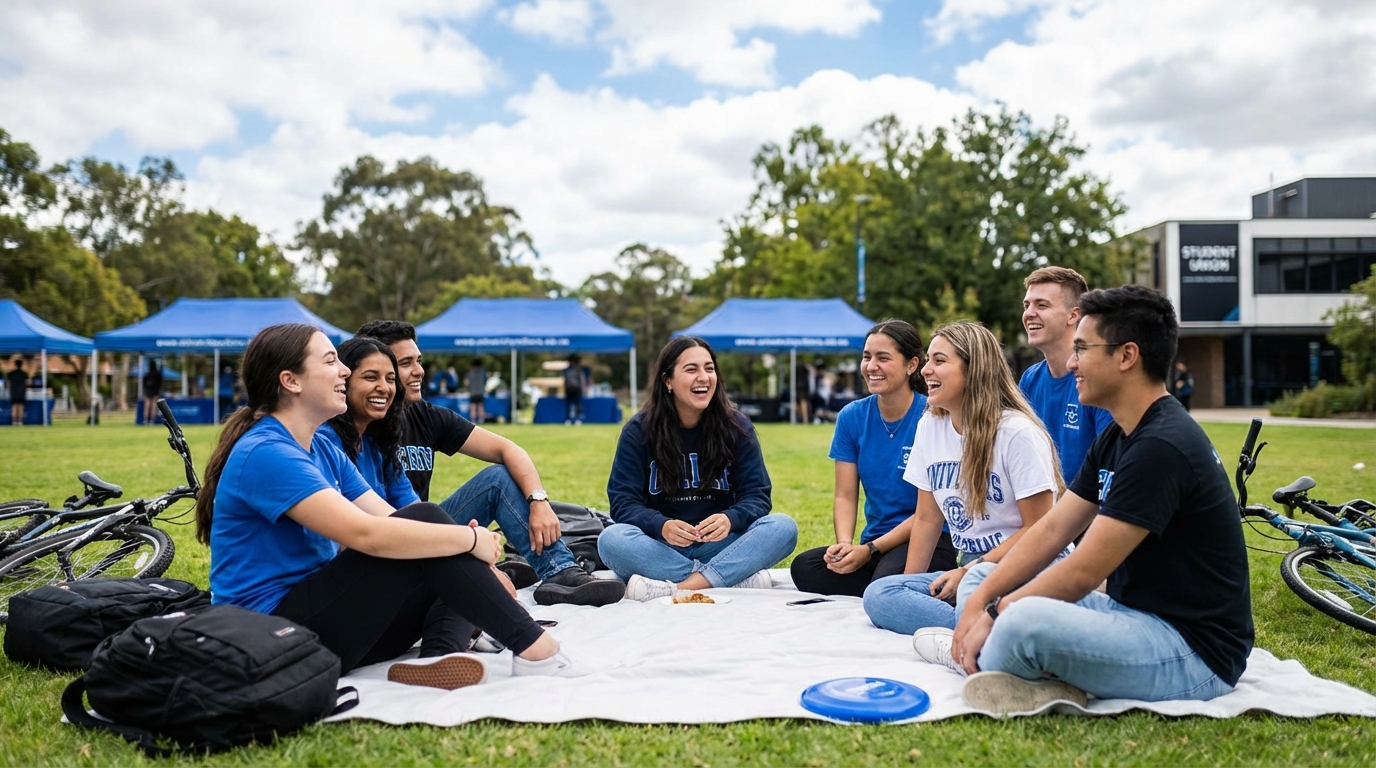
I had this weird 1 a.m. moment where I checked my bank balance, thought about my weekend plans, and realized those two things did not agree with each other at all. How are we supposed to “make the most of uni life” when a single night out costs more than a week of groceries?
If you want the short version: the best budget-friendly weekend activities are the ones that either cost nothing or turn small costs into big value. Think student-led events, potluck hangouts, free campus resources, slow travel around your city, low-cost skill-building projects, and structured “play” like themed challenge nights. You do not need more money to have better weekends, you need better defaults.
Rethinking What a “Good Weekend” Actually Means
I realized during a lecture on behavioral economics that a lot of my “fun” spending was just autopilot. Same places, same people, same outcomes: tired, broke, kind of bored.
A good weekend is not about how much you spend, it is about how intentional you are with your time, your people, and your energy.
If your default plan is “go out, spend, recover, repeat,” your weekends will always feel expensive and short. The trick is to replace that default with things that:
- Cost little or nothing
- Are easy to organize or join
- Help you meet people or deepen friendships
- Teach you something or create memories you actually remember
The rest of this guide is a menu. Think of it like a weekend buffet. You pick a few things, experiment, then tune your personal “cheap weekend system.”
Zero-Cost Social Stuff That Is Actually Fun
Most of us say “we should hang out more” and then default to cafes and restaurants that quietly drain money. Social time does not have to come with a receipt.
1. Potluck Rooms, Not Restaurant Bills
The best nights I have had on campus happened in messy dorm kitchens, not fancy places.
Here is a simple structure that works:
- Pick a theme: “5-ingredient meals”, “Comfort food from home”, “Breakfast for dinner”.
- Everyone brings one food item or drink that costs under a set limit.
- One person organizes a shared playlist. Another brings a card game or sets up a movie.
Set a hard rule: no food delivery apps that night. You force creativity and save money.
Make “potluck Friday” the default, and nights out become the special event, not the norm.
If your dorm kitchen is chaos, borrow a common room on campus, or ask a friend with a bigger place. Most people are more open to hosting if they are not also expected to pay for everything.
2. Low-Stakes Game Nights That Do Not Feel Awkward
Game nights work well because they give people something to do with their hands while conversation warms up. That solves the classic “everyone staring at each other in a circle” problem.
You do not need expensive board games. You can run a full night with:
- Print-and-play games found free online.
- DIY games like charades, Pictionary with a whiteboard, or phone-based quiz games.
- Deck of cards plus games like President, Mafia, or Resistance-style social deduction.
If you want structure, try a “Game Night League” across the semester:
| Week | Game Type | Costs |
|---|---|---|
| 1 | Card games (Uno-style, President, Spoons) | One deck of cards |
| 2 | Social deduction (Mafia, Werewolf) | Free, just paper |
| 3 | Drawing-based (Pictionary, Telestrations) | Marker + paper |
| 4 | Quiz night (general knowledge, memes, class content) | Phone, Google Slides |
People love continuity. A “league” makes it feel like an event, without making it expensive.
3. Themed Movie or Series Marathons
Watching something alone is passive. Turning it into an event with constraints makes it social and memorable.
Some examples:
- “So bad it is good” night: only movies with terrible ratings but cult followings.
- “One actor, three roles” night: pick an actor and watch their strangest movie era.
- “Across the world” series: movies or episodes from different countries each week.
Add one extra layer:
Let one person “curate” each week and give a 3-minute intro on why they picked it.
You suddenly turned a lazy Netflix scroll into a mini film club, with zero extra cost.
Using Your Campus Like a Free Weekend Playground
Most campuses quietly function like a free city: venues, equipment, clubs, workshops, gyms. The problem is that we treat campus like a weekday-only place.
4. Club-Hopping Without Overcommitting
Every campus has clubs that meet or run stuff on weekends. They are always hungry for new people, even if you are not ready to join officially.
Instead of scrolling social media on Saturday, try this:
- Find your campus weekly events calendar or club mailing lists.
- Mark every open event that requires zero membership or low commitment.
- Pick one new club event per weekend: dance practice, debate, robotics, drama, hiking, whatever.
Think of it as “trial weekends”: sample things, do not marry them.
This is low-cost because:
- Clubs often cover materials or snacks using their budgets.
- You gain skills or contacts without paying for classes in town.
- Transport cost is usually zero if it is on campus.
5. Free Gear: Cameras, Tools, Studios
Many campuses have things like:
- Media labs with cameras, microphones, tripods.
- Maker spaces with 3D printers, woodworking tools, or electronics benches.
- Music rooms with pianos, drum kits, and sound booths.
Most students never touch them because they assume they are “only for certain departments.”
Ask instead:
- What equipment can any student check out with an ID card?
- What spaces are open after hours or on weekends?
- Are there short trainings that unlock access to more tools?
Weekend ideas:
- Record a short podcast with friends about campus gossip or study hacks.
- Host a “photo walk” using borrowed cameras and learn simple photography.
- Design and print something small on a 3D printer just for fun.
You are replacing “spend money for entertainment” with “use free campus gear to make things.”
6. Low-Cost Fitness and Skill Sessions
Gym memberships are expensive, but student gyms are usually subsidized or free. The issue is that going alone can feel boring or intimidating.
Turn it into a social plan:
- Create a recurring “Saturday Circuit” with 2 or 3 friends.
- Try a new sport every month using courts and fields you already pay for via tuition.
- Ask senior students or club athletes to run casual clinics for beginners.
Fitness does not need boutique studios. A half-empty campus court and a YouTube playlist is enough.
If you really hate gyms, try:
- Weekend yoga or stretching sessions in a quiet classroom.
- Campus stair challenges: pick a building and see who can design the most painful route.
- Remote “walk and talk” calls with friends, just walking laps around campus.
Exploring Your City Without Acting Like a Tourist With Money
I realized I could name cafes near campus, but not any free viewpoints, local markets, or quiet parks. That felt like living in a city but only knowing the inside of the library and the nearest bubble tea shop.
7. Micro-Adventures Within 30 Minutes
Instead of “where should we go this weekend,” try this different starting question:
“What is the most interesting place we can reach in 30 minutes with the cheapest transport option?”
This might be:
- A river walk or park where you can read or chat.
- A local flea market or secondhand bookshop.
- A neighborhood that has street art or cultural spots.
Set a few constraints:
- Transport budget cap (for example: bus only, or walking distance).
- Food budget cap (for example: one snack or one drink, not a full meal out).
- Activity rule: you must discover at least one new thing about the area.
You turn “let us go somewhere expensive” into “let us try a mini expedition with a map and a bus pass.”
8. Free Events in the City
Cities often run free or low-cost events, especially on weekends:
- Public lectures and talks
- Museum free days
- Street performances or festivals
- Community workshops and meetups
Set up a simple system:
| Step | Action |
|---|---|
| 1 | Follow local event pages, libraries, and community centers on social media. |
| 2 | Create a shared group chat called “Weekend Radar”. |
| 3 | Anyone who spots a free event drops it in the chat. |
| 4 | Vote with reactions and decide by Friday evening. |
This is how you replace “what are we doing?” with “which of these 3 free options do we pick?”
9. Poor Student, Rich Walks
Walking sounds boring until you add structure to it.
Try:
- “Most beautiful campus route” challenge: each person designs a path and the group votes.
- Photo-scavenger hunts with a list of things to capture on camera.
- Historical walks: read short bits about local history and match them to locations.
You get motion, fresh air, and conversation, without spending much. Your brain will also quietly thank you when exam season hits.
Weekend Projects That Make Your Future Self Grateful
Some of the best weekend activities feel fun in the moment and productive when you look back. You feel like you “rested” but you also moved your life forward.
10. Two-Hour Skill Sprints
Instead of vague goals like “learn to code” or “start guitar,” pick micro-projects that fit into a single weekend.
Structure:
- Pick one skill you are curious about.
- Give yourself a 2-hour sprint block on Saturday or Sunday.
- Pick a very small output that proves you did something.
Examples:
- Skill: basic coding. Output: a tiny website with your name and a few links.
- Skill: design. Output: one poster for a fake event using free design tools.
- Skill: languages. Output: a 1-minute self-introduction video in the new language.
You are not trying to master the skill. You are trying to reduce the fear of starting.
If you repeat this across weekends, you get a “portfolio of experiments” without paying for courses.
11. Mini-Builds and Side Projects With Friends
Many students want to “start a startup one day” but never practice building anything small. Weekends are perfect for harmless little experiments.
Project ideas that cost almost nothing:
- Make a simple Notion template for time management and share it on social media.
- Build a spreadsheet that tracks textbook swaps or carpools for your campus.
- Create a niche meme page for your faculty and see if anyone finds it.
Keep scope tiny: one weekend, one clear output. No grand business plans. That way, you avoid guilt and burnout.
If a project shows traction, you can always extend it later.
12. Skill-Swap Weekends
Your friends know things you do not, and vice versa. You are surrounded by a free teaching network, but we rarely use it.
Try this:
- Send a form or message asking: “What can you teach in 1 hour?” and “What do you want to learn?”
- Match 2 or 3 topics that have both a teacher and interested people.
- Run 1 or 2 sessions on a weekend in a quiet room or online.
Examples:
- Basic Excel tricks
- Public speaking tips
- Intro guitar chords
- Cooking one good, cheap meal
You pay nothing, and everyone feels a little more competent on Sunday night.
Cheap Food Strategies That Unlock Better Weekends
Let us be honest: food dominates student spending. Weekend activities look expensive mostly because meals out stack up.
13. Batch-Cook and Socialize at the Same Time
Cooking alone feels like a chore; cooking together feels like an event.
Plan a “meal prep hangout”:
- Everyone brings one set of ingredients for a simple dish.
- Cook together, eat together, then split leftovers into containers.
- You end the night with both full stomachs and food for the week.
This turns food from a cost sink into a weekend investment in your future self.
You can theme it:
- “Three meals under 5 units of currency.”
- “Everything from the frozen aisle.”
- “Only ingredients from the discount shelf.”
14. DIY Cafe Mornings
Brunch and fancy coffee destroy student budgets quietly. Instead of going out, turn a common space into a temporary cafe.
Ideas:
- Collect different instant coffee or tea brands and rate them.
- Try DIY iced drinks with cheap ingredients and experiments.
- Bring laptops or books and turn it into a quiet work block with background music.
You get the social “cafe” energy at a fraction of the cost.
Structured “Play” That Does Not Feel Childish
Weekends are when your brain needs to play, not just rest. The trick is to design play that does not make you feel like you wasted two days.
15. 24-Hour Creative Challenges
Give yourself one mildly absurd creative challenge and a 24-hour window.
Examples:
- Write and record a 3-minute song using only free software and your phone mic.
- Make a 5-page comic or short story based on a random sentence someone sends you.
- Film a 1-minute campus “trailer” as if it were a movie.
Rules:
- No perfectionism. You must ship by the end of the day.
- No expensive gear. Use what you already have.
- Share the result with at least one person or group.
It feels like play, but you also sharpen creative muscles.
16. The “No-Money” Day Challenge
Pick one weekend day and set a strict goal: spend zero money for 24 hours.
That sounds restrictive, but it forces you to get inventive:
- Free activities only: campus walks, using common rooms, borrowing books, using public spaces.
- Meals from what you already have in your kitchen.
- Entertainment from shared resources: games, music, library DVDs, online content.
Once you experience one genuinely good “no-money” day, your brain stops associating fun with spending.
If a full day feels extreme, start with a half-day block.
17. Study + Fun Mashups
This sounds wrong at first: “Why bring studying into the weekend?” But it can actually free up your weekdays and lower stress.
Try creating “Study + Something” sessions:
- Study + Snacks: 90 minutes of focused work, then 30 minutes of chatting and snacks.
- Study + Walk: flashcards or concept explanations while walking slowly around campus.
- Study + Game: quiz each other, and the lowest score does a silly dare.
The key is to cap the work. A 2 or 3 hour block on Saturday can make the rest of the weekend feel lighter, and it costs very little.
Mental Health-Friendly Weekends Without Expensive Wellness Stuff
A lot of weekend regret comes from either overbooking or doing absolutely nothing and feeling guilty. The sweet spot sits in the middle.
18. The “3-Block” Weekend Method
I started feeling much better about weekends when I gave them a soft structure.
Divide each weekend day into three blocks:
- Block A: Social / fun
- Block B: Progress (study, project, admin tasks)
- Block C: Rest (sleep, quiet time, reading, solo walks)
You only need to plan one thing per block.
| Block | Example activity | Cost |
|---|---|---|
| Social | Game night in dorm | Snacks only |
| Progress | 2-hour group study session | Free |
| Rest | Solo walk + podcast | Free |
This structure keeps you from falling into the “scroll all day, panic at night” pattern that ruins both your mood and your wallet.
19. Quiet Hobbies That Reset Your Brain
Not every weekend moment needs to be social or ambitious. Some hobbies are cheap and deeply calming:
- Reading library books instead of buying new ones.
- Journaling: brain-dump the week, then plan lightly for the next one.
- Sketching, simple crafts, or origami with recycled paper.
- Gardening, if your campus has a community garden.
Boredom is not a problem to fix with spending; it is often a signal that your brain needs gentler input.
If you struggle with guilt about “doing nothing,” choose one quiet activity and actually schedule it as “rest,” not “wasted time.”
Money-Smart Habits That Make Weekends Cheaper Automatically
Fun fact no one tells you: your weekend costs are usually locked in by habits you set during the week.
20. The “Weekend Envelope” Trick
This is very simple:
- At the start of the week, decide how much you are willing to spend that weekend.
- Put that amount in cash or track it in a separate digital “envelope.”
- Once it is gone, that is it. No top ups.
The restriction sounds painful, but it has a nice side effect: you start ranking plans by “joy per unit of currency” rather than just saying yes to whatever comes first.
21. Pre-Decide Your Default Plans
If you wait for the weekend to “see what happens,” you will usually slide into the most expensive option. The social gravity pulls you toward food, drinks, and transport.
Instead, before Friday, decide:
- If nothing special comes up, what is my default Friday night?
- What is my default Saturday afternoon?
- What is my default Sunday evening?
Examples:
- Default Friday: potluck or game night.
- Default Saturday afternoon: skill sprint or city walk.
- Default Sunday evening: meal prep + low-key movie.
You are not blocking spontaneous plans. You are giving yourself a healthy, cheap fallback that stops panic-spending.
22. Build a “Free Fun” List with Friends
When people ask “What do you want to do?” our brains go blank. Then we pick the easiest, usually expensive, option.
Solve this once, not every weekend:
- Start a shared note with a group of friends.
- List every free or cheap activity you can think of within reach.
- Sort them loosely by mood: social / quiet / active / creative.
Next time someone asks, you open the list and pick a few candidates. No extra mental load and much less pressure to spend.
Pulling It All Together Without Turning Weekends Into Homework
At this point, you might be thinking: “This sounds like a lot of planning. I just want to relax.”
That is fair. The goal is not to schedule every minute; it is to shift your default from “spend by accident” to “enjoy on purpose.”
Here is a light, realistic structure you can actually try:
- Before Friday:
- Set a weekend spending limit.
- Pick one social plan, one progress block, one rest block.
- Check your campus and city event calendars once.
- During the weekend:
- Stick to your envelope or budget.
- Replace “I am bored” with “I will pick something from the Free Fun list.”
- Allow at least one completely unstructured block.
- Sunday evening:
- Ask yourself: “What was the cheapest fun I had this weekend?”
- Repeat that kind of activity next week with small tweaks.
You do not need more cash to have better weekends. You need 3 things:
A small budget boundary, a menu of cheap options, and people who are willing to try slightly different defaults with you.
If your current friend group resists every cheap idea and insists on expensive plans, it is okay to say no sometimes and mix in new circles. Your money, time, and energy are limited. Your weekends should respect that, not fight it.