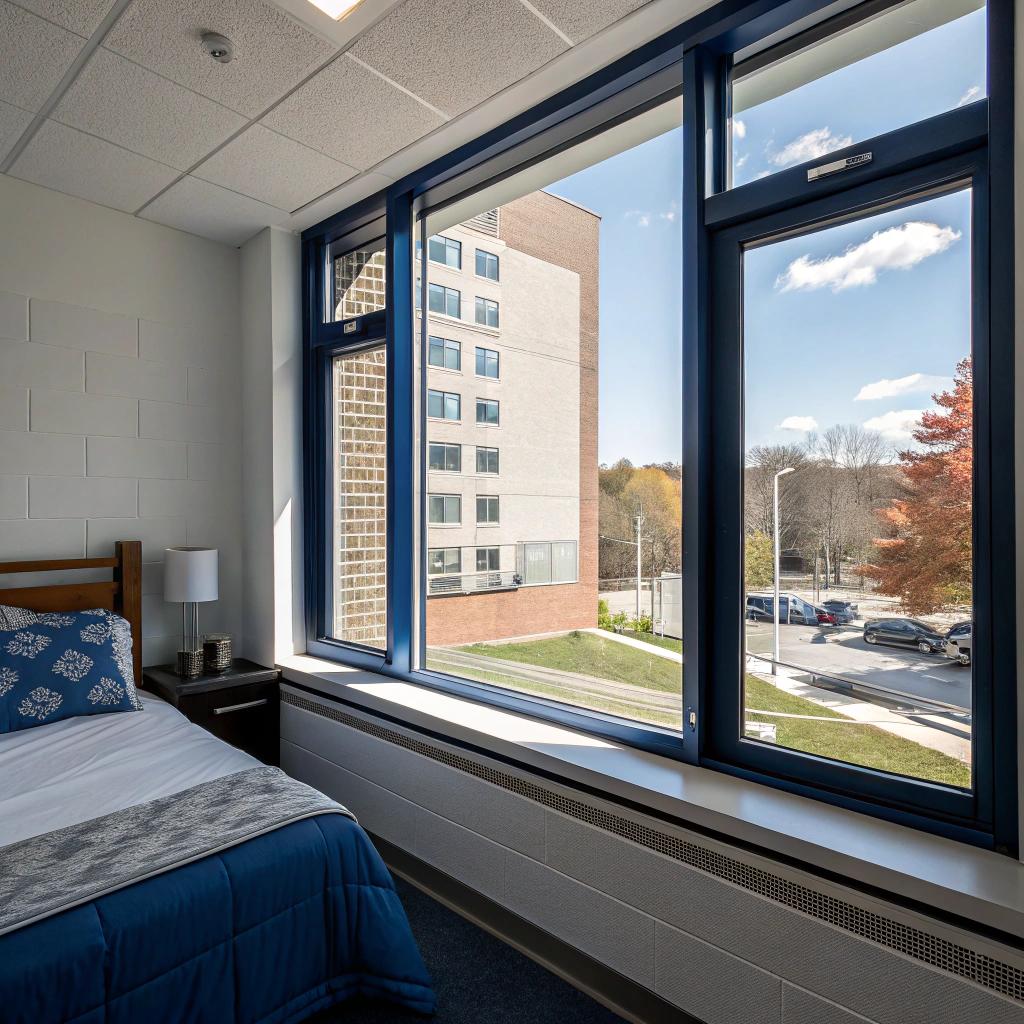
Ever stare at your dorm window at 2 am and think, “If this thin sheet of glass breaks, my whole room, my deposit, and maybe my GPA are gone”? I had that exact thought one night during a storm, watching the window rattle and picturing a stray frisbee finishing the job.
Here is the short version: real glass in dorms is fragile, loud, hard to control for light, and rarely your choice. You cannot usually do full glass replacement in a dorm, but you can layer smart, cheap, removable materials on top of it to get more privacy, more comfort, and less drama with your RA or housing office.
Once you accept that point, the whole topic gets calmer. The goal is not to renovate like a landlord. The goal is to treat the usual dorm window or glass panel like a base layer, then add things that protect it, hide it, or upgrade it without leaving damage.
You are not trying to become a glazier. You are trying to keep your room livable, your screen glare low, and your deposit alive.
Why dorm glass is more annoying than it looks
Most campus windows are not bad on paper. They just do not match student life very well.
Common problems:
- They leak heat or cold, so your room swings between sauna and fridge.
- They let in too much light at the wrong time, especially if you are facing east or near floodlights.
- They kill privacy, because many dorms were not designed with actual human boundaries in mind.
- They echo sound from the street, courtyard, or hallway.
- And if something cracks, you cannot just grab tools and fix it yourself.
On top of that, almost every housing office has rules about sticking, drilling, taping, or hanging things on or around windows. You are always one “no adhesives on the frame” email away from a fine.
So instead of thinking about permanent changes, think about layers and modules that you can remove in 5 minutes during checkout.
Smart dorm glass hacks are about temporary upgrades. If it needs a screwdriver, permanent glue, or cutting into the frame, skip it.
From here, it helps to break the problem into four simple questions:
- How much light do you want?
- How much privacy do you need?
- What does your housing contract allow?
- How much money and time can you actually spend?
If you answer those honestly, you often do not need anything fancy. A few smart layers can give you 80 percent of the effect of a full window overhaul.
Layer 1: Removable window films that fake a glass upgrade
The fastest way to make dorm glass feel less harsh is to cover it with something thin, so it still looks like glass, but behaves more like a filter. That is where removable window films come in.
Types of window film that actually make sense for dorms
- Frosted privacy film
Good if your window faces a hallway or another dorm that is way too close. It blurs shapes but still lets in light, so your room does not feel like a cave. - Blackout film
Good if you work nights, pull late study sessions, or your campus loves floodlights. It cuts light almost completely. Your room can feel like a tiny cinema, which is both good and a bit weird. - Light tint / glare control film
Helps screen glare if your desk is right next to the window. It softens the brightness without making things too dark. - Decorative film
Patterns, gradients, or color blocks. Slightly extra, but it can make a blank dorm room feel less like temporary storage.
What makes them useful in dorms is not just how they look. It is how they stick. Most decent films rely on static cling or water-based adhesive. That means:
- You can take them off with no tools.
- You can reapply them if you mess up the first time.
- You avoid residue that gets you in trouble during room checks.
If you cannot peel it off in one piece with your fingers, it is probably too permanent for a dorm window.
How to install film without bubbles or stress
You do not need to be perfect, but a bit of care helps. Here is a quick process:
- Clean the glass with mild soap and water. Dry it with a lint free cloth.
- Measure the window and cut the film slightly larger than the glass.
- Spray the glass lightly with water mixed with a tiny bit of dish soap.
- Peel the backing off the film and place it on the wet glass.
- Slide it into position, then push bubbles out with a card or squeegee.
- Trim the extra edges with a sharp utility knife, very gently.
If you mess up, peel it, spray again, and try one more time. It is not graded.
What films help with what problems
| Goal | Best film type | Good for | Watch out for |
|---|---|---|---|
| More privacy, same daylight | Frosted film | Ground-floor rooms, windows near sidewalks | Night privacy is weaker if lights are on inside |
| Sleep in total darkness | Blackout film | Night shift students, late sleepers | Room feels darker all day, plant life suffers |
| Reduce screen glare | Light tint or UV film | Desk near window, laptop use | May slightly change color of outside view |
| Make room feel less like a box | Decorative / patterned film | Sharing on social, personal style | Can look cluttered if design is too busy |
If your campus has strict rules, film is often the least controversial upgrade, because it avoids screws, nails, or curtains sagging off the ceiling. Some housing offices still want to approve it in advance, though, so reading the boring PDF can save you a headache.
Layer 2: Curtains, shades, and screens that actually fit dorm life
Once you have the glass itself handled, the next layer is what hangs around it. This is where most people go straight to “thick blackout curtains,” and that sometimes works, but it is not always the smartest first choice.
Pick light control based on how you actually live
Ask yourself two honest questions:
- Do you need total darkness to sleep, or just less glare?
- Are you ok opening and closing curtains every day?
If you are the “wake up to sunlight” type, full blackout might ruin your rhythm. Thin or medium weight curtains with a liner can be enough.
If you sleep during the day, then yes, heavy curtains matter. Pair them with a simple shade or blind for daytime privacy.
Damage free mounting ideas
Most dorms do not allow you to drill into the wall or window frame. That means you need hardware that either grabs the existing frame or pushes between surfaces.
Some common setups that usually keep housing happy:
- Tension rods above the window frame for light curtains.
- Twist and fit rods that brace between two walls if the window is in an alcove.
- Over the frame hooks that hang on top of the window casing.
- Adhesive hooks on the wall, used very lightly with thin rods.
If you hang anything heavy, check weight limits. It is easy to forget until you hear a crash at 3 am.
Smart combos that work better than one single curtain
Some setups that work well in real dorm rooms:
- Sheer + blackout combo
Hang sheers closer to the glass on a tension rod. Hang blackout curtains slightly in front on another rod.
Daytime: close sheers, open blackout.
Night: close both.
This gives privacy without total darkness when you want light. - Roller shade + side curtains
A simple roller shade inside the frame, with lightweight curtains on the outside.
The shade gives clean control.
The curtains soften the look and cover gaps. - Vertical hanging panels
Fabric panels hung from adhesive hooks on the ceiling, overlapping slightly.
Works well for wide windows or glass doors in apartment style dorms, where a normal rod does not span easily.
If one layer is for function and one layer is for looks, you get a room that works better and does not feel like a blackout bunker.
Layer 3: DIY fixes when something actually cracks or chips
Housing usually handles serious glass damage, but real life is messy. A mini crack may show up before you even unpack, or a friend bumps a window with furniture. You should never pretend to be professional repair staff, but you can do temporary stabilizing that keeps things from getting worse while you report it.
Quick triage: what you can and cannot handle
A fast rule that keeps you safe:
- If the glass is shattered, loose, bowing, or you can feel air moving through a large opening, stop. Report it right away.
- If there is a small chip or hairline crack, you can sometimes stabilize it so it does not spread quickly.
For minor issues, students often use:
- Clear packing tape to hold loose shards in place temporarily.
- Cardboard over the area to protect people from contact.
- Light plastic film on the inside to block drafts.
This does not fix the glass in any real sense, but it buys time. If you are in an off campus place one day, real glass work belongs to pros with the right gear, not roommates with vibes and a YouTube playlist.
Why long term DIY fixes can backfire
Hardware store repair kits look tempting, especially ones for glass chips. Some do work for car windshields, but building windows behave differently, and your lease or housing rules may treat those kits as “unauthorized modification”.
There is also the safety side. Glass under stress can fail without warning. If you try to drill, grind, or heavily press on it, you turn a small problem into a bigger one.
So as boring as it sounds, if there is real damage:
Photo first, email housing, then do only temporary protection that does not hide the damage or pretend it is fixed.
That record protects you from being blamed later for something that was already there.
Thermal and sound hacks that sit on or near the glass
Glass is not just about people seeing in or out. It is also about how your room feels and sounds. A thin dorm window next to a busy street or poorly heated wall can make life annoying in quiet ways.
There are simple, non permanent things you can add that help a lot.
Thermal layers for cold or hot dorms
If your window leaks cold air:
- Thermal curtains
Curtains with a built in liner that slows heat loss. They feel thicker and slightly heavier than regular ones. - Clear plastic insulation kits
These are clear sheets that attach to the frame with tape and then shrink slightly with a hair dryer to become taut. They trap a layer of air and cut drafts.
They are not fashionable, but in older dorms they can make the difference between “need three hoodies” and “one hoodie”. - Rugs and soft furniture near windows
Not actually a glass fix, but soft materials soak some of the cold that radiates off thin glass.
In hotter rooms, light colored curtains and tint film that blocks UV can cut how much heat builds up during the day, especially on south or west facing windows.
Sound control that does not involve foam on every wall
Dorm noise comes from many places, but glass is one path. Thicker, layered materials help.
Ways to make it better:
- Heavier curtains
Even if they are not official “acoustic curtains”, extra fabric across the window slows some noise. - Bookshelves near the window wall
Filling shelves with books or storage bins gives a mass barrier. It slightly reduces how sound bounces around. - Fabric panels
Simple canvas or cloth panels on adjacent walls make echoes less sharp, so outside sounds feel less harsh inside.
If you live near a loud road, none of this will create silence, but it can make the difference between “constant distraction” and “background noise you stop noticing after a week.”
Privacy tricks for shared rooms and glass inside dorms
Not all glass is part of a window. Some dorms use interior glass panels, sidelights next to doors, or even partial glass walls in student apartments. Those can feel strange, especially if you share the room with people you just met at check in.
Soft dividers instead of permanent walls
If your room has an open layout and you want zones:
- Bookcases as partial walls
Turn a tall bookcase sideways so the back faces your bed. Put it close to the window but not blocking all light, so you get privacy without losing sunlight. - Ceiling track or wire for curtains
Some students run a thin wire or removable ceiling track across part of the room and hang curtains from it.
Use light fabric so the weight does not strain adhesive hooks. - Folding screens
Old fashioned, but they work. You can fold them away for cleaning checks or guests.
For small interior glass near doors, frosted film again pulls a lot of weight. It stops direct view without making the hall feel like a cave.
Balancing privacy and roommate trust
One small social point: pulling heavy blackout curtains across your sleeping area 24/7 can signal “do not talk to me” even if that is not your goal.
You might want to talk with your roommate about:
- When each of you needs privacy.
- What kind of light you each like in the morning.
- Whether big changes like blackout film are ok with both of you.
Students often skip that conversation and then feel quietly annoyed for months. A ten minute chat is easier.
Smart tech and “pseudo smart” ideas for dorm windows
If you are into gadgets, there are ways to make dorm glass feel slightly more “smart”, even when you cannot replace anything. Some of it is real tech. Some is just clever use of basic tools.
Smart bulbs instead of smart glass
You may see online videos of glass that switches from clear to frosted with electricity. That is cool, but not realistic in a dorm with fixed windows.
What you can control is your own lighting. A simple smart bulb in a desk lamp helps with:
- Warmer light at night so bright white light does not scream through your window.
- Timers that brighten slowly in the morning if your curtains are heavy.
- Color temperature shifts for study vs rest.
That indirectly improves how your room looks from outside and how your body feels next to the window.
Window sensors and micro habits
If you are the kind of person who forgets to close windows when it rains, a cheap sensor that pings your phone when the window is open can save you from soaked textbooks. Not every dorm window allows a sensor, but stick on ones often mount on the frame without damage.
Other small habits that pair well with glass upgrades:
- Opening windows for 5 to 10 minutes around midday to air out, then closing them again to keep temperature stable.
- Angling your desk so the window is to your side, not behind your screen.
- Cleaning glass once a month. It changes how bright the room feels more than people expect.
These are minor, but real student life is often a stack of minor habits, not one big project.
Working within housing rules without giving up
Campus housing rules feel annoying until you realize they exist because hundreds of students before you broke things in very creative ways. That does not mean every rule is smart. Some are just outdated. But ignoring them usually costs money.
What to ask housing before you change anything big
If you plan anything more intense than curtains or film, you might want to ask:
- Are there any approved window coverings or banned materials?
- Are adhesive hooks on the frame allowed?
- Is film on glass ok if it is removable, or do they want clear glass for inspections?
- Who handles repair if the window frame or glass is already damaged?
This feels like overkill, but written answers (even short ones) are useful later. If someone new does the checkout, you can say, “I asked in September, here is the reply.”
Signs you are about to cause trouble
Simple cues that your idea might lead to a fine:
- You need power tools to install it.
- You intend to paint or stain anything near the glass.
- Removal will tear drywall, wood, or paint.
- The product description lists “permanent” or “construction adhesive.”
If something goes wrong and real work is needed on a window, pros and housing staff will handle the long term fix.
Turning glass hacks into mini campus projects or startups
Since your site is about student ideas and campus trends, there is a fun angle here. All these tiny glass and window frustrations are actually early stage business problems.
Some examples:
- Students who design removable kits that bundle film, rods, curtains, and tools targeted at specific dorm models on their campus.
- Campus groups that offer weekend “room comfort clinics” to help people install film, curtains, and thermal liners correctly.
- Small startups that partner with housing to pre install smart shading or standard film options in certain buildings.
What looks like a small annoyance, like glare on a laptop at 2 pm, is a hint about what many people on the same campus deal with. If you hear the same complaint in three different buildings, that is not random.
If your dorm window annoys you, it probably annoys hundreds of other students too. That is not just a complaint. It is an early user survey.
Some campuses already host competitions around student comfort. Others have hackathons where people prototype smart room upgrades. Glass and windows rarely feel glamorous enough for those events, but they are very real everyday problems.
Common questions about smart glass replacement ideas in dorms
Can I actually replace the dorm window glass myself?
In almost every case, no. Campus housing controls the building envelope for safety, liability, and consistency. Full replacement involves rules, permits, and vendors, not DIY. Your best move is to layer removable materials and report damage quickly.
Is removable film allowed on dorm windows?
Many dorms allow static cling or light adhesive film, but some do not, or they limit dark tint or reflective mirror finishes. The safest path is to use neutral frosted or glare control films that peel off cleanly, and check your housing guide or email them first.
What if my roommate hates blackout curtains or heavy film?
Then treat the window like shared territory and your bed area like personal territory. Use lighter, neutral solutions on the main window, and add heavier barriers (like a curtain or screen) closer to your personal space. That way your roommate still gets some light, and you still get your dark zone.
How much money does a good dorm window setup cost?
Rough ranges, assuming you shop with some care:
- Basic film for one window: low cost.
- Tension rod and light curtains: low to medium cost.
- Thermal curtains and plastic insulation kit: medium cost.
- Full layered system with film, sheers, blackout, and hardware: medium to higher cost, but you can often split with a roommate.
A realistic target for a big comfort boost is somewhere between a simple night out and a month of streaming services, which many students find worth it once winter or exam season hits.
What one change should I try first if I do not want a huge project?
If privacy is your main problem, start with frosted or light tint film. If sleep is the issue, start with a basic blackout curtain on a tension rod. Try one experiment, live with it for a week, and see what still bothers you. Your next step becomes clear after that, and you avoid turning your dorm into a half finished construction site.