Last semester I was sitting in a 9 a.m. lecture, half awake, watching someone plug a laptop into a wall socket that was powered by rooftop solar. I realized the assignment I was stressing about was literally running on sunlight.
Here is the short version: “green tech on campus” is not just recycling bins and posters. It is solar panels, smart buildings, electric campus fleets, student-built hardware, and weird little pilot projects that together cut emissions, save money, and turn universities into live testbeds for climate solutions.
What “Green Tech on Campus” Actually Means
Most people think green tech on campus is just about energy. That is one part, but the real picture is wider and more interesting. It touches how we move, eat, build, cool, heat, charge, and even where our old laptops end up.
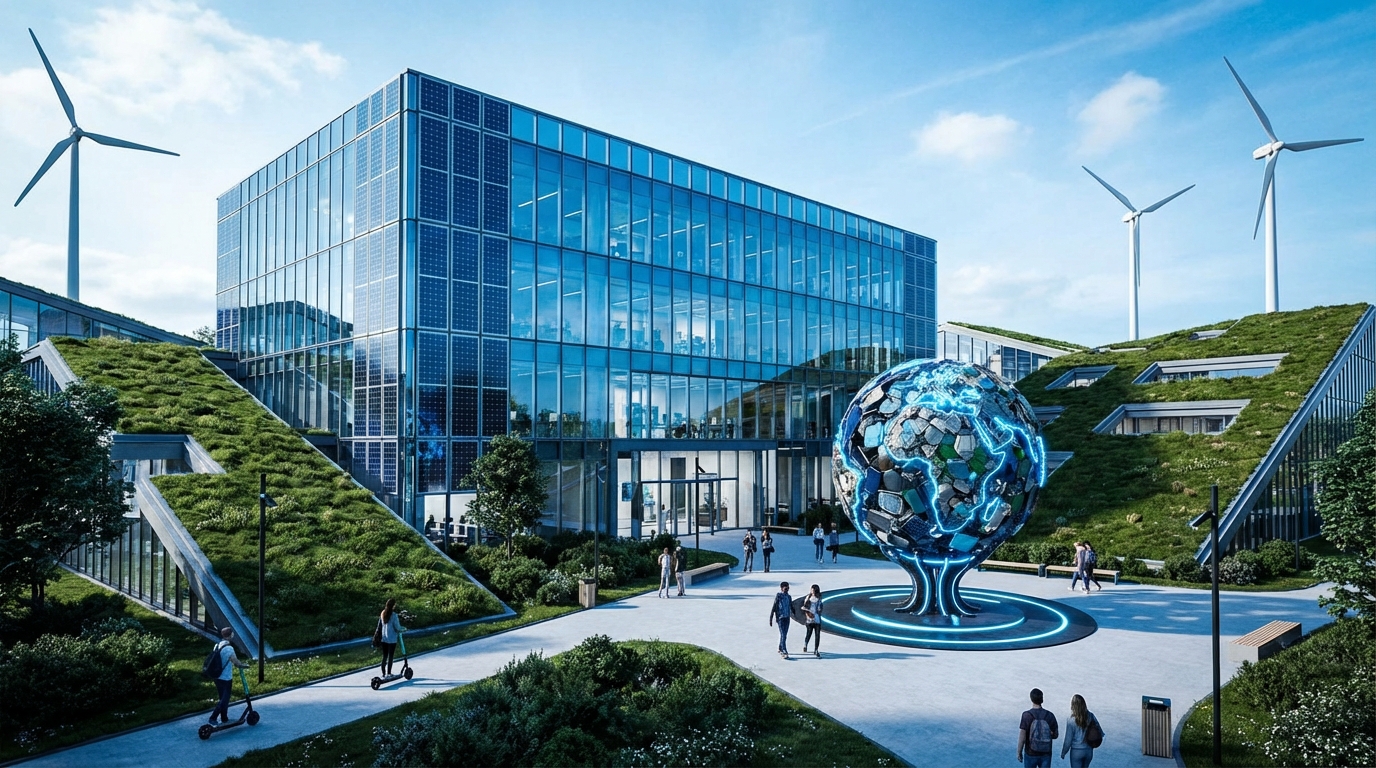
Campus green tech is basically a live prototype of the future city, squeezed into a few square kilometers with Wi-Fi and exams.
At a high level, green tech on campus usually clusters into a few categories:
- Energy: solar, wind, batteries, smart grids, efficient lighting, HVAC upgrades
- Mobility: electric buses, bike infrastructure, e-scooters, car-sharing, smart parking
- Buildings: smart sensors, retrofits, green roofs, low-carbon materials
- Food & waste: composting, anaerobic digestion, food recovery, recycling, circular labs
- Water: low-flow fixtures, greywater reuse, leak detection, rainwater harvesting
- Digital: dashboards, apps, sensors, and data systems coordinating all of the above
The interesting part for students is that almost all of these areas are open for projects, startups, and side experiments. The campus is like a mini city, but the “mayor” answers emails from an .edu address.
Why Campuses Are Perfect Green Tech Testbeds
In one planning meeting, a facilities engineer told me: “We have the problems of a city, but our population graduates.” That mix creates a strange but useful setup for experiments.
| Campus Feature | Why It Helps Green Tech |
|---|---|
| Lots of buildings in one place | Easier to test smart grids, building controls, and shared infrastructure |
| High energy demand | Solar, batteries, and efficiency upgrades have big impact and clear data |
| Student projects and research | Constant flow of ideas, prototypes, and people willing to test new things |
| Centralized management | Decisions for dozens of buildings can be made by a few teams |
| Public image pressure | Administrators care about climate pledges and rankings, which opens doors |
If you treat your campus like a sandbox for climate tech, you suddenly see research labs, dorms, parking lots, and cafeterias as “hardware” you can reprogram.
The flip side: you will also hit slow procurement, safety rules, and risk-averse managers. That is annoying, but it is also realistic training for building climate products in the real world.
Energy: From Solar Roofs To Smart Grids
I realized during a lab tour that our science building roofs were not just empty surfaces. They were prime solar real estate sitting under the same sun that was blinding everyone in the courtyard.
Rooftop Solar And Microgrids
Many campuses are quietly turning their roofs and parking lots into power plants.
Common setups:
- Rooftop solar: Panels on lecture halls, gyms, libraries, and dorms.
- Solar carports: Shade for cars with panels on top, sometimes with EV chargers.
- Microgrids: Local energy networks that can run even if the main grid fails.
- Battery storage: Rooms full of lithium-ion or newer chemistries storing solar power for evenings.
Why campuses like this:
- Daytime schedules line up with solar production.
- Big flat roofs reduce installation complexity.
- They can hedge against rising electricity costs.
- They pick up serious PR and grant potential.
From a student perspective, this opens several paths:
- Data analysis projects on solar output vs. demand.
- Hardware and software for managing microgrids.
- Policy and finance work on power purchase agreements (PPAs).
If you are in engineering, business, or policy, your campus solar is not just infrastructure. It is a free dataset plus an excuse to email facilities with a “research idea.”
Smart Buildings And Energy Management
Smart buildings are where “green” tech gets invisible and kind of nerdy.
Typical tech stack:
- Smart meters: Track real-time electricity, heat, and water use.
- Building Management Systems (BMS): Central software that manages HVAC, lighting, and schedules.
- Sensors: Occupancy, CO2, temperature, humidity, light levels.
- Controls: Variable-speed drives, smart thermostats, dimmable LEDs.
Universities are retrofitting older buildings with:
- LED lighting replacing fluorescent tubes.
- Automatic lights that switch off when rooms are empty.
- Modern chillers and boilers with better controls.
- Window and insulation upgrades that cut heat loss or gain.
This is not glamorous, but it is where a huge slice of emissions sit.
Student angles:
- Build dashboards that show dorm energy use in near real time.
- Create competitions between residence halls based on energy reduction.
- Research algorithms that predict and smooth campus demand peaks.
If you study CS or data science, there is a whole “climate + data” niche just in building energy analytics.
Mobility: Making Campus Movement Less Carbon-Heavy
It is kind of ironic that many campuses teach climate science while their parking lots are oceans of cars. That is slowly changing.
Electric Buses, Shuttles, And Fleet Vehicles
Transit is one of the most visible green tech upgrades.
Campus fleets are switching:
- Diesel buses to electric buses.
- Gas maintenance trucks to small EV vans or bikes.
- Security and mail vehicles to compact EVs or low-speed electric carts.
Why this works well on campus:
- Routes are short and predictable, so range anxiety is low.
- Vehicles can charge in depots at night.
- Students notice new buses and talk about them, which builds support.
Startup chances:
- Charging schedule software that avoids peak electricity costs.
- Route planning tools optimized for electric fleets.
- Retrofit kits for existing campus vehicles.
Bikes, Scooters, And Walkability
Some of the lowest-tech and highest-impact moves do not need any batteries.
Green mobility patterns:
- Protected bike lanes that feel safe enough for first-time riders.
- Shared bike programs or partnerships with e-scooter providers.
- Better walking routes, shade trees, and lighting.
- Smart parking that charges more for central lots and less for edge-of-campus lots.
A lot of this is design and policy more than electronics, but tech still plays a role:
- Apps that show the best low-traffic walking or cycling paths.
- Scooter data analysis to identify where to add racks and lanes.
- Computer vision projects counting bike and pedestrian traffic from camera feeds.
If your campus is car-centric, almost any small tool that makes walking and biking less annoying can shift habits more than a hundred posters about climate change.
Buildings And Construction: Greener Bricks And Mortar
One thing I did not expect to learn from a campus sustainability officer: building stuff often emits more carbon than running it for years. That is called “embodied carbon”.
Low-Carbon Materials And Design
When universities build new labs or dorms, there is a quiet race to make them lower carbon and more resource-conscious.
Common approaches:
- Low-carbon concrete: Blended cements or alternative binders with less CO2.
- Mass timber: Engineered wood that stores carbon and replaces some steel and concrete.
- Recycled materials: Reused bricks, reclaimed wood, recycled steel.
- Passive design: Orienting buildings for light and shade, good ventilation, and natural daylight.
- Green roofs and walls: Vegetation that cools buildings and improves stormwater handling.
These choices affect:
- Construction emissions.
- Energy use for heating and cooling over decades.
- Indoor air quality and comfort for students.
For architecture, engineering, and planning students, campus projects are real-world case studies. You can:
- Analyze life-cycle emissions of new buildings.
- Run simulations of different design options for future projects.
- Prototype sensor-based comfort systems that reduce HVAC load.
Retrofitting Old Buildings
Most campuses have older structures with bad insulation, single-glazed windows, and leaky heating systems.
Retrofit levers:
- Window replacements or double-glazing films.
- Insulation upgrades in roofs and walls.
- Heat pump installation replacing old gas boilers.
- Smart thermostats and zoning for better control.
- Demand-controlled ventilation using CO2 sensors.
From a student angle: these projects are dense with data.
You can:
- Run before-and-after studies on energy bills and comfort surveys.
- Prototype cheap sensor kits to guide retrofit choices.
- Design financing models that make retrofits viable for cash-strapped departments.
New zero-carbon buildings are cool, but if your 1960s dorm still leaks heat like a sieve, that is the bigger climate lever.
Food, Waste, And Circular Systems
Most campus tours never mention what happens behind the cafeteria or under the trash chute. That is where some of the most creative green tech lives.
Smart Kitchens And Food Systems
Cafeterias are like mini factories for food. They waste energy, water, and food if not designed carefully.
Key tools:
- Food waste tracking systems: Scales and software that log what gets thrown out, when, and why.
- Menu optimization: Software that adjusts orders based on demand patterns and seasons.
- Induction stoves: More efficient and cleaner than gas burners.
- Dishwashers with heat recovery: Capture heat from wastewater.
Impact:
- Lower food waste and costs.
- Less energy used in cooking and refrigeration.
- Clearer data for climate reporting.
Student roles:
- Analysts: model how menu changes affect waste and emissions.
- Developers: build or improve waste tracking apps.
- Entrepreneurs: create services that upcycle surplus food.
Waste, Recycling, And Closed Loops
Waste systems are where sustainability gets physical and messy.
Campus green tech examples:
- Smart bins that track fill levels and reduce collection trips.
- AI sorting using cameras to classify recyclables on conveyors.
- Composting systems for food scraps, either on-site or at regional facilities.
- Anaerobic digesters producing biogas and fertilizer from organic waste.
- E-waste recovery stations for laptops, phones, and lab equipment.
Circular projects on campus might include:
- Clothing swap platforms and events, tracked via student-built apps.
- Lab equipment sharing platforms that reduce over-purchasing.
- Furniture reuse systems for dorms and offices.
If you walk the path your trash takes from your dorm room to wherever it ends up, you will probably find three startup ideas and one research project along the way.
Water And Climate Resilience
Climate is not only about CO2. Water stress and flooding are already here in many regions, and campuses are starting to react.
Water Saving And Reuse
Key interventions:
- Low-flow fixtures in showers, toilets, and sinks.
- Greywater reuse for irrigation or toilet flushing.
- Rainwater harvesting in cisterns and tanks.
- Smart irrigation based on soil moisture sensors and weather data.
- Leak detection systems in underground pipes and buildings.
For engineering and environmental science students, this is a nice mix of:
- Sensor networks.
- Hydrology modeling.
- Behavioral studies on how people use water.
Green Infrastructure And Stormwater
Heavy rainfall can flood basements and overwhelm old drains. Campuses are testing:
- Permeable pavements that let water soak through.
- Bioswales and rain gardens that absorb runoff.
- Retention ponds that double as small ecosystems or recreation spaces.
- Tree planting to manage both heat and water.
There are design studios and civil engineering projects that model these systems. They can also tie into biodiversity work, like habitats for birds and insects.
Digital Layer: Data, Dashboards, And Campus “Operating Systems”
At some point, someone in your sustainability office says: “We have lots of projects but no unified view.” That is where digital tech sits.
Sustainability Dashboards And Analytics
Many campuses are building central dashboards that track:
- Energy use per building.
- Solar and wind generation.
- Water use and leaks.
- Waste and recycling volumes.
- Carbon emissions from travel and commuting.
These dashboards feed into:
- Public transparency sites.
- Annual climate reports.
- Research datasets for student projects.
Student involvement:
- Integrate different data APIs from hardware vendors.
- Build visualization tools that are actually usable by non-technical staff.
- Develop anomaly detection for leaks, spikes, or failures.
Behavior Change Tech
The tech is not only infrastructure. It also influences habits.
Common tools:
- Apps reminding students to bring reusables or track carbon footprints.
- Nudges like default plant-based options in online menus.
- Gamified challenges linked to energy and waste data.
- Real-time feedback screens in dorm lobbies about energy and water use.
You cannot “engineer” your way out of climate issues without changing human behavior. Campuses are perfect labs for testing that human-tech interface.
Student Startups And Projects In Green Tech
This is where it gets interesting for ambitious students. Campus green tech is not just a background feature. It can be your test market.
Common Types Of Student Green Tech Ventures
From watching hackathons, campus accelerators, and club pitches, there are a few recurring patterns:
- Energy & hardware: sensor kits, solar monitoring, retrofitting gadgets.
- Software: dashboards, routing tools, behavioral apps, campus “climate OS”.
- Services: consulting for departments, student-led audits, waste sorting programs.
- Product ventures: reusable container systems, low-waste dorm supplies, second-hand marketplaces.
Many start as class projects, then win small grants, then run pilots in one building, and then either grow beyond campus or die quietly. That cycle is normal.
How To Plug Into Campus Green Tech As A Student
If you want to be more than a spectator, a simple sequence works well:
- Map the actors: Find the sustainability office, facilities team, and any energy or climate research labs. Note names, not just departments.
- Find the data: Ask what they currently measure. If they say “not much”, that is a gap you can fill.
- Shadow reality: Spend time with someone who manages boilers, waste routes, bus schedules, or lab equipment. Classroom theory will look different afterward.
- Pick one friction point: Overflows at recycling bins, weird spikes in dorm energy, EV chargers always busy. Narrow your scope.
- Prototype on a small slice: One building, one bus line, one cafeteria, one dorm floor.
This path is less glamorous than big pitch decks, but it is far more likely to create something that works.
Funding, Politics, And Constraints
Here is where I am going to be blunt: if you treat the campus like a blank check with solar panels, you will be disappointed.
Where The Money Comes From
Campus green tech is usually funded through:
- Capital budgets for buildings and infrastructure.
- Energy performance contracts where savings pay for upgrades.
- Government grants for research or demonstration projects.
- Philanthropic gifts linked to climate goals.
- Student green funds from modest fees.
For student projects, typical funding paths:
- Small grants from sustainability offices or student governments.
- Hackathon prizes and accelerator stipends.
- Externally funded research assistant positions.
If your idea needs millions on day one, you probably picked the wrong scope. Start with what fits a 4 or 5 figure budget and a 1 or 2 semester window.
Institutional Constraints You Cannot Ignore
You are probably taking a bad approach if you assume:
- You can attach things to roofs or electrical systems without long approvals.
- Data will be easily shared without privacy or security checks.
- Maintenance staff have spare time to test student prototypes frequently.
- Procurement can buy any product you suggest quickly.
Constraints to plan around:
- Safety regulations for electrical and structural changes.
- Existing vendor contracts and lock-in to specific systems.
- IT security protocols for anything on the network.
- Union rules for maintenance and operations staff.
If you treat facilities staff and administrators as co-founders instead of gatekeepers, your odds of getting a pilot go way up.
Measuring Impact: Beyond Vibes And PR
One late night during a group project, we stared at a slide saying “This project will save the planet.” After a few minutes of silence, someone asked: “By how much exactly?” We had no answer.
Key Metrics For Campus Green Tech
If you want your project to survive beyond a semester, track impact in numbers.
Common metrics:
- Energy: kWh saved, peak demand reduced, percent from renewables.
- Emissions: tonnes of CO2 equivalent avoided, by source (electricity, gas, transport, waste).
- Water: cubic meters saved or reused.
- Waste: tons diverted from landfill, contamination rates in recycling, food waste per meal.
- Mobility: modal split (car vs. bike vs. walk vs. transit), EV share, average trip emissions.
- Financial: payback period, net present value of upgrades, operating cost changes.
- Engagement: active users, opt-in rates, repeat participation in programs.
Turning these into simple dashboards can help convince administrators to expand pilots. It also grounds your climate claims in reality instead of marketing.
Linking Campus Work To Larger Climate Goals
Many universities have public climate targets such as:
- Net-zero emissions by a certain year.
- 100 percent renewable electricity by a certain year.
- Zero waste to landfill by a certain year.
Connect your project impact to these goals honestly:
- Estimate the share of total emissions your area represents.
- Calculate how your intervention scales across campus.
- Be clear about uncertainties and what assumptions you used.
If your idea only affects 0.1 percent of emissions, that is fine. The key is being accurate, not dramatic.
Emerging Trends: Where Green Tech On Campus Is Heading
Looking at newer projects and pilot programs, a few trends are gaining momentum.
Electrification Of Everything
Campuses are gradually removing fossil fuels from:
- Heating and cooling (heat pumps instead of gas boilers).
- Cooking (induction instead of gas stoves).
- Transport ( EV fleets, e-bikes, and scooters).
Electrification integrates tightly with renewables and batteries. It also creates huge loads that need smart scheduling. Plenty of room here for load management software and storage solutions.
AI And Automation In Operations
You can roll your eyes at hype around AI, but there are real uses in campus sustainability:
- HVAC control that adapts to occupancy and weather predictions.
- Fault detection in equipment using sensor data streams.
- AI-based grading of building energy retrofit options.
- Computer vision for recycling sorting and contamination detection.
The risk is overcomplication. Simple rule-based systems often work fine. AI helps when systems are too complex for manual tuning.
Student-Led Climate “Ops” Teams
More campuses have student groups or paid teams that operate like mini consultancies for sustainability:
- Conduct audits and surveys.
- Run pilot projects and measure impact.
- Write reports for facilities or administration.
- Support grant applications for larger projects.
These groups are excellent landing zones if you want to be hands-on. They also help pass project knowledge across graduating classes.
Cross-Disciplinary Studios And Labs
Climate tech on campus cuts across majors. Some of the most interesting courses mix:
- Engineering students designing hardware.
- Design students shaping user experience and behavior.
- Business students modeling costs and scaling.
- Policy students handling regulations and public impact.
Campus green tech is not just a technical puzzle. It is also social, economic, and political, and the best projects respect that mix.
How To Choose Your Own Project Or Startup Angle
If you are still reading, you are likely trying to figure out “Where do I fit in this puzzle?”
Here is a simple mental map:
| If You Like… | Campus Green Tech Niches To Explore |
|---|---|
| Hardware & electronics | Sensor networks for buildings, energy monitors, retrofit gadgets, solar tracking systems |
| Software & data | Dashboards, anomaly detection, energy modeling, waste tracking apps |
| Design & UX | Behavior change tools, intuitive interfaces for dashboards, wayfinding for biking and walking |
| Policy & planning | Campus climate plans, transport strategies, building codes for new projects |
| Business & finance | Energy performance contracts, climate funds, models for student-run services |
| Biology & environment | Green roofs, biodiversity on campus, water and soil projects, nature-based solutions |
You do not have to invent a completely new technology. Very often, the winning move is to connect existing tech, ideas, and people in a way your campus has not tried yet.
Think of your campus as an unfinished prototype of a low-carbon city that just happens to give homework. Your role is to find one weak point and upgrade it before you graduate.