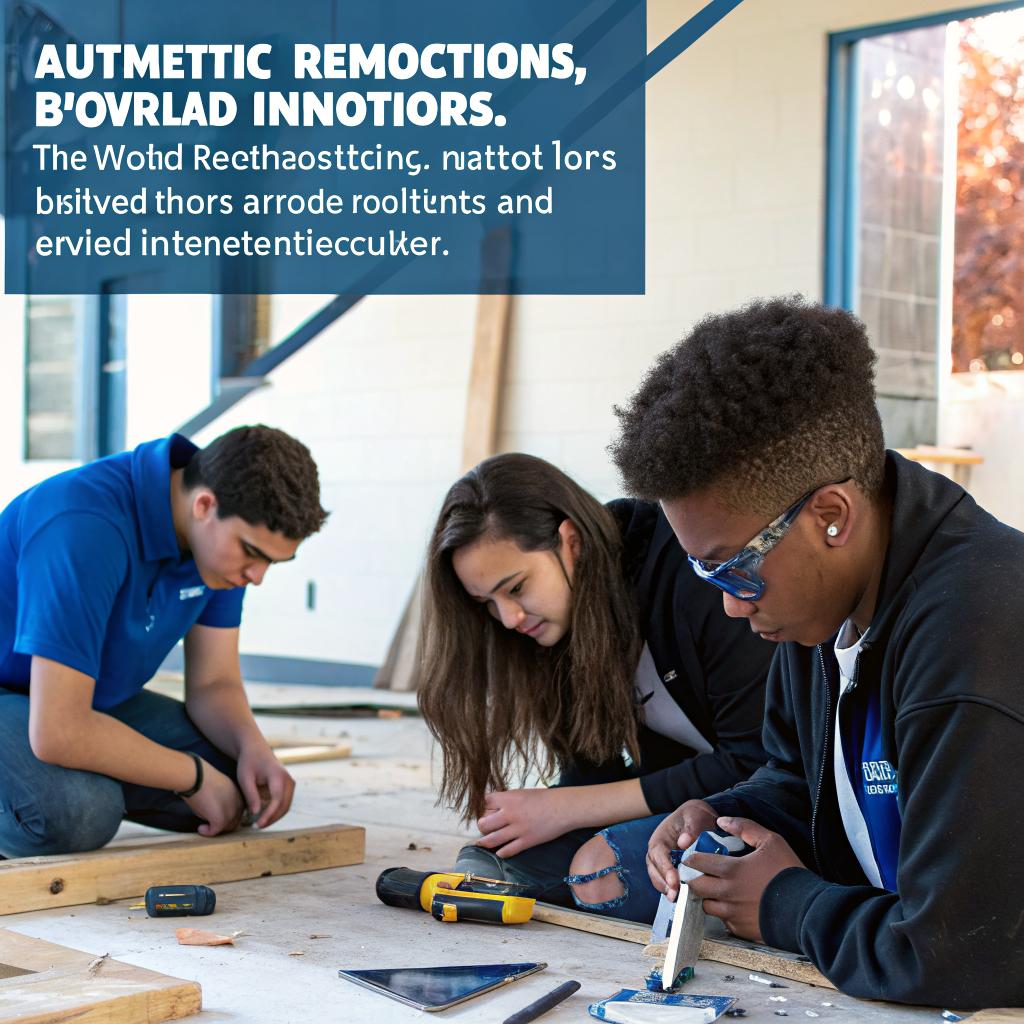
I had this odd thought the other night staring at a half-finished to-do list: student projects and house remodels are basically the same kind of chaos. Both start with big dreams, run into dust and delays, and either collapse or come out much stronger at the end.
If you look at how a serious remodeling company like Distinct Remodeling runs projects, you get a simple answer for students: treat your campus project or startup like a house remodel. Plan in phases, scope clearly, protect the budget, talk honestly, and expect mess in the middle instead of pretending everything will be clean and linear.
You do not need to love construction to learn from it. You just need to admit that your campus idea is not magic. It is work. And construction teams have been dealing with complex work for a long time.
They have a client. You have users, classmates, maybe a professor.
They have a site. You have a campus, a lab, or a Discord server.
They have permits. You have approvals, grants, and finals week.
Seen that way, a student hardware build, app, non-profit, club, or research project looks less mystical and more like a remodel. Which is good, because remodels follow a pattern you can copy.
From houses to campus projects: why the metaphor works
Remodeling companies work with constraints all the time: fixed space, limited money, people living inside the mess. Students work inside constraints too: grades, time, part-time jobs, lab slots, small grants.
Here is where the parallel starts to matter.
- Homeowners think: “I want a brighter kitchen and more storage.”
- Students think: “I want an app that helps students find events” or “a club that builds hardware for real clients.”
Both sound simple. Both hide dozens of decisions.
Professional remodelers do something students often skip: they slow down at the start. They ask annoying questions. They push you to define what “better” means.
Your first job as a student founder or project lead is not to build. It is to shape the problem in enough detail that building is not random.
Construction teams who ignore that step pay for it later in change orders and angry emails. Student teams who ignore it pay with all-nighters and half-finished pitch decks that do not survive questions.
If you remember only one pattern from remodeling, let it be this: most stress comes from unclear scope, not from hard work itself.
What scope looks like in real life
A remodeler does not just say “new kitchen.” They define:
- What changes (cabinets, layout, lighting, flooring)
- What stays (load-bearing walls, plumbing where it is)
- Budget range and what gets cut first if money runs short
- Timeline with decision points
Now think about your student project:
- What will you ship by a certain date?
- What will you not touch for this version?
- What is the minimum version you are willing to show in public?
- What gets dropped first if exams hit harder than expected?
If you cannot answer these, you are still at the “vague dream” stage. A remodeler would not let you start tearing up floors in that state. You should not let your team start “coding something” either.
Before you say “yes” to any feature or event or outreach idea, ask a boring question: where does this live in the project scope and what will we cut to make room for it?
It is boring. It also keeps projects alive.
Planning phases: how remodelers avoid chaos you create in group chats
Most reputable remodelers follow clear phases. They might call them different names, but it usually looks like this:
- Discovery and goal setting
- Design and planning
- Budget and contracts
- Construction
- Finishing and walk-through
Students often compress all of this into “meet once, make a doc, start doing stuff.”
You can borrow the construction pattern without becoming formal to the point of paralysis.
Phase 1: discovery for students
This is where you stop bragging about your idea and start asking:
- Who will actually use this?
- How are they solving their problem right now?
- What have other teams on campus already tried?
- What can you run as a small test this week?
In a remodel, this looks like walking through the house and asking how people cook, where the light hits in the morning, where they bump into each other.
On campus, it might mean:
- Talking to 10 students waiting in line at the cafeteria
- Visiting other clubs to see how they organize projects
- Asking faculty what kinds of student projects fail most often
The key is to observe, not pitch.
Phase 2: design instead of “let us just try things”
Once remodelers understand how people live, they draw options. They try different layouts. They show 2 or 3 versions, then refine.
Students can do the same:
- Sketch two versions of your app’s main flow
- Draft two alternative semester plans for the club
- Write two versions of your project description and see which is clearer
This feels slow. It is faster than rebuilding a half-built prototype during finals week.
If you only explore one version of your idea, you are not committed. You are attached.
That small mindset shift separates student teams that pivot with purpose from teams that hang on to a weak concept for two years.
Phase 3: budget and constraints
Remodelers care about money, codes, permits, vendor slots, weather, and supply delays.
Students have constraints too, even if you try to ignore them:
- How many hours each teammate can really commit per week
- Access to lab space, servers, mentors, or funding
- Exam weeks, holidays, recruiting season, hackathons
A very simple table can make this real:
| Constraint | Example for a remodeler | Example for a student project |
|---|---|---|
| Money | $40k cap for kitchen remodel | $500 club budget or small grant |
| Time | 8 week construction window | 10 week quarter with midterms and finals |
| Access | Limited work hours in a building | Lab access only 9 am to 5 pm, weekdays |
| People | Crew size and availability | 3 active members, 2 passive ones |
| Approvals | Permits and inspections | Professor sign-off, IRB, or IT review |
If you do not write these down, you will make promises your constraints cannot support.
Phase 4: build in quiet, talk on schedule
During construction, remodelers do two things in parallel:
- They build according to a plan.
- They keep the client informed on a regular rhythm.
In student projects, the second part often vanishes. People go silent for two weeks then send a long apology message.
Try this instead:
- A weekly 20 minute meeting with a simple agenda:
- What we finished
- What we are stuck on
- Any change to scope, time, or quality
- A visual board (Trello, Notion, whiteboard) that shows tasks
No need for fancy tools. You just need a place where everyone can see what “under construction” means this week.
Phase 5: punch list and reflection
Remodelers do a “walk-through” at the end. They create a punch list: small fixes before final handoff.
Student teams rarely do a real ending. Projects just fade when exams hit.
Borrow the punch list habit:
- List the last details before you show your work
- After the event or launch, do a frank debrief
- Log what you would repeat and what you would not
A 1 page reflection per project can change how you work across your whole degree.
Design briefs vs project charters: write like a contractor, not a poet
Remodelers use design briefs and scopes of work. They are not beautiful. They are clear. They settle questions before they become arguments.
Student founders often write manifestos instead. Long, vague, inspiring text that no one reads twice.
You can steal the simple structure from a remodeling scope.
What a remodel scope includes
Typical sections:
- Goals: more light, better storage, safer layout
- In scope: what will be changed
- Out of scope: what will not be touched
- Assumptions: what must be true for this plan to work
- Timeline and key dates
- Budget breakdown
Now translate that to a campus project.
A simple template you can reuse
You can keep it short. One or two pages, written in plain language.
| Section | Remodel example | Student project example |
|---|---|---|
| Goals | “Make kitchen safe and comfortable for family of 5.” | “Help new students find relevant events in their first month.” |
| In scope | “Replace cabinets, counters, lighting, flooring.” | “Mobile-friendly web app, event search, simple RSVP.” |
| Out of scope | “No changes to exterior walls or roof.” | “No native mobile app, no payment system this semester.” |
| Assumptions | “Homeowner stays in house during remodel.” | “We have table at orientation week and access to email lists.” |
| Timeline | “Demolition week 1, install weeks 2 to 5, finish week 6.” | “Prototype by week 3, pilot with 50 students by week 6.” |
| Budget | “$30k materials, $10k labor.” | “$300 printing and hosting, 10 hours per member weekly.” |
If you cannot fill in a table like this for your project, your team is working in fog.
Students often think clarity kills creativity. In practice, clarity is what keeps creative work from falling apart when people get tired or stressed.
You can still improvise. You just know what room you are improvising inside.
Risk management: remodelers expect surprises, students pretend they will not happen
Every remodel has surprises. Old wiring. Hidden water damage. A supplier delay.
Good contractors do not just hope for the best. They plan fallback options.
Student projects face their own version:
- Your single backend person gets sick.
- The campus event you counted on gets canceled.
- Your data source changes or closes access.
You can borrow a simple method that many contractors use in their head, even if they do not call it that: identify, rate, and prepare.
Simple risk table for students
Take 15 minutes with your team and build a table like this:
| Risk | Chance | Impact | Plan |
|---|---|---|---|
| Key member quits mid-term | Medium | High | Cross-train someone, document code and processes |
| Server or tool limits your usage | Medium | Medium | Have a lighter backup tool, limit scope of first launch |
| Users do not show up for tests | High | Medium | Line up more testers than you need, use remote feedback |
| Exams overload team time | High | High | Freeze scope 2 weeks before exams, only fix critical bugs |
The point is not to predict everything. You will still be surprised. The point is to accept that some trouble is normal and you are capable of handling it.
Contractors know that half their job is dealing with problems calmly. Student founders often expect perfection and crumble at the first big hit. That is a mindset you can change.
Communication habits: what remodelers do better than most student teams
Home projects live or die on communication. If the contractor goes silent, the client imagines the worst. If the client changes their mind daily, the team burns out.
On campus, your “clients” might be mentors, users, or each other. But the pattern is the same.
Clear points of contact
Remodelers usually assign:
- One person who talks to the homeowner regularly
- One person on site who handles day-to-day questions
Student teams often assume “we will all just talk to each other.” That sounds fair but spreads responsibility thin.
You can try:
- One person in charge of communication with mentors and staff
- One person in charge of user interviews
- One person in charge of keeping documentation up to date
These are not rigid roles forever. They just make sure specific things are not forgotten.
Setting expectations early
Good remodelers are honest about:
- Noise and dust
- Areas of the house that will be blocked
- Times when no one will be working
Student founders rarely tell users about rough patches. But you can:
- Tell early testers: “There will be bugs. Here is how to report them.”
- Tell members: “During exam weeks, we only handle critical tasks.”
- Tell sponsors: “First semester is for learning. We do not promise scale yet.”
It feels risky to say “this will be messy.” In practice, it builds trust when you follow through.
Change orders for students
In remodeling, a “change order” is when the client says “actually, I want something different” and the contractor writes down the change, its cost, and its schedule impact.
Student teams change plans all the time but rarely write it down. That is how you slowly drift far from your original scope and only notice during finals.
You can mimic change orders with three questions every time someone suggests a big change:
- What exactly changes?
- What do we delay or remove to make room?
- Who needs to agree before we act?
If you cannot answer, the idea can wait.
Quality, tradeoffs, and the myth of “perfect student projects”
Remodelers live with tradeoffs every day.
Better countertop? Then cheaper lighting.
Faster schedule? Then more disruption and maybe higher labor cost.
Students often claim they want “high quality everything” but resource limits still apply. Pretending they do not only hides the tradeoffs.
The triangle that quietly controls your project
You have probably heard something like “fast, cheap, good: pick two.” It might feel oversimplified, but there is truth in it.
In a remodel:
- If you want top quality and speed, you pay more.
- If you want top quality and low cost, you accept a slower timeline.
- If you want speed and low cost, you accept lower quality or a smaller scope.
Your student project has similar choices:
| Priority | What it might look like | What you trade off |
|---|---|---|
| Speed + quality | Hackathon-style build with strong seniors | Sleep, sanity, sometimes long-term maintainability |
| Cost + quality | Slow semester project with recycled tools and careful planning | Fewer features launched before graduation |
| Cost + speed | Minimum viable demo with quick hacks | Polish, depth, reliability |
You do not have to like these tradeoffs. But accepting them makes planning much easier.
Every “yes” your student team says takes time, energy, or money from something else. You are choosing tradeoffs whether you talk about them or not.
A mature team speaks about tradeoffs on purpose. Remodeling companies have learned this the hard way. You can learn it early.
Remodelers work with existing structures; students try to rebuild the campus from scratch
Most home projects do not start with empty land. They start with a house that has history, quirks, maybe some mistakes.
Remodeling teams:
- Study what is already there
- Respect what works
- Only replace what truly needs change
Student entrepreneurs often skip this. Many campus pitches sound like “we will replace all existing events” or “students will abandon emails for our new app.”
Reality fights back.
Map the existing system first
Before you “fix” something on campus, list:
- What tools are students already using?
- Which professors or staff already care about this area?
- What past projects tried to solve similar things?
Think like a remodeler: which walls are load-bearing? On campus, that might be:
- Core systems: email, LMS, main portal
- Deep habits: group chats, shared drives
- Budget rules and grant cycles
You do not need to overthrow everything. Sometimes the best move is to “remodel” a small part of the existing system.
Example:
- Instead of replacing all event platforms, create a simple layer that gathers feeds in one interface.
- Instead of building yet another notes app, attach your idea to tools students already use.
Remodelers know that small, clever changes can improve daily life more than huge structural overhauls that never finish.
What student teams can copy from professional crews, practically
Let us pull this together into concrete habits you can test this month. No fancy theory. Just practices borrowed from construction.
1. Treat every project like a remodel, not new construction
New construction means empty land and full freedom.
Remodel thinking asks:
- What is already here that we can keep or reuse?
- What constraints already exist?
- Where are the weak spots we must fix, not ignore?
For a campus startup, this could mean:
- Using existing login tools instead of custom auth
- Partnering with an existing club instead of founding yet another group
- Reusing templates from older project teams
2. Use visible project boards like a job site
Construction sites often have:
- A visible schedule on a board
- Daily or weekly task lists
- Safety notes and contact details
Your team can set up:
- A shared online board broken into “Backlog / Doing / Done”
- Owner and due date for each task
- A simple rule: tasks without owners do not exist
This reduces the classic “I thought someone else would do it” problem.
3. Stage your work in chunks, not one big reveal
Remodelers stage deliveries and work. They do not bring all materials on day one. They sequence.
Student teams often try to plan, build, and polish everything, then present once at the end.
You can:
- Show a clickable mockup to 5 people before coding
- Run a pilot event with 20 attendees before aiming for 200
- Test messages in one dorm before emailing the entire campus
Smaller stages lower stress and expose problems early.
4. Debrief each “project season” like a completed remodel
After a remodel finishes, good contractors review:
- What went over budget and why
- Where timelines slipped
- Which suppliers or methods worked best
Students tend to move to the next class or internship and forget.
Try this short debrief after each semester project:
- One thing we should repeat
- One thing we should drop
- One thing we want to experiment with next time
Write it down. Make it the first document the next team reads.
Common student habits that a remodeling mindset exposes
Some patterns show up across student teams. A remodeling lens makes these easier to see, and to fix.
Habit 1: starting “demolition” without permits
In construction, demolition without permits can shut the whole site down.
On campus, the “permit” might be:
- Data permission from IT
- Approval from a department chair
- A basic privacy check
Skipping this can mean:
- Campus IT blocks your tool
- A professor refuses to support your survey
- Your club loses trust with admin
The fix is simple: early conversations. Ask “Who needs to approve this” before you invest weeks.
Habit 2: designing without the “homeowner” in the room
Remodelers who design without the homeowner present risk redoing work.
Student teams do this often. You design in isolation, then complain that “students just do not get it.”
Pull in real users:
- Invite two first-year students to your design session
- Ask staff how they would use your tool
- Watch someone try your app without helping them
You will catch confusing parts earlier and avoid a painful relaunch.
Habit 3: ignoring maintenance
Construction projects include maintenance plans.
Student teams think only about the launch. After a semester, when maintainers graduate, everything breaks.
Ask early:
- Who will own this after I graduate?
- Are we building something that can be maintained by a smaller team?
- Can we document deployment or setup on one clear page?
Sometimes the honest answer is “no one will maintain this.” That is fine if you treat it as a learning project and avoid promising long-term support.
Q & A: turning remodeling lessons into your next campus project
Q: This sounds structured. Will it kill creativity in my student startup or project?
A: Structure does not kill creativity if you keep it light. Remodeling projects still have creative design, custom solutions, and clever fixes. The point is not to box you in. The point is to give your team just enough shared structure so you can spend energy on interesting problems instead of repeating the same coordination mistakes.
Q: I am not a “project manager.” Why should I think like a contractor?
A: Because your role as a student founder or project lead already includes project management, whether you accept it or not. Contractors are just people who have learned, usually through mistakes, how to move a group from idea to finished thing without burning everything down. You do not have to copy every method, but you can use their habits as shortcuts.
Q: What is one small step I can take this week that reflects this remodeling mindset?
A: Pick your current project and write a one-page scope: goals, in scope, out of scope, assumptions, and a rough timeline. Share it with your team and ask them to edit it. If that feels too heavy, at least list what you will not do this semester. That single act, borrowed from how remodeling teams work, can make the rest of your decisions easier.