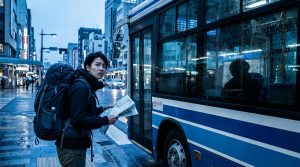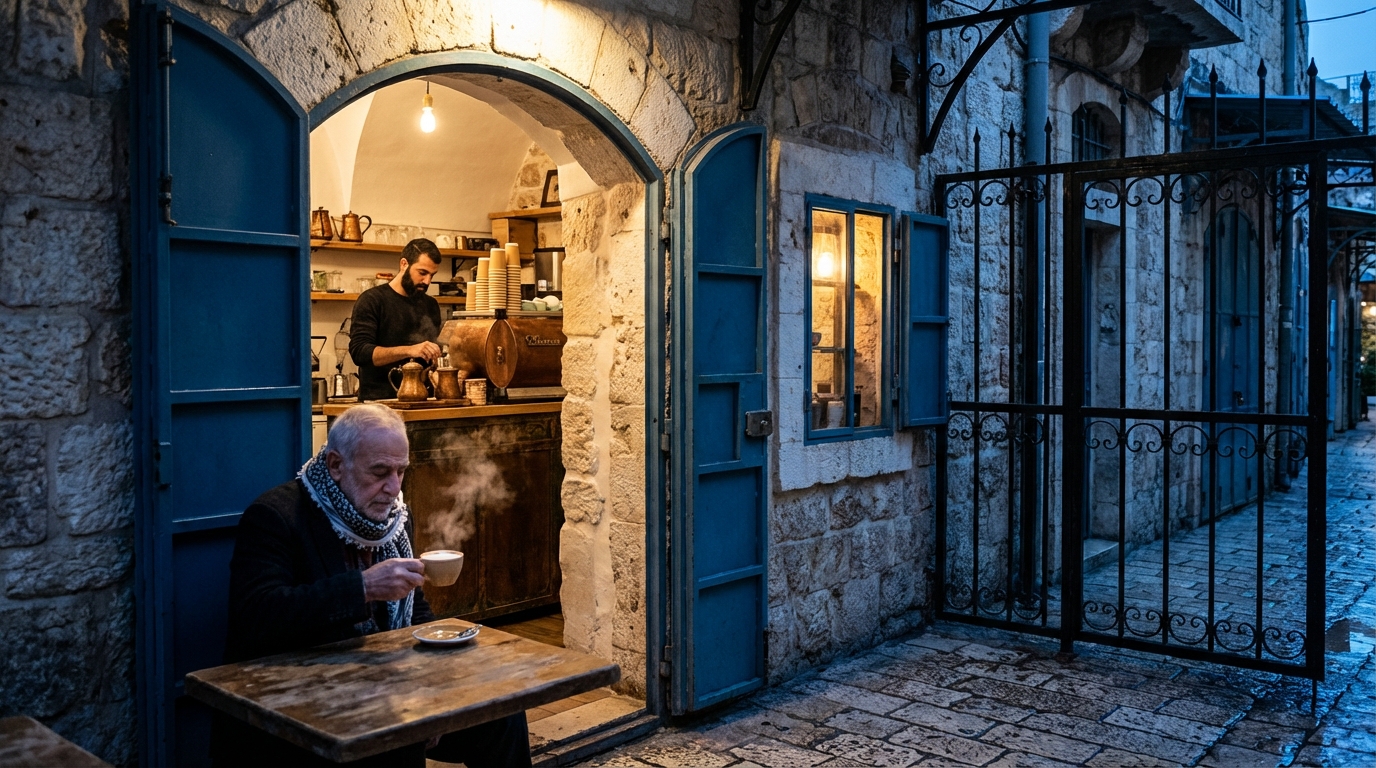
I had this strange moment walking near Jaffa Gate at 8 a.m.: the streets were already filling with tour groups, but every place they entered looked identical. Same menus, same decor, same soundtrack. I realized most visitors never see the Jerusalem that students, artists, and early‑stage founders hang out in at all.
Here is the short answer: Jerusalem has a parallel coffee universe that most tourists never touch. If you step just a few streets off the postcard routes, you find small places where baristas know half the customers by name, the Wi‑Fi actually works, people sketch product ideas on napkins, and conversations jump from Talmud to TikTok to seed funding in about three minutes.
What makes a “hidden gem” coffee shop in Jerusalem?
At some point during a long afternoon “studying” for an exam, I realized my favorite coffee spots all had the same quiet pattern. They were not the most beautiful, or the most Instagrammable. They were the ones where I could plug in my laptop, think clearly, and not feel rushed while spending 18 shekels on a cappuccino that tasted like someone cared.
A hidden gem in Jerusalem is usually one turn off the main road and three steps away from the obvious choice.
So what pushes a cafe into this category?
- It is not on the main tourist streets, or if it is, the sign does not scream at you.
- Students, freelancers, and early‑stage founders treat it as a second home.
- The staff are relaxed about people staying with laptops for hours.
- The coffee is at least “good enough,” and in a few spots, genuinely excellent.
- You hear more Hebrew, Arabic, and English blended together than tour‑bus English.
Jerusalem has a reputation for being intense and heavy, but the cafe layer is calmer. It is the buffer zone where religious students compare commentaries, design students edit portfolios, and someone in the corner is quietly negotiating a prototype quote on WhatsApp.
Central vs side‑street: where you actually want to sit
If you walk only along Jaffa Road and the Old City, you will see chains with big logos and photo menus. They have their role, but they are not where the interesting conversations happen.
Here is a simple way to think about it:
| Area type | What tourists see | Where hidden gems sit |
|---|---|---|
| Old City & Jaffa Gate | Tea stands, souvenir cafes, crowded spots with group menus | Small back‑alley places with 3-4 tables, mostly locals |
| Ben Yehuda & Zion Square | Chains, loud music, fast turnover | Side streets like Shlomtzion HaMalka, Hillel, Yoel Moshe Salomon |
| German Colony & Emek Refaim | Brunch spots packed on Fridays | Smaller side‑street cafes on the parallel roads |
| Mahane Yehuda Market | Bars and dessert stalls near the main aisles | Corners at the edges of the shuk and nearby residential streets |
Once you know this pattern, you start to see the gaps between the tour routes. That is where the good coffee lives.
Hidden gems around the city center and Ben Yehuda
This is the area where most visitors stay, usually in walking distance from the light rail. The trick is not to sit where everyone else already is.
If you can hear three different languages at the next table and at least one laptop fan humming, you are probably in the right place.
1. The quiet study hole behind the main drag
Just a few minutes from Ben Yehuda, there is a pattern of small, slightly cramped cafes that feel like they borrowed their chairs from a local synagogue or art studio. These are the places where exams are crammed for, relationships are debriefed, and someone is trying to debug code without crying.
What to expect:
- Tables close together, but somehow still calm.
- A mix of religious and secular students working side by side.
- Staff who understand the phrase “I will order food in a bit, I just need to send this email.”
- Coffee that ranges from “solid” to “wow, this person really cares about extraction time.”
You can usually spot these cafes by looking one floor up or down. A staircase to a basement or a small balcony is a good sign. Tourists tend to avoid stairs unless a guide tells them to climb.
If you are working on a project, bring:
- Headphones: the background noise is great, the random phone calls less so.
- A power strip adapter: outlets exist, but sharing is a sport.
- Cash or a local card app: small spots sometimes prefer not to handle foreign cards.
2. The “artist corner” cafe where sketches meet spreadsheets
Walk north from the main drag and you start to hit streets where the rent is a bit cheaper. Here, tiny cafes share blocks with vintage shops and random galleries that open “when the artist feels like it.”
In one of these spots, I watched a design student pitch a logo concept to a founder who clearly had not slept. Next to them, a guy in a kippah was editing a film script. None of them looked surprised that all of this was happening in the same room.
Typical signs you have found an artist‑leaning gem:
- Handwritten signs or chalkboards with misspelled English.
- Rotating art on the walls that might also be for sale.
- A small bookshelf with mismatched paperbacks and a few philosophy texts.
- A coffee menu that includes at least one “house special” drink.
These places feel less like businesses and more like someone’s living room that accidentally acquired a commercial license.
If you are into building things, this environment is perfect. You can pull out a sketchbook without feeling self‑conscious. Ask the barista what they are working on; there is a decent chance they are in a band, a ceramics class, or a coding bootcamp.
Mahane Yehuda and the outskirts of the shuk
Mahane Yehuda (the shuk) has become a kind of open‑air food court during the day and a bar corridor at night. Tourists flood the central aisles, take photos of spices, and sit at the very visible cafes on the main cross streets.
The coffee spots that students favor usually sit just far enough away that the noise drops by half.
3. Early‑morning espresso near the produce stalls
If you get to the shuk early, before the crowds, you see the city stretching. Vegetables are still being unloaded. Bread is still warm. This is when the market coffee bars feel local.
Look for:
- Small counters with a few stools instead of big seating areas.
- Customers who greet each other by name.
- Baristas who pull espresso almost without speaking.
- Simple pastries that actually match what locals eat.
For someone obsessed with productivity, this time slot is gold. You can drink your coffee standing at the bar, review your task list, and be out before the tourist groups arrive.
If you need to sit and work, though, move a bit away from the inner shuk. The Wi‑Fi signal tends to suffer under metal roofs and crowds.
4. The “edge of the shuk” laptop zone
On the streets surrounding the market, there are cafes that quietly cater to freelancers and remote workers. These places are usually not the ones with the loud music and neon signs. They have:
- Tables that are big enough to share between two laptops.
- Multiple outlets, often near the walls or under benches.
- Menus that run on autopilot so nobody hovers over you.
- A mix of customers: someone in a suit, someone in sandals, someone on a Zoom call.
If you see more MacBooks than cameras, you have stepped out of tourist territory and into local work mode.
These cafes are strong candidates for deep work. The sound level sits in that strange sweet spot where you could record a podcast in the corner, but you could also fall asleep by accident.
One strategy that works well:
- Walk a full loop around the outside of Mahane Yehuda without sitting anywhere.
- Note which places have plug sockets visible from the street.
- Check how many people are sitting alone with laptops or notebooks.
- Pick the one where no server has tried to grab you off the street.
Cafes that lure aggressively tend to focus on quick tourist turnover, not quiet work sessions.
The German Colony and surrounding side streets
Emek Refaim is on every guide’s list, mostly for its brunch spots. Those are fine, but they get crowded and expensive. The more interesting cafes for students and young founders sit a street or two away.
5. Residential‑block cafes with “third place” energy
In the blocks around Emek Refaim, you find small corners with a few tables inside and some outside, shaded by trees. These cafes serve local residents who treat them as a third place: not home, not work, but that place in between where you read, think, or meet.
Common traits:
- Regulars at every time slot: the morning newspaper reader, the afternoon parent, the evening student.
- Menus with basic but honest food: toast, salads, maybe shakshuka, nothing too staged for Instagram.
- Children passing through without staff panicking.
- Quiet background music, if any.
If you walk here during exam season, you will see open laptops, highlighters, and what I call “deadline posture”, that hunched position that says “this PDF is my enemy.” It is a comforting sight if you are in the same state.
These places make you forget you are in a “famous city” and remind you that you are just in a neighborhood where people live.
For anyone building a campus project or startup, this environment can be great for partner meetings. You can talk through numbers without shouting, but it does not feel as formal as a boardroom or co‑working space.
6. The “I will just grab a coffee” trap that becomes three hours of focus
There is a particular category of cafe around the German Colony that looks too small to be practical for work. You step in to “grab something quick”, and then three hours later, your laptop battery is at 11 percent and you have a draft business model, half a literature review, and seven browser tabs about legal structures.
Why this happens:
- The small size reduces background distractions; your world shrinks to your screen and your cup.
- The staff are often students themselves, so they quietly refill water and leave you alone.
- The seating is just comfortable enough to sit in, not cozy enough to nap.
- The mix of Hebrew and English around you feels like white noise.
These tiny spots can be your secret weapon if you are trying to push through a stubborn task. Just bring a battery pack. Outlets can be rare in older buildings.
Near campuses: where student energy leaks into the menu
If you want to understand any city’s younger crowd, find the cafes near the main universities. Jerusalem is no different.
The spaces near the Hebrew University campuses, Bezalel Academy, and other colleges have their own flavor. They absorb exam schedules, studio deadlines, and side‑project meetings.
7. The Hebrew U orbit: Givat Ram and Mount Scopus
Around these campuses, cafes have to adapt to some predictable patterns:
- Huge spikes before midterms and finals.
- Groups arguing over group projects.
- People doing online exams and praying the Wi‑Fi holds.
- Waves of students trading lecture notes and coffee recommendations.
You will find both chains and independent places here, but the hidden gems are usually the spaces slightly too far for someone on a 10‑minute break, and just close enough for someone with a two‑hour gap between lectures.
These spots tend to have:
- Tables large enough for group work.
- Board games or card decks for when people give up on studying.
- Notice boards with tutoring offers, apartment listings, and club posters.
- Staff who do not panic if someone asks for “water and Wi‑Fi” before ordering food.
Campus‑adjacent cafes are where ideas go when the library feels too heavy and the dorm feels too distracting.
If you are just visiting but interested in the local student scene, spending a few hours in one of these cafes tells you more than walking through the campus gate with a camera.
8. Bezalel and the creative cluster
Where there are design students, there are cafes with half‑finished mood boards on the tables. Near Bezalel Academy, you can feel the creative pressure in the air.
Typical features:
- People critiquing each other’s projects over Americanos.
- Occasional informal “crits” happening at the next table.
- Sketchbooks and laptops sharing table space.
- Posters for exhibitions and small shows next to the bathroom door.
From an outside perspective, these places are like watching open‑source creativity in real time. You can quietly learn how people think about typography, visual hierarchy, or user flows, just by listening.
If you are building anything that touches design or user experience, this is a useful environment. Just do not interrupt someone who is clearly wrestling with a deadline. Respect the quiet panic.
The Old City and just outside the walls
Most visitors experience the Old City as a sequence of gates, alleys, and holy sites. Coffee is often an afterthought, served as an accessory to souvenirs. Still, there are pockets where the rhythm slows down and local life appears.
9. Family‑run corners with three tables and strong coffee
Loop away from the main tourist arteries and you begin to see smaller places. No big signs, no laminated menus with 15 languages. Just a counter, a few chairs, and one person running everything.
Clues you have found a real local spot:
- No one approaches you with “special price, my friend.”
- The menu is short, sometimes just “coffee, tea, juice, something sweet.”
- You see actual neighbors greeting each other.
- Prices are written in Hebrew or Arabic first, English second or not at all.
The Old City looks like a museum to most tourists, but these tiny cafes remind you that it is also a neighborhood.
Do not expect laptop‑friendly conditions here. Think of these spots as places to reset your head after sensory overload, not as offices. Order something simple, sit, listen to the background conversation, and watch people use the alley not as a “route” but as their street.
10. Outside the walls: where pilgrims rarely cross
On the streets just outside some of the Old City gates, there are cafes that serve people on their way to work, not on their way to the Kotel. These places sit in small clusters near bus stops, small shops, and residential entrances.
They are useful for:
- Short breaks between sightseeing chunks.
- Meeting a local friend who does not want to navigate the Old City itself.
- Checking maps, answering messages, and resetting your battery (mental and phone).
The coffee quality swings from “functional” to “quite good”, but the main value is the pause. You step out of the emotional intensity and noise of the Old City and into a scene that feels more like any other neighborhood.
How to spot a hidden gem on your own
By this point, you might be thinking: “This is nice, but I do not have friends in Jerusalem sending me cafe lists. How do I find my own hidden spots?”
The good news: hidden gems often reveal themselves through simple signals. You just need to train your attention a bit.
Signal 1: Who is sitting there at 10 a.m. on a weekday?
If a cafe at 10 a.m. on a Tuesday is full of:
- People with backpacks and laptops.
- Individuals reading books without any rush.
- Small business meetings with notebooks, not just phones.
Then you have probably found a semi‑local hub.
If at that same time it is full of:
- Large groups following one guide.
- People looking around like they might miss a bus.
- Only cameras on the tables, no notebooks or laptops.
Then it is most likely a tourist‑first spot. That is not bad; it just means you will probably not get that quiet “I could be a temporary local here” feeling.
Signal 2: How many languages are on the menu?
Here is a rough rule of thumb:
| Menu style | What it usually means |
|---|---|
| Hebrew + Arabic, English as small subtitles | Primarily local customers, tourists welcome but not targeted |
| Hebrew + English, no pictures | Mixed local / foreign student / freelance crowd |
| Many languages + big photos | Tour buses, quick service, less “hang out and work” energy |
Menus tell you who a place expects to serve, long before anyone speaks to you.
This is not absolute, but it is a good filter when you are tired and just want a quiet table.
Signal 3: How does the staff react to your laptop?
Walk in with your bag and laptop slightly visible. Before you sit, look around. Do you already see other people working? If yes, you are probably safe.
If no, ask politely: “Is it OK to sit and work for a bit?” The response tells you a lot.
- If they say “of course” and maybe point you toward an outlet, you have found a laptop‑friendly place.
- If they hesitate and ask how long, they probably rely on quick table turnover.
- If they say no firmly, do not push it. Find another spot.
You can also observe how staff behave when someone finishes their drink. Do they rush over with a bill, or do they let the person sit with an empty cup for a while? That gap is the invisible “time tax” of each cafe.
Signal 4: Sound level and seating layout
Two quick checks:
- Could you comfortably take a quiet phone call here without shouting?
- Are tables set up for pairs and individuals, or only big groups?
If the music is so loud that everyone is leaning forward to talk, this place is more about atmosphere than conversation or deep work.
If there are many small tables against the walls, it is more likely to be a hangout and work space.
Cafe culture as a window into Jerusalem’s student and startup scene
When I first started paying attention to where people worked, I realized that for many students in Jerusalem, the cafe is not just a caffeine station. It is part of the study and building infrastructure.
Libraries are for silence and discipline; cafes are for ideas and momentum.
In these hidden spots, you see:
- Students from different faculties helping each other: computer science explaining a spreadsheet to art history, and vice versa.
- Small teams sketching out app mockups on napkins or Figma screens.
- People pitching projects in low‑pressure settings before heading into more formal meetings.
- Freelancers mentoring students informally over coffee.
If you are visiting and care about campus trends or startup culture, these cafes are where you can listen without intruding.
Cafe etiquette if you want to blend in
To move through these spaces without feeling like “the tourist at the wrong table,” a few simple habits help:
- Order at the counter if it is not obvious that there is table service.
- Do not occupy the largest table if you are alone and it is busy.
- During peak lunch hours, consider keeping your laptop footprint small.
- If you plan to stay long, order more than one item across the time span.
- Ask for the Wi‑Fi password only after ordering something.
None of this is strict law, but it signals respect. In a small cafe, one person’s behavior can change the room.
Why tourists miss these places in the first place
Tourist routes reward speed and certainty. When you have a short trip, you want to “not make a mistake” with your limited time. That pushes people toward:
- Well‑known chains they recognize from elsewhere.
- Places with big signs in their language.
- Spots listed in the first page of search results.
Hidden gems, by definition, are the opposite of that. They feel slightly ambiguous at first glance. You might not be 100 percent sure they will have an English menu, or that anyone else inside speaks your language fluently.
The tradeoff is clear:
| Tourist‑standard cafe | Hidden‑gem local cafe |
|---|---|
| Low uncertainty, predictable menu | Small uncertainty, more character |
| Staff trained for fast turnover | Staff relaxed about longer stays |
| Many people like you | People who actually live and study here |
If you can accept a little uncertainty, you unlock a richer, calmer version of Jerusalem.
Practical route ideas for a “hidden cafes” day
If you want to design a day around this concept, you can structure it like a mini coffee crawl that also shows you the city students actually inhabit.
Think of it as a lab: you are testing how the city feels through caffeine and Wi‑Fi.
Route 1: Center city focus day
Morning:
- Start in a quiet cafe near but not on Ben Yehuda. Use this session for reading or light planning.
Late morning:
- Walk toward Mahane Yehuda, avoiding the main tourist streets, and stop at a small side‑street cafe that looks laptop‑friendly.
Afternoon:
- Find an “edge of the shuk” spot to work, watch local lunch rhythm, and maybe talk to someone about which university they attend.
Evening:
- Head back toward the center and pick a small artist‑leaning cafe. Journal your impressions or sort your photos while hearing local conversations in the background.
Route 2: Old City to German Colony decompression
Morning:
- Walk through the Old City, but make time for one family‑run corner cafe off the main alleys. Order something simple, sit, and just observe.
Midday:
- Exit through one of the less crowded gates and find a cafe just outside the walls. Use this as your transition space back to the modern city.
Afternoon:
- Take a bus or walk toward the German Colony and aim for a residential‑block cafe. This is your deep‑thinking slot: notes, reflections, or planning.
Evening:
- Finish in a tiny “I will just grab a coffee” spot that quietly traps you into another focused session. Let your brain land.
By the end of a day like this, you have not just seen the city; you have sampled how it works for the people who live, study, and build here.
The small, repeatable trick
During a lecture on urban planning, I realized that the same trick works in almost any city: follow the students and side streets, not the billboards. Jerusalem just adds its own twist with history at every corner and three major religions sharing Wi‑Fi.
The pattern is simple:
- Avoid the loudest, most obvious cafes on the main tourist paths.
- Look one or two streets away, or one floor up/down.
- Check who the regulars look like: tourists, or people on laptops and with books.
- Be polite, order slowly, and give yourself permission to stay long enough to feel the room.
Do that, and you start to see a different Jerusalem. Not just stones and stories, but a live city where a barista might also be studying philosophy, a neighbor might be launching a side project, and the person next to you is quietly stress‑refreshing their grades portal between sips.