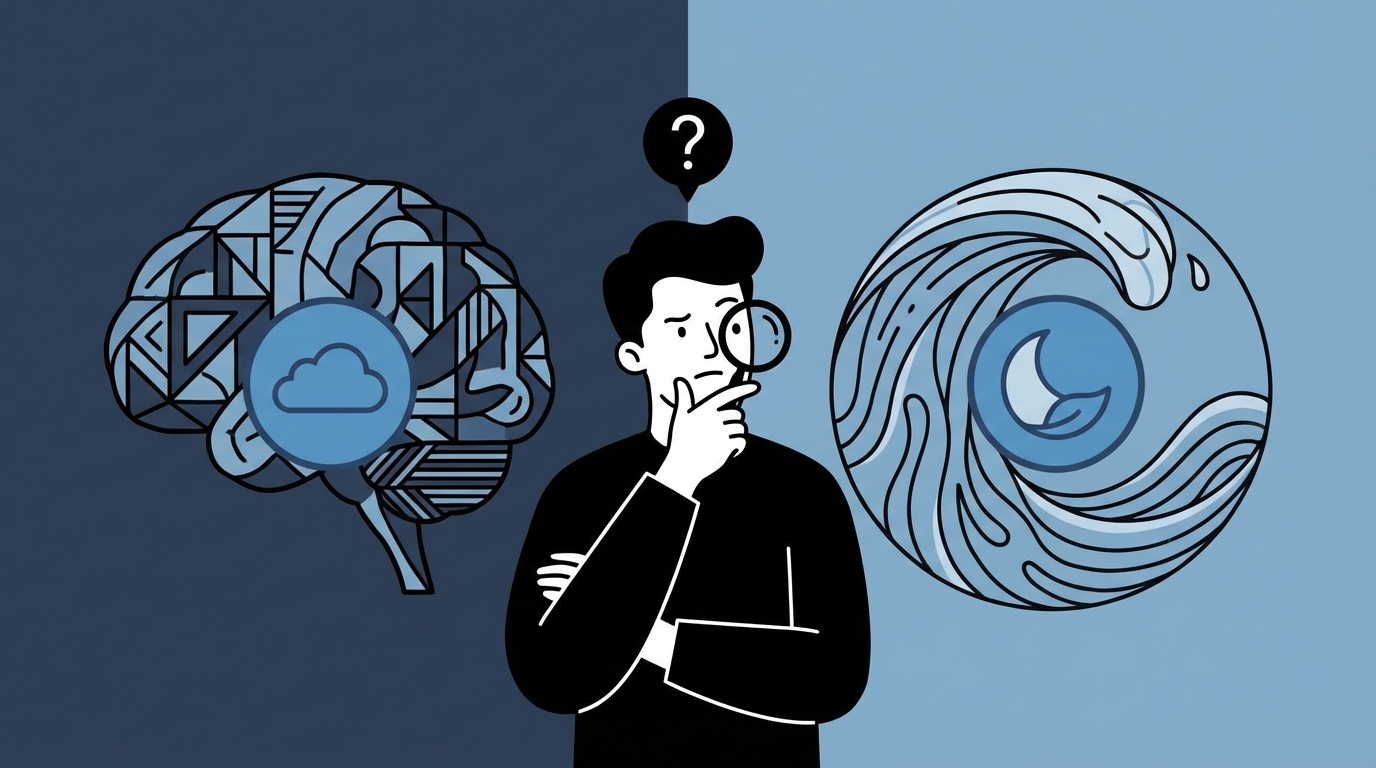
I used to think meditation apps were just soft music, pastel gradients, and people trying to “manifest” better grades instead of actually studying. Then one week before exams, my brain felt like 47 tabs open on Chrome, and I downloaded Headspace and Calm “just to prove they do not work.”
TL;DR: Headspace is better if you want structure, habit-building, and a coach-like voice guiding you; Calm feels better if you want variety, sleep help, and a more relaxed, pick-what-you-like vibe. If you are skeptical, start with Headspace for learning meditation as a skill, and use Calm as your “sleep and chill” toolkit on the side.
What Skeptics Actually Want From Meditation Apps
In a random Tuesday lecture, I realized half the class “meditates” by scrolling TikTok on silent and calling it a brain break. No wonder people think meditation is overhyped.
If you are skeptical, you probably want at least some of these:
- Evidence that it helps more than just “feeling spiritual”
- Clear structure so you are not guessing what to do
- No cringe language or fake positivity overload
- Short sessions that fit between classes, labs, or part-time work
- Real tools for sleep, focus, or anxiety, not just nature sounds
If you treat meditation as a mental training habit instead of a personality trait, both Headspace and Calm suddenly make more sense.
Headspace and Calm both claim to help with stress, sleep, and focus. The difference is in how they teach your brain to handle those things, and how annoying or helpful that feels when you are already skeptical.
Headspace vs Calm: Quick Comparison for Students
If you are scanning this on your phone between classes, here is the fast breakdown.
| Feature | Headspace | Calm |
|---|---|---|
| Best for | Learning meditation as a structured skill; building a habit | Sleep, relaxation, variety, and “pick what you feel like” |
| Teaching style | Coach-like, step-by-step, very guided | Gentle, relaxed, less step-by-step instruction |
| Vibe | Bright, playful, cartoon-style, upbeat | Calm, moody, nature / minimal, more “aesthetic” |
| Best for skeptics | Beginners who want structure and clear explanations | People who hate routines, want sleep stories and relaxing audio |
| Sleep tools | Sleep meditations, sleepcasts, some sounds | Huge library of sleep stories, music, soundscapes |
| Science vibe | More explicit about mental training and practice | Less “training,” more mood and soothing content |
| Good for ADHD/fidgety minds | Short structured sessions, repeated basics | Good soundscapes and music for studying and unwinding |
If you want meditation to feel like a course: Headspace.
If you want it to feel like a chill audio library: Calm.
How Meditation Apps Actually Help (Without the Mysticism)
Let us be clinical for a moment. Forget crystals. What do these apps train?
The Three Skills Both Apps Target
- Attention control: Noticing when your mind drifts and bringing it back (to the breath, sounds, or body).
- Emotional regulation: Responding to thoughts and feelings with less panic and more distance.
- Body awareness: Noticing tension, fatigue, or anxiety early, instead of realizing it when you crash.
Seen like this, meditation is basically cognitive training with a calm voiceover.
Meditation is not about “having no thoughts.” It is about noticing thoughts faster and reacting to them slower.
Both Headspace and Calm wrap these same ideas in pretty UIs and different teaching styles. So the real question is not “Which app is better in general?” but “Which app matches how your brain prefers to learn?”
Headspace: The Coach-style App For People Who Want Structure
The first time I used Headspace, it felt like someone turned meditation into Duolingo, but without the guilt-tripping owl. Clear levels. Clear basics. Repeatable skills.
Headspace Vibe: Bright, Playful, Slightly Nerdy
Headspace feels like it was designed for people who are fine admitting “I have no idea how to meditate, please just tell me what to do.”
Interface details that matter:
- Colorful, simple screens that reduce decision-making.
- Clear sections: “Meditate,” “Sleep,” “Focus,” “Move,” “Stress.” No mystery menus.
- Progress indicators for courses, which help if you like checklists.
If you are a student who lives by “Just give me a path and I will follow it,” Headspace fits that mentality.
How Headspace Teaches Meditation
The core strength of Headspace is that it treats meditation like learning a sport or an instrument.
Key design choices:
- Foundational courses: “Basics” packs teach you core techniques step by step.
- Consistent voices: Mostly the same instructors across sessions, so your brain gets used to them.
- Repetition of concepts: You will hear the same reminders about wandering minds, posture, and breathing, which sounds boring but really trains the habit.
The style is coach-like: calm but direct. Less “float through the cosmos,” more “here is what we are doing this session, here is why.”
Headspace is like a structured lab course: same concept, multiple runs, slowly increasing difficulty.
Headspace Features that Matter for Skeptical Students
You do not need every feature. These are the ones that actually change daily life on campus.
- Short, timed meditations: 3, 5, 10, 15 minute options. Perfect for between classes.
- Themed packs: Stress, anxiety, focus, exam prep, relationships, and more.
- Focus music: Lo-fi, atmospheric tracks that work as study background.
- Sleepcasts: Spoken word stories with low stakes plots and gentle audio design.
If your brain wants to track progress, Headspace gives you streaks and “time meditated” stats. That can be motivating or mildly stressful, depending on personality.
Where Headspace Works Best
Headspace fits you if:
- You like structured courses or learning paths.
- You want someone to literally tell you how to sit, breathe, and refocus.
- You are new to meditation and prefer a clear, slightly repetitive teaching style.
- You enjoy the idea of building a proper mental training routine.
It is especially good for people who think “My mind is too busy for this.” The app itself expects that and designs for it.
Where Headspace Can Annoy Skeptics
Some honest drawbacks:
- The repetition of basic concepts can feel like you are stuck in tutorial mode.
- The playful, cartoon art style can feel a bit childish for some people.
- If you want lots of variety from day one, the structured approach may feel restrictive.
If you are already experienced with meditation, early Headspace sessions can feel too simple. You might still use it for sleep or focus, but not as your main teacher.
Calm: The Library-style App For People Who Want Variety
Calm feels like someone built a huge audio library for your brain’s different moods. Instead of a course, you get a buffet.
Calm Vibe: Minimal, Aesthetic, Relaxation-first
When you open Calm, it feels more like a moody screensaver than a training app.
Interface details:
- Nature visuals: rain, mountains, water, sky.
- Soft colors and ambient animations.
- Less pressure to “complete” things; more “play what fits right now.”
If Headspace is a coach, Calm is a giant relaxing media library with occasional teaching in it.
How Calm Teaches Meditation
Calm does have courses and daily meditations, but it leans less into strict progression and more into gentle guidance.
Typical Calm teaching style:
- Soothing voices, slower pacing, more silence.
- Less emphasis on “you are learning this skill today” and more on “let us sit with this experience.”
- Sessions often feel more like a guided reflection than a training module.
For some people this is perfect. For a pure skeptic who wants to understand “what exactly am I training here,” Calm can feel a bit vague at the start.
Calm is strongest when you are looking for relief right now, not a full long-term training plan.
Calm Features that Matter for Skeptical Students
The big strengths of Calm are in sleep and ambient content.
- Sleep stories: Narrated stories with intentionally boring plots and very gentle voice acting.
- Soundscapes: Rain, ocean, wind, environmental noise to block out dorm or library chatter.
- Music for focus and relaxation: Good as background for studying or winding down after labs.
- Short meditations and check-ins: Quick emotional scans or body scans when your brain is overloaded.
If your main complaints are “I cannot sleep before exams” and “My brain keeps spinning at night,” Calm is extremely practical.
Where Calm Works Best
Calm fits you if:
- You want help falling asleep more than you want a meditation curriculum.
- You hate being told “do this course in order” and prefer browsing.
- You like ambient sound while studying or walking around campus.
- You want meditation to feel gentle and optional, not like homework.
It is also good if you want to dip in and out without feeling like you are “failing a program.”
Where Calm Can Annoy Skeptics
Some honest drawbacks:
- The lack of structure can make it harder to build a consistent skill over weeks.
- There is more “vibe” and less explicit explanation of what each practice trains.
- If you want a coach-like voice teaching you step by step, Calm might feel too soft.
If you are the type who asks “why” every five minutes in a lab, Headspace might feel more intellectually satisfying.
Pricing, Discounts, and Student Reality
Both apps run on subscription models. Cost changes over time, but the pattern is consistent: monthly pricing is high, yearly pricing is much lower per month.
Typical Pricing Structure
| Headspace | Calm | |
|---|---|---|
| Free version | Short trial + a few basics; limited library | Short trial; some free content, most locked |
| Monthly subscription | More expensive over a year; flexible for experiments | Similar pricing; useful for short-term stress periods |
| Yearly subscription | Much cheaper per month; often heavy discounts | Same pattern: big discount on annual plan |
I will not quote exact numbers because they change, but both run frequent sales.
How to Not Waste Money as a Student
If you are skeptical and broke, do this instead of panic-buying a full year:
- Use the free trials one at a time, not overlapping.
- During each trial, commit to 10 minutes per day for a week. Treat it as an experiment, not a lifestyle decision.
- Keep a simple log: “Day 1: could not focus / Day 4: fell asleep faster / Day 7: less panicky before quiz.”
- Cancel before the trial ends, then decide if benefits matched the price for you.
If you cannot commit 10 minutes per day for one week, do not buy a yearly plan. Your skepticism is not the problem; your schedule is.
Also check:
- Student discount programs
- Campus mental health or wellness centers that may offer free premium access codes
- Family plans or shared accounts where cost is split
Which App Fits Your Brain: A Simple Decision Guide
This is the part where people usually say “It depends,” but I will be more direct and risk disagreement.
If You Care Most About Sleep
Pick:
- Calm if you want long sleep stories, gentle narrators, and a big range of soundscapes.
- Headspace if you want structured sleep meditations that also teach you skills for anxiety.
If your main complaint is “I cannot turn my brain off at 2 a.m.,” Calm is usually stronger.
If You Care Most About Learning Meditation Properly
Pick:
- Headspace if you want lessons, clear paths, and a sense of building skill step by step.
- Calm only if you prefer to learn through repeated exposure and do not care about strict structure.
For skill-building, Headspace wins for most skeptics.
If You Have an Overloaded, Distracted Student Schedule
Ask yourself:
- Do you like courses and progress bars? → Headspace.
- Do you prefer pressing play on whatever feels right in the moment? → Calm.
- Do you want one app to teach you meditation and one to help you relax? → Headspace for training, Calm for sleep, if you can afford both or share with someone.
Your “perfect app” is the one you actually open three times a week, not the one with the longest feature list.
Using Meditation Apps Like a Skeptical Scientist
I realized during a stats lecture that the best way to test these apps is to treat yourself like a research subject.
Define Your Problem First
Before you download anything, answer these in one sentence each:
- What is the main problem? (Example: “I cannot sleep before midnight.”)
- When does it happen most? (Example: “Night before deadlines.”)
- How long has it been happening? (Example: “Since the past semester started.”)
If you cannot define the problem clearly, any app will feel vague.
Set a 7-Day Micro Experiment
Pick one app and run a tiny experiment.
- Day 1 baseline: Rate your stress (1 to 10), sleep time, and focus in class or studying.
- Days 2 to 7: Do a 10-minute session daily. Same time each day if possible.
- Day 7: Rate the same variables again.
This does not prove causation in a strict research sense, but it gives you data. If nothing changes after a week of honest use, that is useful information too.
Questions to Ask Yourself After the Trial
- Did this app make it easier to show up to practice, or harder?
- Did I understand what I was training during each session?
- Did I notice any micro-changes in how I react to stress or sleep?
- Did I feel annoyed by the app’s vibe, voice, or interface?
If your honest answer is “Yes, it helped, but I still dislike it,” that does not mean meditation tools are useless. It just means that this specific format is not a good fit for your personality.
Specific Use Cases: Headspace vs Calm in Real Student Scenarios
Sometimes the fastest way to decide is to see your own life in examples.
Scenario 1: Pre-exam Panic & Racing Thoughts
You are lying in bed at 1 a.m. before an exam, heart thumping, doing fake math in your head like “If I get 52 percent on this I can still pass the course.”
- Headspace: Use a “pre-exam anxiety” or stress session; it will walk you through noticing the panic and grounding the breath.
- Calm: Put on a short sleep story or a calming meditation; let the narrator distract and soothe your thoughts.
If you want to learn to handle the same panic earlier next time, Headspace gives you more training tools. If you only care about surviving tonight, Calm is very effective.
Scenario 2: Afternoon Energy Crash
It is 3 p.m., your brain is fried from lectures, but you still have a long evening of work.
- Headspace: Try a short “recharge” or “focus” meditation. It trains your mind to notice tiredness and reset attention.
- Calm: Use a short body scan or ambient soundscape while you close your eyes at your desk for 10 minutes.
Calm is slightly better if you want something that feels like a tiny nap. Headspace is better if you want to train the ability to recover attention on demand.
Scenario 3: Constant Low-level Anxiety About Grades
This is not panic. It is the background hum of “I should be doing more.”
- Headspace: Take a series on stress or anxiety. It will repeatedly teach you how to relate differently to those thoughts.
- Calm: Sprinkle short meditations and ambient tracks throughout the week to lower background tension.
For long-term pattern change, Headspace usually wins. For comfort and support, Calm does well.
Scenario 4: You Hate Sitting Still
If the idea of “sit quietly and focus on your breath” makes you want to uninstall the app mid-session:
- Headspace: Try walking meditations or “Move” sessions that include light physical activity.
- Calm: Pair soundscapes or short meditations with a physical walk around campus.
You can stop treating “stillness” as a requirement. Both apps have content that fits a fidgety nervous system.
Meditation does not have to be a statue pose. Walking with awareness counts more than sitting and hating every second.
What If You Try Both and Still Do Not Like Meditation?
This is the part many people skip, but it matters. You might try Headspace and Calm and still feel “meh.”
Possible Reasons the Apps Did Not Work For You
- Expectations too high: Meditation will not erase exams or fix bad time management.
- Wrong time of day: Trying only when you are exhausted can bias you toward hating it.
- Zero curiosity about the process: If you treat every session like a pass/fail test, frustration wins.
- Deeper mental health needs: Anxiety or depression that would benefit more from therapy, medication, or both.
If sessions consistently trigger more distress rather than relief, please take that seriously. That is not “you failing at meditation.” That is a signal to talk to a counselor or mental health professional.
Alternative Micro-practices Without Apps
If structured apps are not a fit, you can still use the same core skills with less friction:
- 1-minute breathing: 4 seconds in, 4 hold, 4 out, 4 hold. Repeat for 60 seconds.
- 5-sense check-in: Name 1 thing you see, hear, feel, smell, and taste.
- Body scan in bed: Mentally move from toes to head, relaxing each area, with or without audio.
These are technically still meditation skills. You just do not need branding to use them.
My Honest Take: Which App I Would Recommend to a Skeptical Friend
If a friend in my dorm said, “I think meditation apps are marketing fluff, but my brain is fried, what should I try?” I would answer like this:
- Start with Headspace for 7 days if you want to learn the skill with structure, like a course.
- Try Calm next if your main battle is sleep or you love audio variety and soothing soundscapes.
- Do not pay for a full year until you have done at least 7 honest days of use on the free or trial version.
If you feel a slight resistance to both, that is fine. The interesting question is not “Do I love this app?” but “Does 10 minutes of this practice change how I handle stress, even slightly?”
You do not need to become “a meditation person.” You just need enough mental tools so your brain is not running your life on exam week autopilot. Headspace and Calm are two different on-ramps to that, and as a skeptic, you are allowed to test them like you would test any other tool: with curiosity, data, and zero blind faith.