I was sitting on my dorm floor at 1:37 a.m., surrounded by half-packed boxes, when I realized I had labeled three different boxes “Misc.” That is not a label, that is a cry for help.
So here is the simple answer: a sane moving day is 70% done before you touch the first box. If you pack in a logical order, track what goes where, and plan the actual logistics (rides, elevators, friends, time slots) like a mini group project, moving day itself becomes mostly lifting and walking, not chaos and panic.
Step 1: Decide your moving strategy before you touch a box
Before you start throwing hoodies into a suitcase, you need one clear strategy: where is your stuff going, how is it getting there, and who is involved.
Moving day stress comes less from heavy boxes and more from unanswered questions.
Key decisions to make early
- Distance: Are you moving across campus, across town, or across the country?
- Transport type: Parent car, your car, friend’s car, Uber, rental van, train, bus, or shipping boxes.
- Storage gap: Are you going straight from old room to new room, or is there a gap with storage in between?
- Help: Are you doing this mostly solo, or do you have two or three friends/parents helping?
- Timing: Are you stuck with a fixed slot (like dorm move-in windows) or can you choose the day and time?
Once you answer these, your whole packing style changes. For example, if you are flying, your “box” count might drop and your checked baggage game matters more. If you are putting things in a storage unit for 2 months, you pack for “long sleep” not “next day use.”
Pick one moving “identity”
You can mix these, but it helps to choose the one that mostly describes your move:
| Moving Identity | Typical Situation | Main Risk | Main Fix |
|---|---|---|---|
| The Short-Haul Shifter | Same campus / same city, 1 to 3 car trips | Making 10 tiny trips instead of 2 smart ones | Pack by “car load” not by item type |
| The Long-Haul Hauler | Different city or state, long drive or train | Forgetting what you packed where, breakage | Number every box and record contents |
| The Fly-Light Traveler | Flying in / out, limited luggage | Overweight bags, leaving key items behind | Weigh bags, rank items by priority |
| The Storage Strategist | Moving out, then storage, then next room | Packing urgent stuff deep inside storage | Separate “storage boxes” from “with me” boxes |
Step 2: Build a packing system, not random boxes
The least fun version of moving day: 18 unmarked boxes, everyone asking “Where does this go?” and you having to open each one like a surprise.
If a stranger can figure out where each box goes just by reading the labels, you packed well.
Create a simple labeling system
This is where most students get lazy, and this is where the chaos starts. Use a system like this:
- Room code: K for kitchen, B for bedroom, D for desk/study, L for living/common area, C for closet/wardrobe, X for fragile/mixed.
- Box number: 1, 2, 3…
- Short description: 3 to 5 words.
Example labels written on three sides of a box:
- “B1 – Bedding & pillows”
- “D3 – Textbooks & notebooks”
- “K2 – Plates & mugs (fragile)”
If you have a lot of boxes, keep a quick index in your notes app:
| Box ID | Label text | Notes |
|---|---|---|
| B1 | Bedding & pillows | First night priority |
| D3 | Textbooks & notebooks | Heavy, bottom of stack |
| K2 | Plates & mugs (fragile) | Top of stack |
Color code by zone
Tape or stickers are your friend. Pick a color for each zone:
- Blue: Bedroom
- Yellow: Kitchen
- Green: Desk/study
- Red: Fragile items
- Orange: Bathroom
Then:
- Put one colored sticker or piece of tape near each label.
- Print or write a tiny “color key” and tape it on the new room door so helpers know where to drop things.
This sounds extra, but when you are sweaty, tired, and hungry, color is much easier to parse than text.
Step 3: Pack in a logical order (and stop living out of chaos)
I realized during exam week that moving prep works like cramming: you cannot just do everything in the last 6 hours, no matter how much caffeine you drink.
If you pack categories in the wrong order, you either live in a half-move for a week or you rush on the last night.
Suggested packing schedule (3 to 7 days)
This assumes you are not moving out in one emergency night.
5 to 7 days before move
Focus on things you do not need every day.
- Off-season clothes (winter jackets in summer, etc.)
- Decor: posters, string lights, fake plants, picture frames
- Extra bedding, extra towels
- Books you are not using, old notes, prints
- Small appliances you are not using this week (blender, extra kettle)
Pack these fully and push boxes against one wall so your room stays usable.
3 to 4 days before move
Now target medium-frequency stuff:
- Part of your wardrobe: clothes you will not wear in the next few days
- Most shoes (keep 1 to 2 pairs out)
- Kitchen items that are not daily (baking trays, extra pans)
- Extra notebooks and stationery
At this point, your room will look like you are moving, but you still have a “core life kit” out.
1 to 2 days before move
This is when most people panic-pack. You do not want that. By now you should have only:
- Clothes for 2 days
- Toiletries
- Laptop and chargers
- One set of cutlery, one bowl/plate, one mug
- Bedding you will sleep on that last night
Everything else should already be in boxes. This is when you pack “non-urgent but daily” items into clearly labeled boxes that will be opened early in the new place.
Morning of move
What is left should fit into:
- A backpack (laptop, chargers, documents, snacks, water)
- A duffel or tote (last-night clothes, toiletries, bedding)
Anything else that is still loose either needs to be tossed, donated, or shoved into a “last-minute” bag that you label clearly.
Step 4: Pack smart for each category
Different items need different strategies. Treating everything like just “stuff” is how laptops end up under a box of saucepans.
Clothes: less folding, more rolling
Here is a simple approach:
- Keep on hangers: For local moves, clothes can stay on hangers. Stack groups of hangers, wrap them in trash bags (hole at top for hooks), and they become instant “garment bags.”
- Roll, do not fold (most of the time): Rolling saves space and reduces wrinkling for t-shirts, jeans, hoodies.
- Use suitcases first: Suitcases are basically rolling boxes. Fill them with heavy clothes or books at the bottom, lighter things on top.
- Segment by type: One container for tops, one for bottoms, one for gym clothes, one for formal stuff.
Every time you mix clothes with random objects, you build future frustration into your unpacking.
Bedding and soft items: your built-in bubble wrap
Bedding, towels, and hoodies are your secret protective gear.
- Wrap fragile items in t-shirts, towels, or pillowcases.
- Use pillows to fill gaps at the top of boxes so items do not shift.
- Pack one clearly marked “First Night Bedding” bag: fitted sheet, pillowcase, light blanket.
If you arrive late and tired, the ability to make your bed in 3 minutes is gold.
Books, notebooks, and papers
Books are heavier than they look. A couple of bad choices here can produce a box that tries to kill your spine.
- Use small boxes or half-fill larger boxes with books, then top with lighter items.
- Pack books flat or standing upright spine down, not at odd angles.
- Keep active semester materials in a clearly labeled “Current Courses” folder or box.
- If you have notes you never look at, consider scanning or recycling instead of moving them.
Electronics and cables
This is where students either become organized geniuses or future archaeologists in Cable Ruins.
- One tech bag: Laptop, tablet, headphones, chargers, external drive, power strip. Keep this with you, not in the moving vehicle.
- Label cords: Masking tape tags with “laptop charger,” “monitor HDMI,” etc.
- Use small pouches: Zip bags, pencil cases, or cable organizers instead of loose tangle piles.
- Original boxes if possible: For monitors, speakers, or consoles, original packaging helps protection.
If losing or breaking an item would ruin your week, it should go in your personal bag, not in a random box.
Kitchen gear
Student kitchen setups tend to be chaotic: one pan, seven mugs, and a confusing number of plastic containers.
- Use small to medium boxes for plates and bowls. Wrap each piece in paper, bubble wrap, or clothes.
- Stack plates vertically like records, not flat stacks, to reduce pressure on the bottom ones.
- Pack knives in a cardboard sleeve or roll them in a thick towel, blade side away, tape securely, and label “Knives – sharp.”
- Put spices, oils, and open food items in sealed bags to prevent leaks.
Toiletries and bathroom items
Toiletries are silent saboteurs: one shampoo leak can ruin clothes and books.
- Tape or cling wrap lids of liquids, then screw back the cap.
- Pack all liquids upright in a sealed plastic bag or waterproof pouch.
- Make a “First Night Bathroom Kit”: toothbrush, toothpaste, soap, mini shampoo, deodorant, any medication.
Decor, plants, and fragile randoms
Your room’s personality has to survive the journey too.
- Wrap picture frames and mirrors in clothes or bubble wrap; mark “fragile” on all sides.
- For plants, transport them in open-top boxes standing upright, with crumpled paper around pots to keep them stable.
- LED lights and fairy lights can be wrapped around cardboard pieces so they do not tangle.
Step 5: Logistics with cars, friends, and time slots
Moving day feels like a weird group project where half the team shows up late and the other half forgot the assignment.
Treat your move like a timed lab: clear tasks, clear roles, realistic schedule.
Create a simple move-day timeline
You do not need a 20-step Gantt chart, just a realistic outline. For example, if your move slot is 9:00-11:00 a.m.:
- 7:30 – Wake up, quick shower, final items into backpack and duffel
- 8:00 – Quick room sweep, take photos (for damage deposit), start moving boxes near door
- 8:30 – Friends/parents arrive, load vehicle
- 9:00 – Arrive at new place, check in, get keys, elevator access if needed
- 9:15-10:30 – Unload all items into correct zones (not unpack, just place)
- 10:30-11:00 – Return vehicle, recycle trash, grab food
Adjust the times, but keep the structure: prep, load, travel, unload, reset.
Assign roles for helpers
If you have 2 or 3 people helping, tell them exactly what you need. Vague “Help me move” is how people end up scrolling on their phones.
Possible roles:
- Hall runner: Moves boxes between room and vehicle or elevator.
- Vehicle packer: Plays Tetris with boxes in the car or van.
- Room organizer: Stays in the new room, tells people where each color-coded box goes.
Someone could juggle more than one role, but naming roles reduces confusion.
Transport tips by method
| Method | What works well | Watch out for |
|---|---|---|
| Parent / friend car | Multiple trips, flexible timing | Overstuffing, loose items rolling around |
| Rental van | One big move, more space | Booking late, license/age rules, parking tickets |
| Rideshare (Uber/ Lyft etc.) | Small moves, no car needed | Driver refusal for too much cargo, cost spikes |
| Train / bus | Budget moves for limited items | Weight limits, carrying everything by hand |
| Shipping boxes | Long-distance, no heavy lifting on travel day | Delays, lost boxes, shipping cost for heavy items |
If your move is heavy on shipping, always keep:
- Clothes for at least 4 to 5 days in luggage with you
- Core study gear (laptop, one notebook, key textbooks)
- Medication and essentials
Ship non-urgent items: decor, extra clothes, spare dishes, books you do not need in week one.
Step 6: Coordinate with your dorm or housing rules
Campus move days are like controlled chaos. There are usually rules that you either follow or fight, and fighting tends to lose.
Your move is smoother if you behave like the RA’s favorite resident, at least for that one day.
Things to check ahead of time
- Move-in / move-out slots: Do you need to reserve a time? Are you allowed early drop-offs?
- Elevator access: Is there a service elevator? Is it reserved by time slot?
- Parking limits: Loading zones, time limits, parking passes, ticket risk.
- Guest access: How many helpers can come inside? Do they need temporary passes?
- Furniture rules: Can you move or remove existing furniture or do some items have to stay?
If you know these before you pack, you can plan box sizes and trip counts better. For example, if you are on the fifth floor with no elevator, small boxes suddenly look very appealing.
Step 7: Handle move-out like a security deposit speedrun
We talk a lot about moving in, but move-out is where money leaks: cleaning fees, damage charges, lost keys.
Do a “pre-move-out” check
One week before you move, do a slow walk around your room:
- Check walls for tape residue, nail holes, or marks.
- Check furniture for scratches, stains, loose screws.
- Check floor corners for dust piles and trash.
Take photos of anything that looks like pre-existing damage and store them in a “room” album on your phone.
Create a mini move-out cleaning kit
You do not need an entire cleaning aisle, just a focused set:
- All-purpose spray
- Sponge or cloth
- Trash bags
- Paper towels
- Broom or small vacuum (share with a friend if possible)
Plan to spend 30 to 60 minutes at the end for cleaning, after your boxes are out. Leaving this to future-you at 11 p.m. is how late charges happen.
Step 8: Protect your back, your brain, and your roommates
Moving day has this strange hero mentality: people lifting too much, skipping water, and snapping at roommates.
If your moving strategy only works when you are at 100 percent energy, it is not a good strategy.
Back and body basics
- Keep boxes under a reasonable weight. Think “I can lift this comfortably” not “I can just about survive this.”
- Lift with knees bent, box close to your body. Yes, this sounds like a gym poster, but it prevents two days of regret.
- Wear closed shoes. Dropping a box on your toes in slides is an avoidable life experience.
- Take short water breaks every 30 to 45 minutes.
Brain and mood basics
- Have snacks ready. Low blood sugar on move day equals arguments.
- Set expectations with roommates or suite-mates: agree on hallway use, bathroom use, and who has elevator priority if you share.
- Play some background music if it keeps energy up, but not so loud that you cannot coordinate.
Step 9: Zone-based unpacking, not perfectionism
After all the moving, there is this temptation to build the “perfect” room in one marathon. That is like trying to finish a group project in one sitting: technically possible, usually messy.
Unpack in this simple order
- Zone 1: Sleep
Make the bed first: mattress topper if you have one, fitted sheet, pillow, blanket. A made bed gives you a “safe zone” even if the rest looks chaotic. - Zone 2: Essentials
Unpack your “First Night” boxes and bags: toiletries, one set of dishes, towel, electronics, medication. - Zone 3: Study
Set up desk, power strip, laptop, basic stationery. It does not need to look perfect; it just needs to function. - Zone 4: Clothes
Fill closet and drawers. Rough sorting is fine; you can refine later. - Zone 5: Kitchen and decor
These can wait until the next day if you are tired.
Good unpacking is not about building a Pinterest room on day one; it is about making a working life-support system in a few hours.
Step 10: Minimalist vs maximalist: how much should you actually bring?
There is a spectrum:
- One type of student brings everything “just in case” and ends up curating a personal museum.
- Another brings almost nothing and lives in a constant scavenger hunt.
The practical middle point: bring what you use weekly, not yearly.
Questions to ask each item
When you pick up an item, run this quick mental script:
- “Have I used this in the last 4 weeks?”
- “Will I realistically use it in the next 4 weeks?”
- “Could I borrow or cheaply replace this near campus if I need it?”
If you answer “no” to the first two and “yes” to the third, that item is a strong candidate to stay home, get donated, or be sold.
Stuff that often should not move
- Old textbooks you did not open last semester
- Decor that you do not notice anymore
- Multiple duplicates (three can openers, five spare pillows)
- Clothes that do not fit or that you avoid wearing
Selling or donating some of these before you move can also offset costs for boxes, tape, or transport.
Step 11: Simple gear that makes moving less painful
You do not need fancy gadgets, but a few low-key tools make a big difference.
Basic moving toolkit
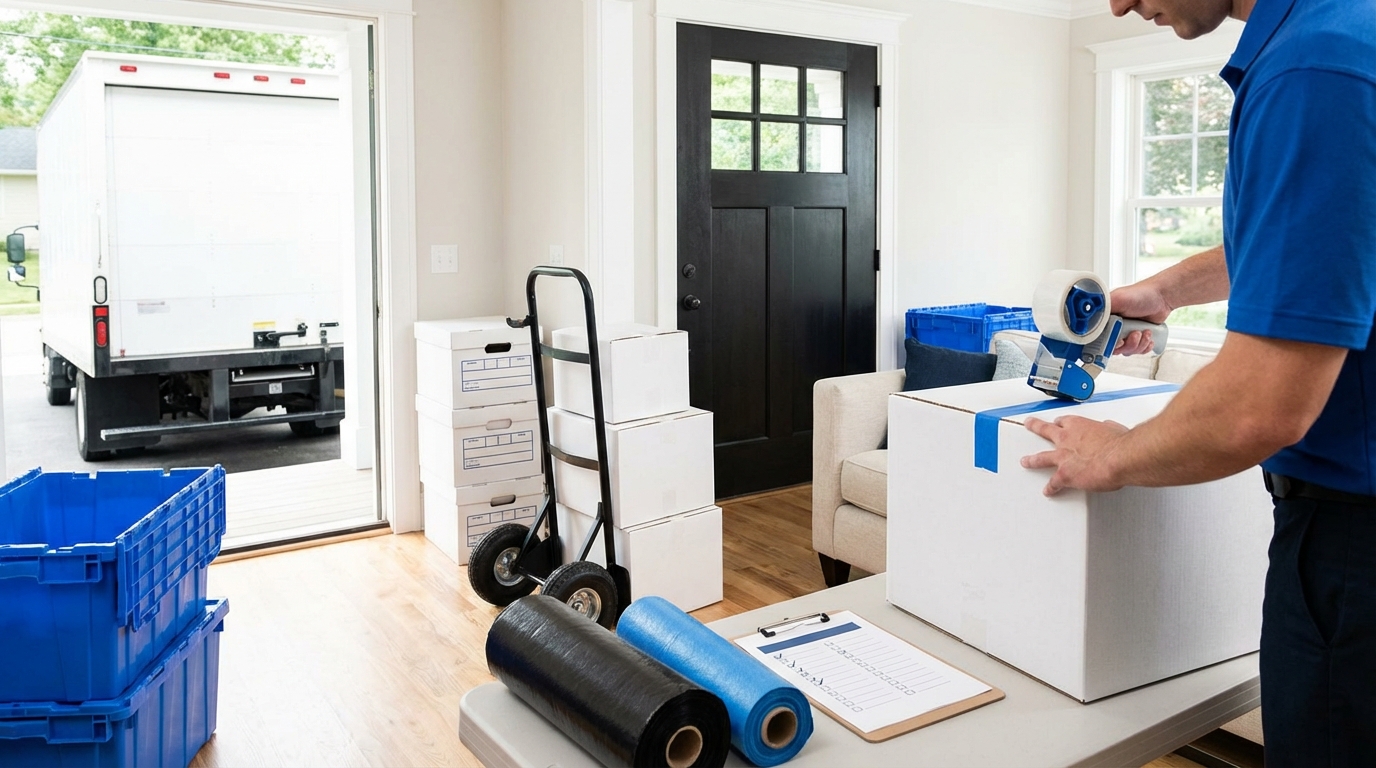
- Strong packing tape and a tape dispenser
- Permanent markers (two or three colors)
- Box cutter or scissors
- Reusable shopping bags or foldable crates
- One or two large trash bags (for clothes on hangers, bedding, trash)
If you can get your hands on a small dolly or hand truck, especially for long hallways or heavy boxes, it can cut your trip count and your exhaustion.
Step 12: A realistic moving day checklist
Here is a compact checklist you can adapt. I would copy this into a notes app and tweak it for your situation.
One week before
- Confirm move-in / move-out dates and time slots
- Arrange transport and helpers
- Gather boxes, bags, tape, markers
- Start packing off-season clothes and decor
- Do a pre-move-out room inspection and take photos
3 to 4 days before
- Pack non-daily kitchen items
- Pack most shoes and part of wardrobe
- Organize books and notes, decide what to keep
- Set aside items to donate / sell / throw away
1 to 2 days before
- Pack electronics (except devices you need daily)
- Pack bedding except what you sleep in
- Prepare “First Night” bag and tech bag
- Label all boxes with room code, number, and description
- Color code boxes by zone
Moving morning
- Shower, eat something, pack toiletries
- Final sweep of drawers, closet, under bed
- Take final room photos
- Load vehicle logically (heavy boxes at bottom, fragile on top)
Arrival at new place
- Check room condition, take photos
- Place boxes directly in their zones by label color
- Make the bed
- Set up basic bathroom and tech
- Order or grab food before a full unpacking binge
The move itself will still be tiring. You will still sweat. You will still find at least one mysterious item that makes you wonder why you own it. But if your boxes are labeled, your logistics are chosen with a bit of thought, and your “First Night” gear is ready, moving day stops being a full mental breakdown and becomes something closer to a long, organized workout.