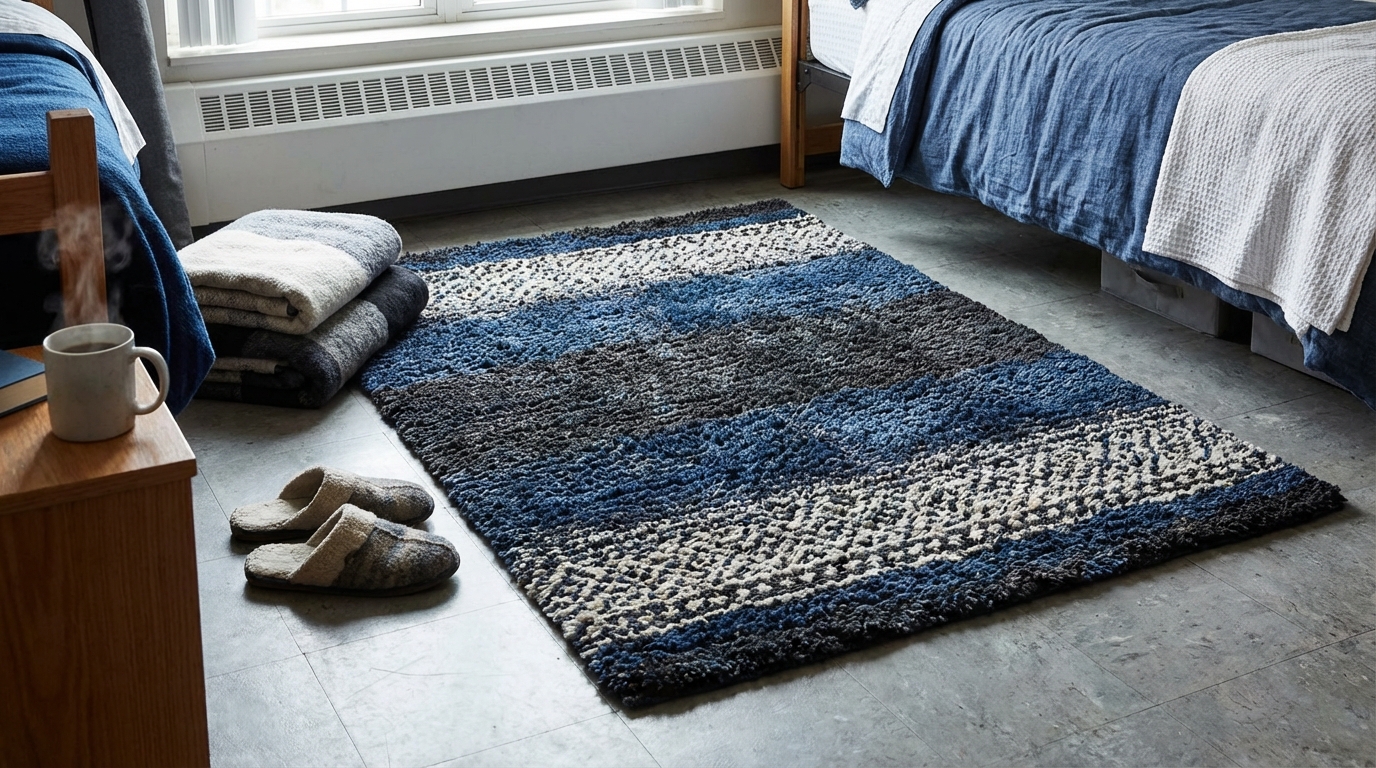
I was sitting on my dorm floor at 2 a.m., eating leftover fries, when I realized my feet were literally going numb. Concrete under a thin layer of cheap vinyl is not exactly “cozy campus life.”
So here is the simple truth: a good rug or carpet is the fastest way to make a cold dorm floor feel warm, quiet, and like an actual living space instead of a storage unit with beds. The smart move is to treat rugs like “portable flooring”: choose the right size, material, and color so your room looks intentional, not like a random pile of textiles.
Why Rugs Matter More In Dorms Than At Home
I used to think rugs were just decoration. Then I moved into a dorm with mystery stains, echoey walls, and neighbors who dragged chairs at 3 a.m. Suddenly, rugs felt like survival gear.
- Warmth: Rugs add a layer between you and whatever hard surface your campus decided was “good enough.”
- Sound control: They absorb noise from rolling chairs, dropped water bottles, and your roommate pacing during exam week.
- Visual comfort: Plain gray or brown floors make a room feel temporary. Rugs make it feel finished.
- Zones: One rug can define “study area,” another can define “sleep / chill” without moving walls.
- Resale / re-use: You can bring a good rug to your next dorm, apartment, or even use it at home in summers.
Think of rugs as your unofficial flooring upgrade that does not require your housing office to approve anything.
From a “student builder” point of view, you are hacking the space without touching the actual floor.
Step 1: Understand Your Dorm Floor (So You Choose The Right Rug)
I realized during a fire drill that nobody looks at the actual dorm floor until move-in day. Then you open the door and see… something. That “something” matters, because different floors work better with different rug types.
Main dorm floor types you are likely dealing with
| Floor type | What it feels like | Rug goals |
|---|---|---|
| Vinyl / linoleum | Cold, a bit slippery, easy to mop | Add grip, warmth, and visual interest |
| Concrete | Very cold, hard, slightly echoey | Add cushioning, warmth, and sound absorption |
| Thin carpet squares | Scratchy, low pile, often stained | Cover stains, add softness and cleaner look |
| Wood / laminate | Less cold, looks nicer, can scratch | Protect surface, add warmth and noise control |
Ask: “What problem am I solving first: cold, noise, stains, or looks?” Your answer guides everything else.
If the floor is freezing and your feet hurt, you want cushion. If your RA keeps sending passive-aggressive emails about noise, you want soft, sound-absorbing materials. If the floor is just ugly, color and pattern take priority.
Step 2: Choosing Rug Size For Tiny Dorm Rooms
Most of us do not have the luxury of massive studio-style rooms. Space is tight. Bed, desk, wardrobe, mini-fridge, maybe a futon if you are brave.
So the geometry matters.
Common dorm rug size strategies
- 3′ x 5′ (small accent rug)
Good for: Next to the bed, in front of the sink, under a mini coffee area.
Bad for: Trying to cover large floor spaces; it will look like a bath mat dropped in a gym. - 4′ x 6′ (medium go-to size)
Good for: Beside or partially under a twin XL bed, under a small seating area, or central “island” between two beds.
This is the “safe” size for many dorms. - 5′ x 7′ or 5′ x 8′ (large statement rug)
Good for: Covering most of the visible floor, creating one shared central rug between roommates.
Needs: Measurement before buying. Too big and it just jams under furniture and wrinkles. - Runner rugs (2′ x 6′ or similar)
Good for: Narrow spaces such as between bed and desk, hallway-style rooms, or galley layouts.
If you only get one rug, pick a size that touches at least two major items: like bed + desk, or bed + dresser. That makes the room feel unified.
A tiny rug floating alone in the middle of the room feels like a random sample page from a catalog.
One big rug or two smaller ones?
This is where roommate strategy comes in.
| Option | Pros | Cons |
|---|---|---|
| One large shared rug | Room looks cohesive, warmer overall, fewer edges to trip on | Harder to clean, cost-sharing can be awkward, needs agreement on style |
| Two small / medium rugs | Each person chooses their own, easier to move and clean, flexible layout | Room can feel visually split if patterns clash too much |
If your furniture is locked into a layout (some housing offices actually bolt beds in), measure that footprint and work backwards. If you can loft your bed, think about a rug that fits a “study corner” or a “hangout corner” underneath.
Step 3: Materials That Work For Student Life
Rugs look soft and harmless until one drink spill turns them into an experiment in biology. So material choice is not just about comfort; it is about how much cleaning you can handle when everyone is pulling all-nighters.
Common rug materials for dorms
- Polypropylene / synthetic blends
Pros: Budget-friendly, stain-resistant, light to carry, plenty of patterns.
Cons: Can feel a bit plastic, may flatten over time. - Cotton flatweave
Pros: Lightweight, can sometimes go in a big washer, low pile so chairs roll easily.
Cons: Less cushion, can slide without a pad, shows stains more on light colors. - Polyester shag or plush
Pros: Very soft, cozy, perfect for sitting on the floor.
Cons: Traps crumbs, harder to vacuum with a small dorm vacuum, can look messy fast. - Wool
Pros: Warm, durable, looks higher quality.
Cons: Usually more expensive, heavier, can shed, not ideal if you are very spill-prone. - Outdoor / indoor-outdoor rugs
Pros: Designed to handle mess, easy to wipe, often thin and stable under chairs.
Cons: Less plush, can feel slightly rough under bare feet.
If nobody in your room owns a proper vacuum, avoid very fluffy rugs. They look nice for two weeks and then become your room’s crumb archive.
For most dorms, synthetic or cotton flatweaves hit the best mix of cost, maintenance, and comfort. If you love sitting on the floor to work, layer: a thinner main rug with a cushioned rug pad underneath.
Step 4: Colors, Patterns, And The “Visual Warmth” Trick
Warmth is not just about temperature. A room with bright overhead lighting, white walls, and a gray floor feels like a clinic. The right rug can change that energy immediately.
Color choices that actually change the mood
You do not need a designer brain for this. Think in simple categories.
- Warm tones: Rust, terracotta, mustard, deep beige, warm browns, soft pinks.
These make a space feel cozy and grounded, especially with cool white LED lighting. - Cool tones: Blues, grays, cool greens.
These feel calm and clean, but can look cold if the floor and walls are already gray. - Neutrals: Beige, cream, taupe, greige.
Good if you want flexibility with bedding and posters. Less visual stress, but watch out for visible stains. - Dark colors:
Hide dirt and spills, but show lint and dust. Can make a tiny room feel smaller if everything else is dark.
A simple test: picture your bedding, your roommate’s bedding, and the rug all in one mental frame. If everything is loud and bright, your room might feel chaotic at 2 a.m. when you are tired and stressed.
If you already have busy posters and colorful bedding, pick a rug that is calmer. If your walls and bedding are simple, your rug can be the star.
Patterns that work under dorm chaos
Patterns are not just about style; they are about camouflage.
- Small-scale patterns: Perfect for hiding crumbs and tiny stains. Great in shared spaces.
- Large geometric patterns: Can make the room feel more “designed,” but if furniture cuts across them, it might look awkward.
- Traditional / vintage-inspired patterns: Often multicolored, very forgiving with mess, and surprisingly good with modern dorm furniture.
- Solid colors: Clean look, but show stains and wear more clearly.
If you are someone who tends to stack textbooks on the floor, having some pattern under them helps the room still feel put together instead of purely accidental.
Step 5: Safety, Rules, And The “RA Check” Factor
I learned during a room inspection that housing offices really care about “fire safety” and “tripping hazards” more than whether your rug looks good on Instagram.
Stuff to check before you buy
- Housing rules on rugs: Some campuses limit carpet tiles, certain sizes, or foam-backed materials. Skim the handbook or email housing before spending money.
- Flammability labels: Many rugs have tags stating they meet fire safety standards. Keep the tag or take a photo in case anyone asks.
- Door clearance: Measure the gap between the door and the floor. A thick rug near the entrance might stop the door from opening smoothly.
- Trip risk: If someone enters your room while half-asleep or carrying a laptop, will they catch their toe on the rug edge?
If your rug keeps sliding, your RA will notice when they walk in and trip. A basic non-slip rug pad is cheaper than a warning email.
A thin rug pad does two things: it stops sliding and adds a little insulation from cold floors. Many are easy to cut with scissors to fit weird room layouts.
Step 6: Cleaning Routines That Fit Actual Student Life
You can pretend your rug will stay clean by sheer willpower, but at some point late-night food, coffee, or protein powder will hit the floor.
Simple cleaning system
- Daily / every few days: Quick shake-out (if you can carry it) or handheld vacuum run.
- Weekly: Go over it with a vacuum, focus on pathways and under chairs.
- Spills: Blot with paper towels or cloth, then use mild soap and water. Do not rub hard, it spreads the stain.
- End of semester: Deep clean if needed, especially if you plan to store it for a few months.
If nobody in your hallway owns a vacuum, talk to your RA. Many dorms have a “community vacuum” you can check out for free. It might be old and noisy, but it is better than letting your rug turn into a dust museum.
Dealing with allergies or asthma
If your roommate has allergies, rugs can either help or hurt:
- They trap dust instead of letting it float in the air.
- That is good if you vacuum regularly, bad if you never clean.
- Low-pile or flatweave rugs usually collect less than high-pile shag rugs.
In that case, you want “smooth enough to vacuum easily” more than “looks like a cloud.”
Step 7: Using Rugs To “Hack” Your Room Layout
I realized halfway through semester one that our room felt crowded not just because it was small, but because everything blurred together: bed, desk, storage, all in one visual block. Rugs helped separate things visually without adding any actual furniture.
Rug zoning ideas that work in dorms
- Study zone:
Place a medium rug under the desk and chair. Your brain starts to associate that spot with “focus,” not “scrolling.” - Sleep zone:
A soft rug next to or partially under the bed makes getting up for 8 a.m. classes less painful. - Hangout zone:
Put a rug in the center of the room where people naturally sit or drop their bags. Add floor cushions to make it intentional. - Entry zone:
A smaller rug or mat near the door helps catch dirt and water from shoes, especially in rainy or snowy weather.
If you think of rugs as “invisible walls,” you can shape how people move through your tiny room without touching the actual walls.
This zoning trick becomes powerful if you are balancing study, sleep, and social life in one shared box.
Step 8: Cost, Sharing, And Not Wasting Money
A lot of dorm shopping advice quietly assumes everyone has a generous budget. Many students do not. Rugs can get expensive fast, especially large ones.
Budget levels and what actually matters at each
| Budget range | What to focus on |
|---|---|
| Under $30 | Small to medium rug, decent pattern to hide stains, accept that it may last one or two years. |
| $30 – $70 | Better materials, 4′ x 6′ or 5′ x 7′, neutral or versatile color that works in future rooms. |
| $70+ | Longer-term piece, maybe wool or better construction, something you plan to take into future apartments. |
Borrowing from older students can help. Many people do not want to haul rugs back home. You can:
- Check campus buy/sell groups.
- Ask graduating friends if they are leaving decor behind.
- Split cost with a roommate, but only if you agree on who owns it after move-out.
If your roommate suggests splitting a very expensive rug impulsively, it is reasonable to push back. You are not wrong to prefer a cheaper one that you can own outright.
Step 9: Rugs, Carpets, And Flooring: How They All Connect
During a facilities tour, I realized our dorm floors are designed for durability and easy cleaning, not comfort. Rugs are our way of “editing” the flooring without changing the infrastructure.
Rugs vs carpet vs actual flooring
| Thing | Who controls it | Flexibility | Comfort impact |
|---|---|---|---|
| Permanent flooring (vinyl, tile, wood, concrete) | Campus housing / maintenance | None for students | Base level only |
| Wall-to-wall carpet (if present) | Campus housing | None, usually standard across rooms | Warmer and quieter than bare floors |
| Rugs and removable carpets | You and your roommate | High: change every year or move them around | Can radically improve warmth and feel |
From a design perspective, dorm flooring gives you structure. Rugs add texture, warmth, and personal identity. Flooring is the “hardware,” rugs are the “software” you can install without admin access.
You cannot control what your dorm floor is made of, but you can control what your feet touch 90 percent of the time.
That is why students treat rugs almost like furniture: part comfort, part function, part personal branding.
Step 10: Quick Decision Guide (So You Actually Pick Something)
When I was choosing my first dorm rug, I kept 20 tabs open and almost gave up. The options felt endless. A simple decision path helps:
1. What is your top priority?
- If your feet are freezing: Look for thicker rugs and a rug pad.
- If the room is echoey and loud: Look for larger surface area and soft materials.
- If the floor is ugly: Focus on color and pattern that you like looking at every day.
2. How messy is your lifestyle, honestly?
- If you eat on your bed or floor a lot: Choose patterns and darker tones, avoid fluffy white rugs.
- If you are very tidy: You can choose lighter colors or simpler designs.
3. How long do you want this rug to last?
- One year: Go cheaper, worry less, treat it like a temporary experiment.
- Several years / future apartments: Spend a bit more, pick a flexible design.
4. Where will it go?
- Under or beside the bed: Comfort and warmth matter most.
- Under the desk: Lower pile so the chair can roll.
- Middle of the room: Something that works with both halves if you have a roommate.
Once you answer those, you are not just “shopping for a rug,” you are choosing specific flooring support for how you live in that space.
Small Extras That Make Rugs Way Better
There are a few simple add-ons that can upgrade a cheap rug.
Rug pads and grips
- Non-slip rug pad: Prevents sliding, adds a bit of cushion, helps with cold floors.
- Corner grips / rug tape: Good for keeping edges down if people walk over them constantly.
Just avoid anything that will leave sticky residue on the dorm floor. Your housing office will not be thrilled with you scraping tape off at checkout.
Floor cushions and poufs
Once your floor is softer and warmer, it becomes usable space. Some people actually prefer working on the floor with a laptop stand. Cushions make your rug zone practical, not just decorative.
Lighting + rugs = instant mood shift
Overhead lights can make any rug feel flat. Pair your rug with:
- A warm-toned desk lamp aimed toward the floor.
- String lights that frame the rug area.
- A small floor lamp in a corner of the rug zone.
Your brain reads that soft light bouncing off the rug as “evening chill mode,” which helps you separate work and rest time in the same four walls.
When A Rug Is A Bad Idea (Yes, Sometimes)
Not every room should have a big rug. There are cases where skipping it, or going very minimal, makes more sense.
- Severe allergies or respiratory issues and no access to regular vacuuming.
- Tiny, irregular-shaped rooms where a rug just ends up bunched or folded.
- Very strict housing rules about floor coverings or fire safety that you cannot work around.
- If you never clean your space and you know you will not start with a rug. Then the rug becomes the problem, not the solution.
In those situations, a small washable mat by the bed or desk might be smarter than a full rug. The point is comfort and practicality, not just checking a “dorm checklist” box.
A rug should make your life easier, warmer, and calmer. If it adds stress, cost, or constant maintenance you cannot keep up with, it is the wrong approach.
For most students though, the right rug turns “cold floor I avoid” into “floor space I actually use,” which is a big upgrade when every square foot of your dorm counts.