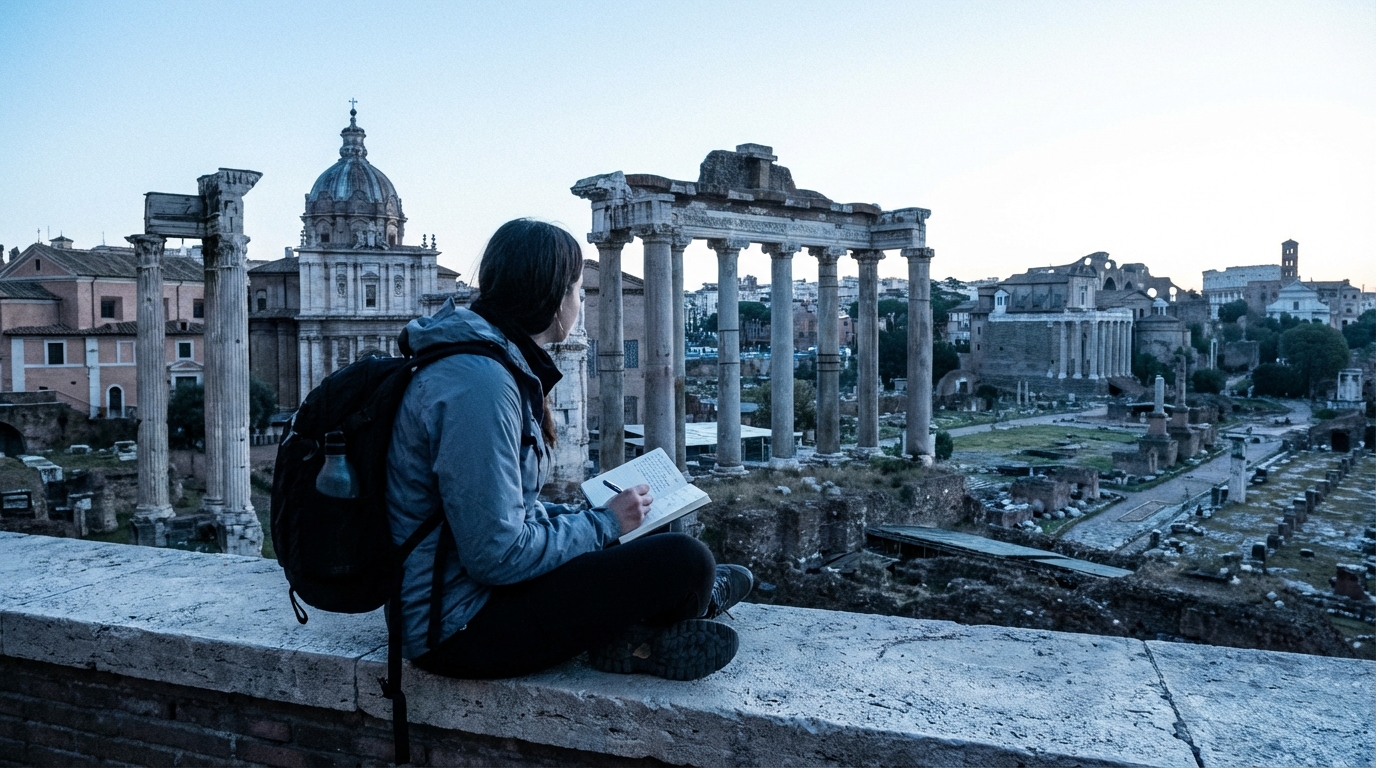
I was scrolling through photos from an exchange semester and realized half my favorite memories were not parties or tourist spots, but some random workshop on community energy in a tiny town hall. That was the moment it hit me: my best trips lately have felt less like vacations and more like portable classrooms.
TL;DR: “Educational tourism” is when travel is built around learning something concrete, not just seeing famous places. For students, that can mean field courses, short programs abroad, startup bootcamps, language trips, research projects, conferences, or even self-designed “study trips” that mix local lectures, coworking spaces, and cultural immersion, while being intentional about skills, budget, and long-term goals.
What People Actually Mean By “Educational Tourism”
I realized during a lecture on consumer behavior that the way students travel has shifted. We still want beaches and photos, but there is this extra voice saying: “What did you learn from this?”
Educational tourism is that shift, made concrete.
At its simplest, educational tourism is travel where learning is the main reason for the trip, not an accidental side effect. You travel to study, train, research, observe, or create, and the location is part of the learning, not just the background.
Educational tourism = travel where learning is the central goal, the main design choice, and the main “return on investment.”
The “tourism” part does not disappear. You still explore, eat, hike, wander. But there is usually:
– A topic or theme (architecture, climate tech, public health, startups, art history, language, etc.)
– Some structure (courses, workshops, field visits, mentorship, or a self-made schedule)
– An output (credits, a project, new skills, portfolio work, data, or a network)
This is not new in a strict sense. Study abroad has existed for decades. What feels new is how wide the spectrum has become and how much of it is student-led or micro-sized.
Types of Educational Tourism Students Are Actually Doing
Right now, the menu looks more like a cafeteria than a fixed meal. Here are the main “flavors” that show up on campuses and in group chats:
- Classic semester/year abroad: You join a partner university somewhere else, take classes, maybe do an internship.
- Short academic programs: 1 to 6 week summer/winter schools, field courses, or intensive modules abroad.
- Field trips and study tours: Faculty-led trips that mix site visits, lectures, and assignments. Often 5 to 14 days.
- Language immersion trips: Travel to a place where the target language is spoken, combine classes with homestays.
- Research travel: Going to a site, archive, lab, community, or conference to gather data and feedback.
- Startup and tech tours: Visiting startup hubs, accelerators, fab labs, or attending hackathons abroad.
- Service-learning & volunteering: Projects that mix community work with structured reflection and learning outcomes.
- Self-designed learning trips: Personal “study sabbaticals”: coworking, online courses, local mentors, and exploring.
The common thread: the trip is not “I will see this place,” but “I will learn this thing, in that place.”
Why Educational Tourism Suddenly Feels Everywhere
Sometimes it feels like half of Instagram is on “some kind of” program abroad. That is not just algorithm bias; there are real forces pushing this rise.
Let us map out the main drivers.
1. Students Want Travel That Counts For Something
There is pressure. Tuition, living costs, competitive jobs, and a constant feed of other students launching startups or stacking internships. A pure leisure trip can feel like a guilty pleasure.
So many of us ask a quiet question before we book:
“If I spend money and time on this trip, what will I have to show for it in 3 years?”
Educational tourism answers that with:
– University credits
– Internship experience
– A research paper or project
– A new language level
– Connections in a specific field
– A portfolio piece (short film, hardware prototype, campaign, etc.)
It does not have to be intense. Even a one-week architecture tour with site sketches and a small report “counts” in a way that a simple getaway might not.
2. Universities Are Treating Travel As A Learning Tool
From the campus side, travel used to be a side dish. Now it is more like a teaching method.
Why? Because real-world context sticks. Seeing a wind farm, a refugee support center, or a robotics lab changes how theory feels.
So lecturers and departments are:
- Designing field-based courses that require travel.
- Building joint programs with universities abroad.
- Creating “global classrooms” that mix virtual and physical exchanges.
- Adding funding lines for research trips and short study tours.
Some programs even bake a mandatory “mobility window” into the curriculum, where you must go out somewhere for credits.
3. Cheaper Flights + Remote Learning Made It More Realistic
Flying did not become magically cheap everywhere, but low-cost carriers and better bus/rail networks opened many regional routes. At the same time, online learning showed that some content can move to a laptop, which frees physical time for travel.
Example: You take an online core theory module from your home university while doing a 4-week hardware bootcamp in another country, using evenings for remote lectures. Five years ago, that would have sounded strange. Now it is just scheduling.
The shift is from “travel disrupts study” to “travel is one mode of study, coordinated with the others.”
4. Employers Care About Portable Skills, Not Just GPA
Recruiters keep repeating similar phrases: adaptability, cross-cultural communication, problem solving, ownership. These are hard to fake on a CV.
Educational tourism is a practical lab for those skills:
– Navigating a non-native language environment.
– Working in diverse, temporary teams.
– Handling uncertainty in unfamiliar systems (transport, bureaucracy, labs, etc.).
– Negotiating with local partners or mentors.
When you talk about a field course where your team had to redesign a prototype overnight because local users hated it, that tells a richer story than “good grades.”
5. Students Are Building Their Own Programs
Some of the most interesting educational tourism is not institutional at all. It is students designing their own “study tours”:
– Booking a month in a cheap city, joining a local makerspace, and building a hardware proof of concept.
– Attending three conferences in a row across nearby countries with a research poster in their backpack.
– Spending a semester “remote” while hopping between coworking spaces and language schools in one region.
These trips often feel like mini-experiments in how to design a life around learning, not just a degree.
Different Flavors: From Lecture Halls To Hackathons
To see how wide this spectrum runs, it helps to sort the main types of educational tourism by their primary focus.
| Type | Main Goal | Typical Duration | Who It Fits |
|---|---|---|---|
| Semester / Year Abroad | Credits, immersion, language, network | 4 to 12 months | Students who can pause home routine and commit long-term |
| Short Academic Programs | Focused topic, fast learning | 1 to 6 weeks | Students with tight schedules or limited budgets |
| Field Courses & Study Tours | Site-based learning, case studies | 5 to 14 days | Project-oriented learners; those who like “learning by seeing” |
| Language Immersion Trips | Rapid language gains, cultural literacy | 2 weeks to 6 months | Anyone serious about one language; humanities, business, IR |
| Research & Conference Travel | Data, feedback, academic network | 3 days to several months | Students doing theses, lab work, or early publications |
| Startup & Tech Tours | Exposure to founders, tech, markets | 3 days to 4 weeks | Entrepreneurial students, hackathon fans, builders |
| Service-Learning & Volunteering | Community projects + reflection | 1 to 12 weeks | Students motivated by social impact or public policy |
| Self-Designed Learning Trips | Portfolio work, personal growth | Variable, usually 2 weeks to 3 months | Independent learners, remote workers, founders |
Academic Programs Abroad: Structured Learning With A Foreign Backdrop
When people say “study abroad,” they usually mean this category. It feels familiar: you enroll, get credits, share housing, and maybe complain about group work.
Educational tourism adds more variety here:
- Thematic summer schools: Climate adaptation in coastal cities, AI ethics, food systems, smart mobility.
- Multi-country modules: Two weeks in three different cities to compare policy, design, or markets.
- Intensive skills bootcamps: UX design, data analysis, hardware prototyping, film production.
You attend classes, but the city itself is part of the curriculum. Site visits, guest speakers, and small local projects are common.
The value is in how the place filters the subject: learning architecture in Rome feels different from learning it in Tokyo or São Paulo.
Language + Culture: Learning To Think Like A Local
Language-focused travel is almost the purest example of “learning while you roam.”
Common setups:
- Half-day group language classes, half-day city exploration.
- Homestays with families who speak almost no English.
- Tandem partners: you teach your language; they teach theirs.
If your major touches international relations, business, law, or social sciences, this is not just a hobby. It can shift your research possibilities and job options.
The travel element matters because language is not just grammar. It is bus signs, sarcasm, memes, body language. Those rarely show up in a textbook.
Field Courses: The Syllabus Leaves The Classroom
Field-based educational tourism is intense. No textbook diagram beats standing in front of the actual glacier, solar farm, or informal settlement you are studying.
Examples:
- Geology students mapping rock formations in a mountain range.
- Environmental science students sampling water and talking to local farmers.
- Business students doing rapid market research in a new country.
- Urban planning students sketching public spaces and interviewing residents.
Assignments often mix observation, reflection, and a small project that connects site realities with theory.
Field courses are learning sprints: they compress a lot of sensory data, peer interaction, and expert input into a short window.
Startup Tours: From Campus Projects To Global Context
For student founders, travel can double as market research. The same app or hardware idea behaves very differently in Berlin, Nairobi, Bangalore, or São Paulo.
Startup-oriented educational tourism might look like:
- Joining an international hackathon.
- Visiting incubators, labs, and local meetups in a tech hub.
- Participating in a short founder bootcamp abroad.
- Shadowing or interning at an early-stage startup elsewhere.
The point is not just networking. It is seeing how people in other cities build, raise funds, fail, and start again. That exposure often resets our assumptions about what is “normal” for a founder.
Conferences & Research Trips: Broadcasting Your Work
There is a special energy in presenting your project to a room of people who do not know you and watching them react.
Student research travel can involve:
- Attending academic conferences, poster in hand.
- Visiting archives, labs, or field sites needed for data.
- Joining research schools that mix lectures, methods workshops, and field activities.
You roam, but you are there with a purpose: move your project forward and stress-test your ideas in front of strangers who do not grade you.
Service-Learning: Travel That Tries To Do Some Good
Not all “voluntourism” is educational, and some versions are actively unhelpful to local communities. The better projects are very explicit about learning objectives and mutual benefit.
Structures that work better:
- Partnering with local organizations that design the project goals.
- Pre-trip training on ethics, history, and local context.
- Assignments that force critical reflection, not just “feel-good” photos.
The goal is not “saving” anyone. It is seeing how social systems work from the ground, and how your future profession might interact with them.
The most honest service-learning trips leave you with more questions than answers about impact, power, and responsibility.
Designing Your Own Learning-While-You-Roam Plan
Here is where it gets interesting for student founders, researchers, and builders. If you treat educational tourism like a product, you can “design” it instead of just signing up blindly.
Step 1: Pick A Clear Learning Goal, Not Just A Destination
Ask yourself a blunt question before you start browsing programs:
“If this trip goes perfectly, what will I know, be able to do, or have built that I did not before?”
Some examples:
– “I want conversational Japanese and a better sense of Tokyo startup culture.”
– “I want to validate whether my climate risk tool works in a coastal city.”
– “I want a short film in my portfolio shot on location in another country.”
– “I want case studies for my thesis on public transport pricing.”
Once you have that, location becomes a tool, not the starting point. You can still care about beaches, food, or architecture. Just avoid letting those pick your program without any connection to your learning.
Step 2: Decide On Your Structure: Programmed Or Self-Directed
You have a rough spectrum:
- Highly structured: Exchange semester, official field course, language school.
- Hybrid: Conference trip where you bolt on an extra week of local interviews or coworking.
- Self-directed: You book a place, plan a learning schedule, and coordinate your own mentors or spaces.
Answering these questions helps:
– How much external pressure do I need to stay on track?
– How comfortable am I with uncertainty in logistics?
– Do I need formal credits, or is output (portfolio, data, prototype) enough?
– Is this my first serious trip alone?
If it is your first serious trip, a semi-structured option might be safer. If you are already used to handling your own time and projects, a self-designed “study tour” can be very powerful.
Step 3: Budget For The Real Cost: Money, Time, Energy
There is a temptation to think only in flight and housing numbers. Educational tourism has at least three currencies:
| Resource | What You Spend | What You Get |
|---|---|---|
| Money | Transport, housing, program fees, food, insurance | Credits, skills, network, projects, materials (footage, data) |
| Time | Weeks or months you are not taking other courses or jobs | Focused learning window without normal campus distractions |
| Energy | Dealing with language barriers, logistics, culture shock | Resilience, adaptability, richer experiences and stories |
Ask yourself:
– What will I say no to in order to say yes to this trip?
– Can I offset any cost with scholarships, remote work, or grants?
– Does the timing clash with critical coursework or personal responsibilities?
Sometimes the right move is to wait one semester and prepare funding better, rather than forcing a rushed version.
Step 4: Capture The Learning So It Does Not Evaporate
This is the part almost everyone underestimates. If you do not capture your learning, a lot of it blurs into “it was cool.”
Practices that help:
- Daily log: 10 minutes each night: what you saw, what surprised you, 1 thing you want to research later.
- Photo + text pairs: Take one photo a day that represents something you learned; write 3 sentences under it.
- Weekly synthesis: Once a week, step back. What patterns do you see? What questions keep repeating?
- Final output: A short report, blog series, video, prototype, small research paper, guide for other students.
Treat the trip like a temporary “field lab” and your mind like the main instrument. Instruments need logs.
This output also gives you something concrete to share with future collaborators, employers, or funders.
Step 5: Be Honest About The Downsides Too
Educational tourism is not pure upside. There are trade-offs that good planning cannot erase.
Common issues:
- Burnout: Trying to do full-time sightseeing plus full-time study leads to neither working well.
- FOMO on both sides: You miss home events and feel guilty if you miss local events.
- Surface-level understanding: Short trips can give you confidence without depth if you do not keep reading afterwards.
- Ethical questions: Some programs profit from communities without fair exchange or respect.
If you feel you are “collecting” experiences more than learning from them, step back. Fewer, deeper trips often beat many shallow ones.
Educational Tourism For Student Founders & Builders
This is a website about student projects, startups, and campus trends. So how does this travel trend intersect with building things?
The short answer: pretty directly.
Travel As Customer Discovery
If you are building something even slightly global, you need to know how different users live. Educational tourism gives a perfect excuse to see that up close.
Tactics:
- On a study trip, deliberately test your app or concept with locals.
- During a hackathon abroad, watch how different teams think about the same challenge.
- In a language course, ask classmates about local products they love and hate.
You come back not just with memories, but with real user stories and maybe a new market hypothesis.
Travel As Co-founder And Team Filter
Travel is a stress test for relationships. That includes co-founders and teammates. If you can survive a week sharing rooms, missed trains, and project deadlines in an unfamiliar city, you learn a lot about how people function under pressure.
Some student teams:
– Join hackathons abroad together.
– Sign up for joint field courses in areas related to their startup.
– Spend a month in a cheap city doing a “build sprint” while living and working together.
If a co-founder consistently disappears when things get hard on a trip, that pattern often repeats when things get hard in a startup.
Travel As Story And Signal
A well-designed educational trip can become part of your founder story:
– “We validated this product across three cities in 2 months.”
– “We started as a class project on a field course and spun out as a venture.”
– “We met our first pilot customer at a conference abroad.”
The key is that the travel element is tied to real outcomes: data, customers, a pivot, a new feature.
How Universities And Campuses Are Responding
If you zoom out from individual trips, you start to see campuses adjusting around this trend.
New Offices, New Programs
Universities are building:
- Dedicated “global learning” or “mobility” offices focused on shorter and more flexible programs.
- Grants for student-led study trips with clear learning goals.
- Joint degrees where students must move between campuses in different countries.
- Hybrid courses where the field component is optional but strongly encouraged.
This is partially a response to student demand, and partially a way for universities to stay relevant in a world where content is easily reachable online.
Digital + Physical Hybrids
An interesting trend is the rise of mixed models:
– Pre-trip virtual modules to cover theory and reduce “classroom time” on site.
– Shared projects with students who stay at the home campus, forming hybrid teams.
– Post-trip digital collaborations that keep the network alive.
Travel is treated as one mode of learning, not the only or main one, which makes programs more inclusive for students who cannot travel long term.
Pressure To Address Equity And Climate
Two questions are becoming harder to ignore:
1. Who gets to travel, and who is left out?
2. What about the climate impact of frequent flights?
Honest educational tourism work cannot dodge these.
Some responses:
- Funded spots for students from lower-income backgrounds.
- Support for train or coach travel when possible, even if slower.
- Virtual exchange options paired with one short, well-justified physical visit.
- Programs that integrate sustainability accounting into their design.
From a student perspective, it is fair to question programs that feel like holiday packages with a seminar label, especially if they are expensive and carbon-heavy with thin learning outcomes.
“Educational” is not a free pass. The more travel claims to teach, the more it should be ready to justify its design.
Red Flags And Green Flags In Educational Tourism Programs
If you are scanning brochures or websites, it can be hard to tell which trips are thoughtfully designed and which are just tourism with a reading list.
Green Flags
Look for programs that:
- State clear learning objectives and how they will be assessed.
- Name local partners and explain what they gain from the program.
- Include structured reflection (journals, debriefs, projects, not just attendance).
- Show some track record: alumni stories with concrete outcomes, not only sunset photos.
- Offer some form of support: financial aid, pre-trip training, academic guidance.
Red Flags
Be cautious if you see:
- Very vague descriptions like “experience culture” with little on what you will actually do.
- No mention of local partners, or partners that seem disconnected from the advertised learning goals.
- Very high fees with few hours of structured activity or support.
- Volunteer roles that would normally be filled by trained locals but are done by untrained students for photos.
- No space for critical discussion of impact, ethics, or limitations.
If a program does not survive three or four sharp questions from you, it might not be worth your money, your time, or your carbon.
Making Educational Tourism Work For You, Not The Other Way Around
Sometimes, in the rush to “do something abroad,” students treat educational tourism like a trophy shelf. That mindset can quietly hijack your schedule, your budget, and even your learning.
A different approach is to treat each trip like an experiment:
“Here is my hypothesis about what I will learn and how this will move my goals forward. I will test it on this trip, measure the result, and adjust the next step.”
That framing does two things:
– It keeps you from over-romanticizing the experience.
– It gives you permission to say no to programs that look shiny but do not fit your goals.
In practice, that might mean:
- Skipping a trendy summer program in favor of a cheaper research trip that better fits your thesis.
- Choosing one deep, extended stay over three short, scattered trips.
- Building your own micro-program around conferences and local meetups instead of buying a packaged tour.
- Staying home one semester to save money and prepare applications, so that the next year you can go for a full exchange with support.
Educational tourism is not a requirement for a meaningful student life. Plenty of people stay in one city and still learn deeply and build impressive things.
What this trend really represents is a growing belief that learning is not locked to lecture halls. The classroom can be a train, a lab in another country, a tiny community center, a startup office, or a noisy street where your language textbook finally makes sense.
Once you start treating travel that way, roaming stops being a break from your education and becomes another lab for it.