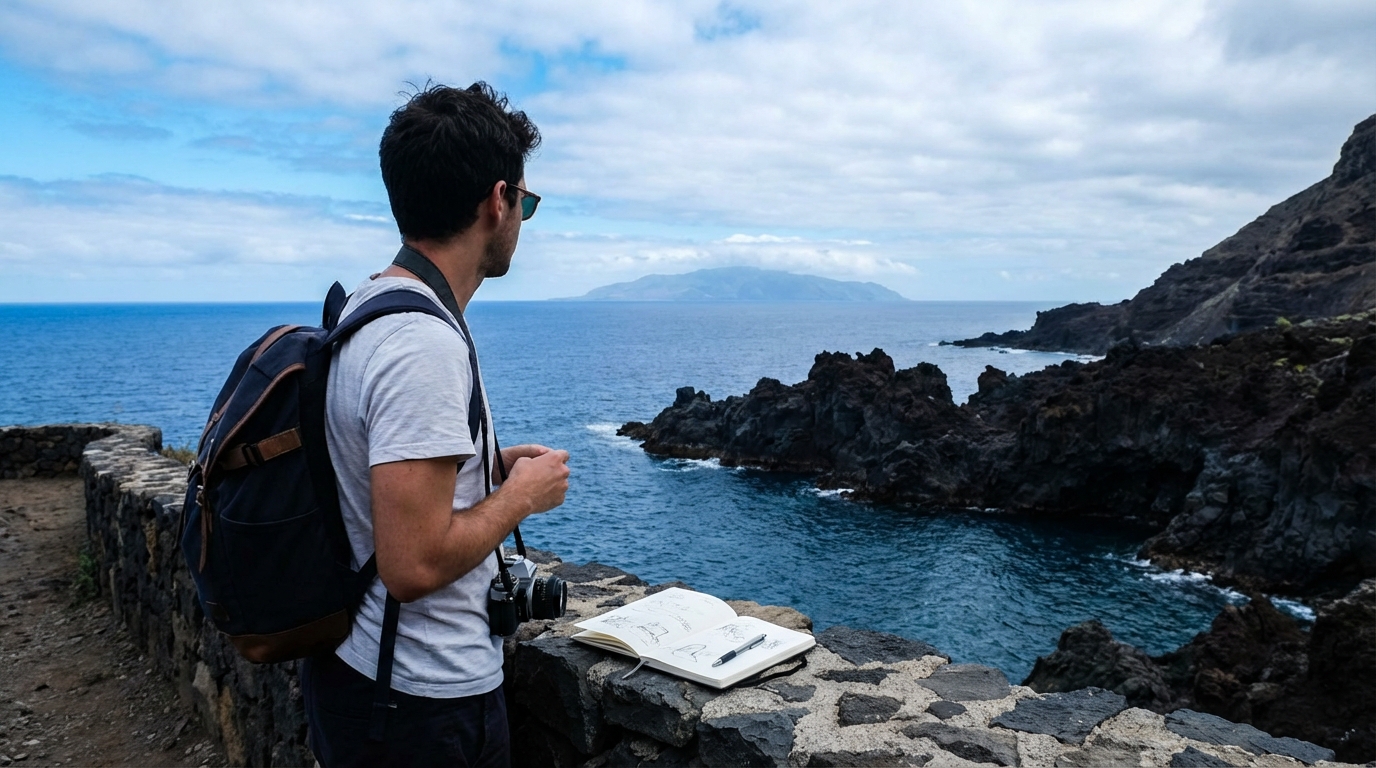
I was staring at my laptop on a Friday night and suddenly realized I had been opening the same three tabs for hours: notes, email, and a blank Google Doc. Zero new thoughts. Just mental static.
Then a friend texted, “Road trip tomorrow? Lake, no Wi‑Fi, bad coffee, good chaos.” I went. My brain woke up.
The short version: breaking your routine, even for a 24-48 hour weekend escape, jolts your brain out of autopilot. That reset gives you fresh input, new connections, and space for your mind to wander. That combination directly boosts creativity, whether you are building a startup, planning a campus event, or trying to write a better essay.
Why Your Brain Gets Bored With Your Routine
I realized during a lecture on cognitive psychology that our brains are efficiency machines. They try to conserve effort. Once you repeat the same pattern long enough, your brain turns it into a script.
Wake up. Same walk to class. Same seat. Same route to the library. Same coffee order. Same study playlist. You are not “deciding” those things; your brain is just running code it saved from last week.
That is useful for survival. It is terrible for creativity.
Creativity needs three basic ingredients:
- New information
- Unexpected combinations of old ideas
- Time for your mind to wander and make connections
Your default routine starves you of all three. It is comfortable, but it is predictable. That predictability makes your thinking loop.
If your days all look the same, your ideas will start to sound the same.
On campus, this feels normal. You bounce between classes, meetings, side projects, maybe a part‑time job. You tell yourself you are “too busy” for a weekend escape. The irony: staying locked in that pattern often slows your actual progress.
Breaking your routine interrupts those scripts. It introduces friction in a good way. Suddenly your brain has to pay attention again.
What Is a “Weekend Escape” Really?
When I say “weekend escape,” I do not mean a luxury trip or a perfectly curated Instagram moment. I mean:
- Leaving your usual physical spaces for 1-2 days
- Changing your rhythm: sleep, food, conversations, environment
- Stepping away from your “productive” self-image on purpose
That could be:
- A cheap bus ride to a nearby town
- Staying at a friend’s campus in another city
- A camping trip with terrible Wi‑Fi
- A day trip to a museum and a random neighborhood you have never explored
The key element is this: your brain cannot run its usual script.
Creativity loves pattern breaks. Your brain cannot auto-pilot when nothing looks familiar.
How Breaking Routine Boosts Creativity (Science + Real Life)
When I started reading about this for a project, I kept noticing the same mechanism over and over: novelty + rest + movement = more original thinking.
Here is what is actually going on.
1. Novelty Wakes Up Your Attention System
Routine tells your brain, “You already know this, stop paying close attention.” That is efficient, but not creative.
New environments do the opposite. Your brain switches to “scan” mode:
- You notice small things again: signs, sounds, people, smells
- Your senses become more active
- Your brain stores fresh patterns for later
There is a bit of research around how “novelty” activates dopamine circuits. You do not need to quote neurotransmitters to feel it though.
Think about walking through:
- A new city at night
- A forest trail you have never tried
- A student market in another country
Your attention level in those situations is nothing like the walk from your dorm to the cafeteria. That extra attention is raw fuel for new ideas later.
The more new input your brain sees, the more raw material it has to combine into original ideas.
2. Distance Gives You Perspective on Your Life
There is a weird thing that happens when you remove yourself from your normal context. Your life suddenly looks like a case study instead of a constant stream.
On a train back from a weekend trip, I once wrote out:
- Everything I was working on
- Why I started each thing
- What I would do if I could hit “reset” on the semester
I realized I was saying “yes” to projects I did not even believe in anymore. That realization did not happen in my dorm. It hit when I was staring out of a dirty window at fields and random warehouses.
Physical distance creates mental distance. It gives you:
- Space to question routines you treat as fixed
- Clarity on which commitments drain you vs. energize you
- New angles on problems that seemed stuck
For student founders, this is incredibly valuable. You stop thinking “How do I get this assignment or feature shipped?” and start asking “Is this still the right problem to solve?”
3. Mind-Wandering During “Boring” Travel Time
One of the most underrated parts of a weekend escape is the transit:
- Bus rides
- Long walks
- Waiting on a platform, or in a line
If you do not fill that time with aggressive scrolling, your brain slips into what psychologists call the “default mode network.” That is just a fancy label for the mental state where you are not focused on a task but your mind is actively roaming.
In that state, your brain:
- Replays recent experiences
- Makes connections between unrelated ideas
- Surfaces half-formed thoughts you ignored while busy
Many of your “shower thoughts” could have been “bus thoughts” if you stopped treating every spare minute as notification time.
Weekend escapes create natural gaps that your brain fills with association and reflection. That wandering is where some of the best startup ideas begin.
4. Stress Drops, Creativity Climbs
On campus, a normal baseline is chronic low-level stress:
- Assignment deadlines
- Team meetings
- Side projects, clubs, recruiting, finances
High stress narrows your thinking. You stop exploring. You look for safe, obvious answers.
When you step away, even for 36 hours, you interrupt that pattern. You remove yourself from:
- Constant reminders of unfinished tasks
- People who only talk to you about work
- Notifications that keep your brain in “react” mode
That does not magically fix deep problems, but it adjusts your mental state. Lower stress gives your brain more space to wander and generate new possibilities.
5. New People, New Input
Talking to one stranger on a trip can give you more creative input than ten meetings with the same three group partners.
Weekend escapes expose you to people who:
- Study different subjects
- Grew up in different places
- Care about completely different problems
Their casual comments can spark ideas:
- A small complaint about housing becomes a startup concept.
- A story from their campus club gives you a new event format.
- Their part-time job reveals a market you never saw from your bubble.
If you only talk to people who share your schedule and your building, do not be surprised when your ideas all sound like group projects.
Weekend Escapes for Student Builders & Creators
If you are trying to build something on campus (startup, club, media project, research angle), weekend escapes can feel irresponsible at first.
“How can I waste a whole weekend when I am behind on everything?”
I had that exact thought. It was wrong.
The trick is to treat weekend escapes as part of your creative system, not a reward after you finish everything.
Balancing Escapes With Work
Here is a simple way to think about it:
| Mindset | Effect |
|---|---|
| “I will travel when everything is done.” | You rarely go. Creativity dries up. Work feels heavier. |
| “Travel is part of my work cycle.” | You schedule short escapes. You return with sharper ideas. |
A reasonable starting pattern:
- One small escape every 4-6 weeks during the semester
- One larger trip during breaks, if your budget and situation allow
You do not need to romanticize it. It is just part of your creative hygiene, like sleep and exercise.
Types of Weekend Escapes That Actually Help Creativity
Different escapes feed different kinds of thinking. Here are four patterns that have worked well for students around me.
-
The Nature Reset
You go somewhere green or quiet: a nearby lake, a forest trail, a small town with more trees than screens.
Best for: Getting unstuck on a problem, calming anxiety, long-term planning thoughts. -
The City Swap
You visit another campus or city. New coffee shops, different student culture, unfamiliar streets.
Best for: Finding new project ideas, seeing alternate ways to run clubs or events, people-watching. -
The Solo Lock-In Escape
You book a cheap room or crash on a friend’s couch, alone. No social schedule. Just you, a notebook, and a different room.
Best for: Big-picture thinking, writing, strategic decisions about your work or startup. -
The Friend Sprint Trip
You go with 1-3 friends who also want space to think. Days free, evenings for talking through ideas.
Best for: Co-founder reflections, club vision planning, shared creative projects.
The quality of the escape has less to do with the location and more to do with how different it feels from your normal week.
How To Design a Creativity-Boosting Weekend Escape
You can absolutely waste a weekend away by turning it into your same routine in a new place: doomscrolling, binge-watching, constant emails, just with a nicer view.
The goal is to structure your weekend to favor curiosity, reflection, and wandering.
Step 1: Set a Simple “Creative Intent”
Before you go, write down 1-2 sentences on a piece of paper (not just your phone):
- What question you want more clarity on
- What kind of ideas you want to come back with
Examples:
- “I want to figure out whether this startup idea is still worth pursuing this semester.”
- “I want new content angles for my campus newsletter.”
- “I want three concrete ways to make my student club actually interesting again.”
Do not treat this as pressure. It is just a mental lens.
Step 2: Pick a Place That Breaks Your Patterns
Instead of aiming for “perfect,” aim for “different.” Ask:
- Does this place change what I see, hear, and do by default?
- Will I actually move my body more than on a normal weekend?
- Can I afford it without wrecking my budget or relying on debt?
Try to avoid places that are:
- So crowded that you feel more stressed than on campus
- So expensive that you spend the whole time worrying about money
- So similar to your dorm that you may as well stay home
Step 3: Do a “Light Digital Diet”
You do not need extreme digital detox rules. That usually backfires. Instead, change your default usage.
For example:
- No email or school portals until late afternoon
- Social media only during one pre-decided 30-minute window
- Keep your phone in your bag for walks instead of in your hand
The goal is not zero screens. The goal is fewer reflexive checks, more intentional attention.
Step 4: Walk, Observe, Capture
Walking is underrated creative tech. It is free. It is available almost anywhere.
During your weekend:
- Take at least one long walk with no destination
- Notice details: signs, overheard phrases, shop setups, public spaces
- Capture quick notes or photos when something pings your curiosity
Try this simple structure:
- Morning: aimless walk + casual observing
- Afternoon: reading, thinking, or light work in a new place
- Evening: conversation or journaling about what you saw
Step 5: Have One “Thinking Session” Each Day
Reserve 45-60 minutes per day of the trip for intentional thinking. No laptop needed.
This could be:
- Notebook brainstorming in a cafe
- Voice notes while walking alone
- A structured conversation with a friend where you both unpack your current projects
Prompts that work well:
- “What am I pretending is ‘non-negotiable’ that might actually be optional?”
- “If I had to cut half my commitments, what would I keep and why?”
- “What surprised me most on this trip, and what does that say about my usual life?”
Turning Weekend Escapes Into Startup Fuel
For student founders and builders, weekend escapes can feel like time “away from the grind.” In reality, they are often where the best ideas appear.
Spotting Problems in the Wild
When you step into a new environment with builder eyes, you start spotting problems that are invisible back on campus.
Look for:
- Processes that seem slow or clumsy
- Stuff people complain about more than once
- Confusing signs, broken interfaces, awkward workflows
For example:
- A friend at another campus struggles with a terrible housing portal. You see how a student-run listing platform could work.
- A small cafe has a clever loyalty system. You realize your club could borrow the same idea to increase event turnout.
- A local community group has no clear way to reach students. You see a bridge you could build.
Many strong campus startups start with a simple sentence: “Why is this still so annoying?” You hear that sentence more often when you switch environments.
Borrowing Models From Other Campuses
Friends at other universities are an underused source of creative models. When you visit:
- Ask how their clubs are structured
- Check their event posters and online groups
- See how they promote student projects or startups
You might find:
- A better way to onboard new members
- A sponsorship format that you can adapt for your own campus
- Collaborations between clubs that you have never seen at your university
This is not about copying. It is about remixing. You take what works somewhere else and adjust it for your context.
Resetting Co-founder Dynamics
If you are building something with friends, a weekend away can act like a mini offsite.
Use the trip to:
- Talk honestly about what is working and what is not
- Revisit your original reasons for starting the project
- Check whether anyone feels burned out or misaligned
You can structure a simple conversation:
- Round 1: “What part of this project energizes you most right now?”
- Round 2: “What part are you secretly dreading?”
- Round 3: “If we could restart today, what would we do differently?”
Having that discussion while walking by a river or sitting somewhere neutral feels very different from yet another late-night Slack call.
Common Objections (And Honest Replies)
If you are reading this and thinking, “Nice in theory, but not for me,” let us test that.
“I do not have the money.”
This is real. You should not pressure yourself into trips that cause financial stress. That would defeat the whole purpose.
Here are lower-cost variations that still break routine:
- Day trips using student-discount public transport
- Staying with friends or relatives in another part of the city
- Bike or walk to a different neighborhood and treat it like a mini-trip
- Spend the day at a free gallery, library, or park in a part of town you never go to
Be honest about your budget. A modest, realistic escape is far better than an aspirational “someday” plan that never happens.
“I have too much work.”
Sometimes that is true: midterms week might not be ideal. But it is worth asking whether you are overestimating how productive your “busy” weekends actually are.
Track one weekend:
- How many focused hours did you really work?
- How much time vanished into half-studying, half-scrolling?
You might discover that:
- A weekend escape that gives you 6 hours of high-quality thinking and 6 hours of deep rest is more valuable than 18 hours of scattered, tired effort on campus.
Sometimes “I am too busy for a break” is just a habit of stress talking, not a clear look at your calendar.
“Trips feel unproductive.”
If your definition of “productive” is only “time spent directly on tasks,” then yes, trips will look unproductive.
Creative work breaks if you treat it like that.
Try tracking different metrics:
- Number of original ideas captured
- Number of clear decisions made
- Level of motivation when you return
A weekend that gives you one breakthrough idea or one key decision about what to stop doing can change your semester more than a pile of small tasks.
Practical Templates: Sample Weekend Escape Plans
To make this less abstract, here are three concrete weekend layouts you could adapt.
Template 1: The 24-Hour Micro Escape (Budget-Friendly)
Goal: Quick reset without blowing your time or money.
| Time | Activity |
|---|---|
| Saturday 9:00 | Catch a cheap bus or train to a nearby town / part of the city you rarely visit. |
| Saturday 11:00 | Long walk through the area. No headphones for at least 45 minutes. |
| Saturday 13:00 | Lunch in a small cafe away from the main tourist strip. Observe, take notes. |
| Saturday 15:00 | Find a park or library. 1-hour thinking session with notebook. |
| Saturday 17:00 | Wander again, visit one free place (gallery, museum, riverbank). |
| Saturday 19:00 | Bus or train back. Quiet reflection on the ride. |
Template 2: The 2-Day Co-founder Reset
Goal: Step back from execution and work on the startup or project, not just in it.
| Day | Focus |
|---|---|
| Day 1 Morning | Travel to a nearby town or cheap Airbnb. No laptops for the first 3 hours. |
| Day 1 Afternoon | Walk + deep conversation: why did we start this, what still excites us, what feels heavy. |
| Day 1 Evening | Light social time, no detailed planning. Let your mind simmer. |
| Day 2 Morning | Structured strategy session: priorities, what to cut, what to double down on. |
| Day 2 Afternoon | Capture key decisions, high-level roadmap. Short walk before heading back. |
Template 3: The Solo Creative Rethink
Goal: Reboot your direction for the semester.
| Block | Activity |
|---|---|
| Morning | Travel + reading something unrelated to your current field (novel, essay collection). |
| Midday | Walk + note down everything on your plate right now. |
| Afternoon | Rank items: what gives energy vs. what drains it. Circle 2-3 creative bets you care about. |
| Evening | Sketch possible future scenarios: if you focused on each bet for 6 months, what would that look like? |
| Next Morning | Decide: what will you stop, start, or change when you return? |
Keeping the Creative Boost After You Return
A common failure mode: you have a mind-opening weekend, then fall straight back into the same old patterns. Within three days your brain feels exactly like before.
You need a simple re-entry ritual.
1. Do a 30-Minute “Download” Session
Within 24 hours of getting back, sit down with:
- Your notes from the trip
- A blank page
Divide the page into three sections:
- “Ideas” – raw thoughts, phrases, concepts
- “Decisions” – things you now know you want to change
- “Experiments” – small habits or projects to test for 2-4 weeks
This turns vague inspiration into something you can act on.
2. Pick One Small Change To Your Weekly Routine
If you try to redesign your entire life based on one weekend, it will collapse.
Instead, choose:
- One new habit from the trip that you will keep (e.g., weekly long walk without headphones, one evening with no screens)
- One thing you will stop doing (e.g., automatic late-night email, saying “yes” to every event)
Write it somewhere visible. The goal is to keep a tiny trace of that “escape” energy inside your normal week.
3. Schedule the Next Escape Before You Forget
While your memory of the benefits is still strong, look at your calendar. Find:
- One weekend 4-8 weeks away that is not already overloaded
- Block it as “escape” time, even if you have not chosen the destination yet
Treat it like a serious appointment with your future ideas.
Your future self will have creative problems that your current self cannot solve yet. Weekend escapes are how you send that future self better tools.
The pattern is simple but powerful: routine keeps you stable, escapes keep you original. If your projects, startups, or creative work feel flat, do not just push harder inside the same four walls. Change the scene, even briefly. Let your brain notice fresh details, wander without guilt, and come back carrying thoughts that did not exist on Friday.