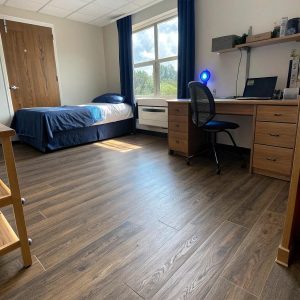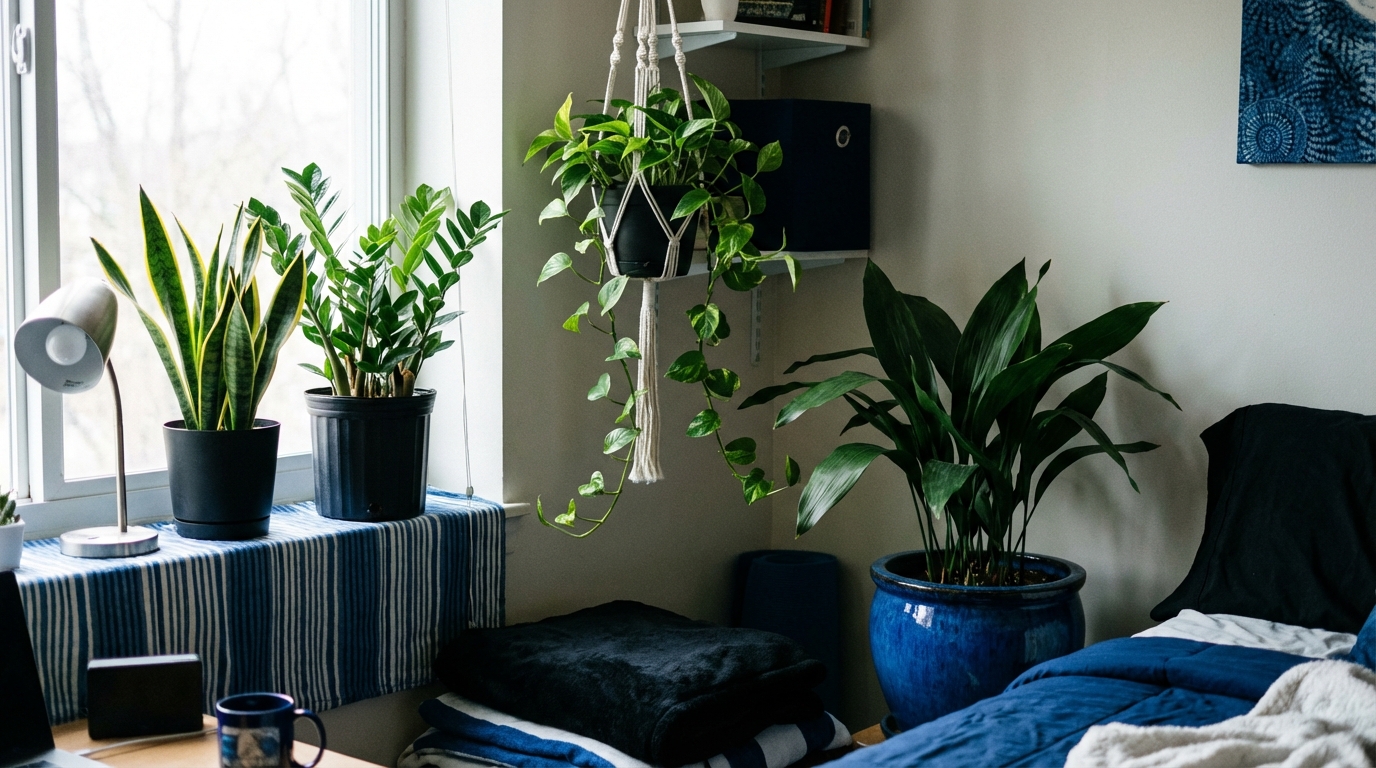
I was staring at the sad, stretched-out plant on my roommate’s windowsill when it hit me: our dorm is basically a cave with Wi-Fi. Why do we keep buying plants that want a full Mediterranean summer when our room gets “cloudy Tuesday at 5 p.m.” levels of light?
If your dorm has weak, indirect, or almost imaginary sunlight, you can still keep plants alive. The short version: go for low-light tolerant species like pothos, snake plant, ZZ plant, philodendron, Chinese evergreen, and peace lily; keep them out of direct sun, water less than you think, and pick the right pot and spot. The plants are not the problem. The setup is.
How low is “low light” in a dorm, really?
I realized during a lecture that “low light” in plant books usually means “shady spot in a house with big windows.” Our dorms are more like the back row of a cinema.
Most dorm “low light” situations look like this:
- One small window facing a wall or another building
- Light blocked by curtains, trees, or the library next door
- Artificial light from overhead LEDs or a desk lamp
- Closed blinds most of the day because, privacy
Here is the catch: “low light” does not mean “no light.”
Low-light plants survive in weak indirect light. No plant survives in zero light.
If you can read a textbook in the spot without turning on a lamp (during the day), you probably have enough light for at least some of the plants on this list.
| Light Level | What it looks like | Plants that cope |
|---|---|---|
| Medium-indirect | Within 1-2 m of a window, bright but no harsh sun on surfaces | Most low-light plants thrive here |
| Low-indirect | 3-4 m from a window, room feels a bit dim in the afternoon | Pothos, snake plant, ZZ plant, philodendron, Chinese evergreen |
| Very low | Deep corner, lit mostly by artificial light | Snake plant, ZZ plant (slow growth, but survive) |
If your dorm is in the “very low” category for more than 8 hours a day, you probably need either:
- Extremely tough plants (snake plant, ZZ plant), or
- A small grow light clipped somewhere discreet
Plants do not care that you are a student; they care about physics: light, water, and time.
Best indoor plants for low-light dorms
Let us go through the plants that do not panic when your blinds stay half-shut and you spend alternate weeks in the library.
Pothos (Epipremnum aureum)
During week three of semester one, I bought a pothos because the label said “hard to kill.” For once, the label was not lying.
Why pothos works in dorms:
- Tolerates low light but grows faster in medium light
- Forgiving with watering mistakes
- Looks good trailing from a shelf or hanging pot
- Easy to propagate in water (you can clone it into infinity jars)
Light:
Best near a window where it does not get harsh direct sun. It will survive in that bookshelf corner too, but it will grow slower and the variegation (white/yellow patches) may fade to solid green.
Water:
Let the top 2-3 cm of soil dry out before watering. In low light that can mean every 1.5-3 weeks, not every few days. Pothos prefer “slight neglect” over “constant soggy feet”.
Signs of trouble:
- Yellow leaves dropping: usually overwatering
- Long bare vines with tiny leaves: stretching for more light
If you want one plant that forgives exams, late nights, and random weekend trips home, start with pothos.
Snake plant (Sansevieria / Dracaena trifasciata)
Snake plants are like that one classmate who never speaks but aces everything. They just sit there and survive.
Why snake plant fits dorm life:
- One of the toughest indoor plants
- Handles low light and dry air from heaters
- Can go weeks without water
- Vertical growth, so it takes little floor space
Light:
From low light to bright indirect. It will grow faster in better light, but it does not protest much when stuck in a shadowy corner.
Water:
This plant hates sitting in wet soil. Water every 3-4 weeks in low light, maybe even less during winter. When in doubt, skip a week.
Signs of trouble:
- Soft, mushy leaves: severe overwatering
- Wrinkled, folding leaves: very thirsty, time to water
Treat snake plants like a cactus that does not mind shade: lots of chill, very little water.
ZZ plant (Zamioculcas zamiifolia)
I got a ZZ plant after realizing I needed something that would not die if I disappeared during exam season. It sat under a lofted bed and still looked fine.
Why ZZ plants are low-light champions:
- Survives in very low light, even interior hallways
- Slow but steady growth
- Shiny dark green leaves make the room look more “put together”
- Stores water in thick roots, so it forgives missed waterings
Light:
Handles low and very low light, though it will be happiest near a window with filtered light. Avoid direct sun; the leaves can burn.
Water:
Water only when the soil is dry at least halfway down. For dorm conditions, often every 3-5 weeks. Overwatering is the easiest way to kill it.
Signs of trouble:
- Yellow, mushy stems: overwatered roots rotting
- Leaves dropping but stems firm: plant is stressing, ease up on water and check the light
Heartleaf Philodendron (Philodendron hederaceum)
Heartleaf philodendron feels like pothos’ artsy cousin. Same basic vibe, slightly different look.
Why it suits a dorm:
- Thrives in low to medium indirect light
- Fast-growing vine, perfect for shelves and window ledges
- Textbook-level “forgiving houseplant”
Light:
Low to medium indirect light. In very dim corners, it will still live, but the internodes (spaces between leaves) get longer, and it looks sparse.
Water:
Water when the top 2-3 cm of soil feel dry. In low light that often means every 1-2 weeks. Less in cooler months.
Signs of trouble:
- Yellow leaves: usually overwatering
- Tiny, far-apart leaves: needs more light
Chinese Evergreen (Aglaonema)
If you want something that looks a bit more decorative than just green vines, Chinese evergreens come with patterns and sometimes pink or red hints.
Why dorm people like it:
- Tolerates low light well, especially green varieties
- Compact, bushy form looks good on desks
- Handles dry indoor air better than many plants
Light:
Low to medium indirect. Varieties with more color or variegation usually want a bit more light than solid green ones.
Water:
Keep soil slightly moist but never soggy. Let the top layer dry between waterings. Water roughly every 1-2 weeks, then adjust for your room.
Signs of trouble:
- Brown tips: dry air or inconsistent watering
- Leaves turning pale: likely needs a bit more light
Peace Lily (Spathiphyllum)
This is the plant that keeps drooping dramatically when it is thirsty and then snaps back up after water. It is like a built-in reminder.
Why peace lilies are interesting for dorms:
- Tolerate low light, even a few meters from a window
- Flower indoors when light is decent
- Visually signals when it is thirsty
Light:
Low to medium indirect light. In true low light it might stop flowering, but the foliage will still look good.
Water:
Likes consistent moisture. Many students wait until it droops slightly, then water thoroughly. Usually every 1-1.5 weeks in low light, less in winter.
Signs of trouble:
- Crispy brown edges: too dry or low humidity
- Yellowing leaves: chronically waterlogged soil
Bonus low-light options
If you want more variety, these also do fairly well in darker dorms:
- Cast Iron Plant (Aspidistra elatior): very tough, tolerates serious neglect and low light.
- Parlor Palm (Chamaedorea elegans): small palm, works in lower light than most palms.
- Peaceful trailing mix: Combine pothos and philodendron in one long planter for a fuller look.
Picking the right spots in a low-light dorm
During exam week, I realized my plants were doing better than me partly because I moved them around intelligently. Plant placement matters more than the plant type once you stay within low-light species.
Best places for plants in a dorm
- Near, but not on, the window: A desk or shelf beside the window is prime real estate.
- On a bookshelf facing the window: Vines can trail down; the leaves still catch sideways light.
- On top of a wardrobe: Great for snake plants or pothos, as long as they are not in complete shadow.
- By artificial light sources: Under a bright desk lamp or near overhead LED light.
Try to avoid:
- Direct contact with icy winter air from leaky windows
- Direct hot air from radiators or vents
- Spots where they get kicked during late-night room rearranges
If you never sit in a corner of your room because it feels gloomy, your plant probably does not want to live there either.
Making the most of weak light
If your dorm faces a brick wall, you still have a few tricks:
- Keep windows as clean as possible: Less dust, more light entering.
- Use light-colored surfaces: White or light desks and walls reflect light around the room.
- Rotate plants monthly: Turn the pots so they do not grow lopsided toward one side.
If conditions are genuinely too dark for comfort, consider a small grow light. A clamp light with a full spectrum bulb set on a timer for 6-10 hours can keep a plant alive in spots that would otherwise be “plant dead zones.”
Watering plants in low-light dorms without killing them
I used to assume plant care meant “water every few days.” That almost killed my first pothos. Low light means slow growth, and slow growth means slower water use.
The “finger test” beats all watering schedules
Forget calendar reminders. Use this instead:
- Stick a clean finger into the soil up to the second knuckle.
- If the top 2-3 cm feel dry, consider watering.
- If it still feels moist or cool, wait a few more days.
Overwatering is not “too much water at once,” it is “watering again before the soil has a chance to breathe.”
General watering rhythm for low-light dorms
This will vary with temperature, pot size, and soil, but as a rough guide:
| Plant | Average water interval (low light) |
|---|---|
| Pothos / Philodendron | Every 1.5-3 weeks |
| Snake plant | Every 3-5 weeks |
| ZZ plant | Every 3-5 weeks |
| Chinese evergreen | Every 1-2 weeks |
| Peace lily | Every 1-1.5 weeks |
Always adjust based on your room. Heated winter air dries soil faster. Dark, cool corners keep it moist longer.
Signs you are overwatering vs underwatering
| Issue | Overwatering | Underwatering |
|---|---|---|
| Leaves | Yellow, mushy, dropping | Crispy, curled, dry |
| Soil | Wet for days, may smell bad | Very dry, pulling from pot edges |
| Stems | Soft, sometimes collapsing | Usually still firm, just droopy |
If you are unsure which issue you have, check the soil first, not the leaves.
Choosing pots, soil, and plant sizes for dorm life
I learned the hard way that the “cute ceramic pot with no hole” is basically a plant trap.
What kind of pot works best?
- Drainage hole is non-negotiable: Water needs a way out. No hole, higher risk of rot.
- Use a saucer: Put a tray or saucer under the pot so you do not flood your desk or your roommate’s notes.
- Size sanity: Slightly bigger than the root ball is fine. Huge pots stay wet longer and can suffocate roots.
If you really want a pot with no hole for looks, use it as a cover pot:
- Keep the plant in a plastic nursery pot with drainage.
- Place that pot inside the decorative pot.
- Lift it out to water, let it drain, then put it back.
Most “mysterious plant deaths” in dorms are not mysterious: they are from roots drowning quietly in a pot without drainage.
Soil choices for low-light plants
You do not need anything fancy, but the soil should drain reasonably well.
- Base: Standard indoor potting mix.
- Optional mix-in: A bit of perlite or coarse sand to improve drainage, especially for snake plants and ZZ plants.
Avoid:
- Heavy garden soil from outside
- Soil labeled only for succulents/cacti for moisture-loving plants like peace lilies
Plant safety, roommates, and dorm rules
Between campus safety rules and roommate allergies, plant choices are not only about vibes.
Check dorm rules first
Some housing offices restrict:
- Hanging pots near fire sprinklers
- Large floor plants that block exits
- Extra lighting equipment (like strong grow lights)
A quick check of the housing handbook saves you from having your plants confiscated during a random room inspection.
Pet and allergy considerations
If someone visits with a cat or small pet (or if pets are secretly smuggled in, which of course never happens), some plants can be a problem.
Common low-light plants that are toxic if chewed:
- Pothos
- Philodendron
- ZZ plant
- Chinese evergreen
- Peace lily
If pets are around often, keep plants out of reach, or pick non-toxic options like some ferns or certain palms. Also, a few people are sensitive to plant sap or pollen, so ask your roommate before filling their side of the room with peace lilies.
Keeping plants tidy and alive with minimal effort
Between labs, late-night group work, and random club meetings, plant care needs to be quick and predictable.
A 10-minute-per-week dorm plant routine
Here is a simple loop that fits into your Sunday reset:
- Step 1: Visual check
Look for yellow leaves, spots, droopiness, or pests (small bugs, webs, sticky residue). - Step 2: Finger test
Check soil moisture for each plant. Only water the ones that feel dry at the top. - Step 3: Rotate
Turn each pot 1/4 turn so growth stays balanced. - Step 4: Leaf wipe
Wipe dust off big leaves with a damp cloth so they can absorb more light.
That is usually enough for low-light tolerant species.
What about fertilizer?
In low light, plants grow more slowly, so they need less fertilizer.
- Use a balanced liquid fertilizer at half strength.
- Feed once a month during spring and summer.
- Skip feeding in winter when growth naturally slows.
Too much fertilizer in low light is like forcing someone to sprint in a small room. They have nowhere to use the extra energy, and things break.
Quick dorm plant setups by personality type
I started noticing that plant choices in my dorm told you a lot about the person. You can match your plant setup to your habits instead of pretending you are someone who “just waters things daily.”
For the “constantly busy, barely home” student
You are overscheduled and you know it. Go for plants that do not punish absence.
- 1 snake plant (floor or desk)
- 1 ZZ plant (corner or under loft bed with some light)
Care:
Water once a month, light dusting when you remember. That is it.
For the “desk study marathon” student
You live at your desk, surrounded by highlighters and empty mugs.
- 1 pothos or heartleaf philodendron trailing off your shelf
- 1 peace lily on the floor beside the desk
Care:
Check soil weekly. Water when dry. Peace lily droop = drink break reminder for both of you.
For the “room as aesthetic project” student
You care about the look of the space and want it to feel balanced and calm.
- 2 different pothos or philodendron varieties for variation
- 1 Chinese evergreen as a focal plant
- 1 snake plant for height
Care:
Same basic routine, just more plants to rotate and wipe.
Common low-light dorm plant mistakes to avoid
Some mistakes are so common that they feel like a rite of passage. They are still avoidable.
Buying sun-loving plants for a shade-only room
Plants that usually fail in low-light dorms:
- Succulents (most of them stretch and rot)
- Cacti (need strong light)
- Herbs like basil or rosemary (want lots of sun)
- Fiddle leaf fig, rubber plant, and similar “statement” plants
If your room is dim, these become slow-motion tragedies.
Overwatering when plants look “sad”
New plant keepers often react to any problem with water. Brown tips? Water. Droopy leaves? Water. That is how many dorm plants quietly rot.
In low light, water is not medicine. Sometimes the cure is actually “stop giving me so much attention.”
If a plant looks sad, check:
- Soil moisture
- Light level
- Roots (if the problem is severe)
Water only if the soil is clearly dry.
Ignoring pests because “it is just one bug”
Shared buildings mean shared insects. If you see small flying gnats or tiny clusters of bugs, do not wait.
Basic response:
- Quarantine the plant away from others.
- Remove heavily affected leaves.
- Use a simple insecticidal soap or neem oil, following the label.
Early action saves you from dealing with a tiny dorm “plant plague.”
Using plant care as a low-key mental reset
There is one more hidden benefit. On days when everything feels noisy and rushed, doing a 5-minute check on your plants is strangely grounding.
You water, you wipe a leaf, you rotate a pot. You watch a new leaf slowly unfurl over a week. It is small, but it is proof that something in your orbit is quietly progressing.
In a semester where every deadline is urgent, plants remind you that not everything works on a 24-hour cycle.
If your dorm is low light, you are not locked out of having living green things around you. You just need the right cast of plants, a realistic watering rhythm, and a bit of awareness about where the light actually falls in your room.