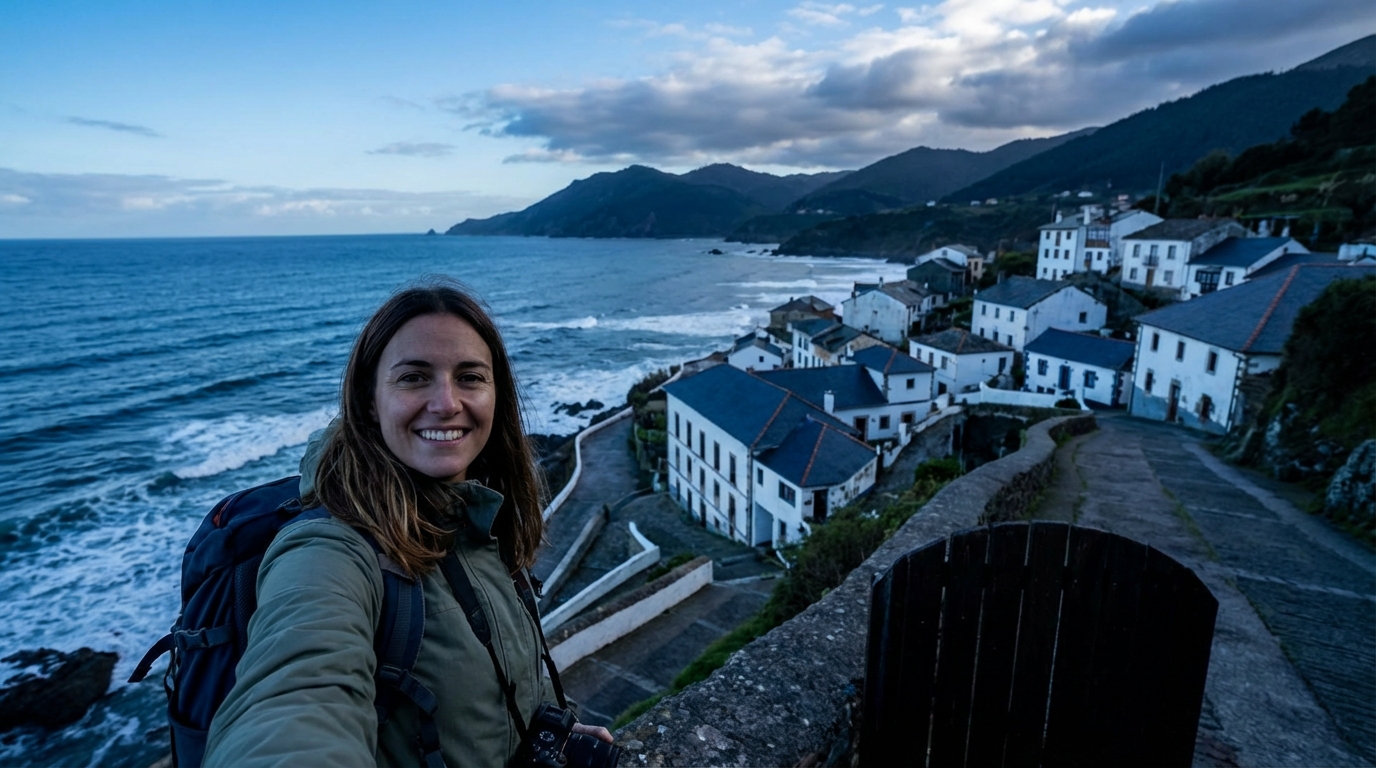
I used to think solo travelers were either fearless or a bit reckless. Then I caught myself on a 1 a.m. YouTube spiral watching solo travel vlogs and realized the reckless one was probably me, stuck in the same three blocks near campus.
Here is the honest version: solo travel is not only safer than most people assume, it is also more fun in a very particular way. You are more focused, more aware, and weirdly more protected than when you are in a distracted group. The fun does not come from constant thrills; it comes from small, intense moments of freedom and self-respect that are very hard to get when you are negotiating every decision with three friends on a budget.
Why solo travel is often safer than group travel
The big fear is usually some version of: “I will be alone, something will go wrong, and there will be no one to help.” That image feels vivid, but it is not how most trips play out. The real risks are usually more subtle: pickpockets, bad judgment when you are tired, or going along with the group when your instincts say no.
Once I started planning my first solo trip, I realized something strange during a campus safety workshop: most of the advice they gave for traveling in general is easier to follow alone. You control your timetable, your alcohol intake, your routes, and your boundaries. That control is a safety feature.
You are not safer because you are brave; you are safer because you are paying attention.
Here is what changes when you travel solo and why that often lowers your risk instead of raising it.
- You default to lower-risk choices. No one is pressuring you to “just come to this club” or “do this one sketchy hike.” When you are alone, small warning signs feel louder, and you are more likely to listen.
- You appear more approachable to strangers who want to help. Staff, hosts, and even other travelers tend to look out for solo travelers. People will point out the safe ATMs, the good bus stops, and the scams to avoid.
- You carry fewer valuables and move with more intention. Most solo travelers reduce what they bring. Less stuff to steal, less fumbling, fewer moments where you are distracted and vulnerable.
- You plan more intentionally. You research neighborhoods, transport, and basic phrases ahead of time. That planning upgrades your safety more than simply having friends around you.
- You are a smaller, less noisy target. Big, loud groups attract attention. A single person who walks like they know where they are going blends in much more easily.
Group does not automatically mean safe, and solo does not automatically mean unsafe. Your habits matter more than your headcount.
The psychology of “safety in numbers” vs “clarity alone”
There is this social comfort in numbers that feels like safety. You think, “If something happens, my friends will be there.” But real safety is often about prevention, not backup.
When you travel with friends, a few things tend to happen:
| Group habit | Risk that sneaks in |
|---|---|
| Following the loudest or most confident person | Ignoring your own instincts about a sketchy street or bar |
| Drinking more because “everyone is” | Lower awareness, easier target for theft or harassment |
| Walking in a pack, chatting | Less attention to surroundings, bags, directions, or exits |
| Delegating logistics to one “planner” | Most of the group has no idea where they are or how to get back |
Alone, you rarely drift on autopilot. You know which metro stop is yours. You know how you will get home from the bar. You are tracking your phone battery, your bag, and your route.
That mental clarity is not dramatic, but it is protective. It means you do not end up stranded at 3 a.m. because half the group lost each other and nobody charged their phone.
Concrete safety habits that solo travelers use
When I planned my own solo trip, I noticed that safety is mostly about habits that are boring on paper but powerful in real life. Here are habits that solo travelers commonly rely on:
- Day 1 is for orientation, not “doing everything.” You walk the area around your stay during daylight, memorize a few reference points, and notice where other people walk at night.
- Safe transport over “cool” transport. If it is late, you take a licensed cab, rideshare, or well-reviewed shuttle. You do not save 3 dollars by walking 40 minutes through empty streets.
- Digital breadcrumbs. You share your live location or daily plan with one trusted person. Even a simple “Leaving hostel now, on bus to X city” message helps.
- Standard check-ins. You decide a check-in time with someone at home. No reply by that time triggers them to follow up.
- Boundary scripts ready in advance. Lines like “My friends are waiting for me” or “I have to call my host now” help you exit conversations that feel off.
Safety is less about emergency heroics and more about a hundred tiny choices that keep you far away from emergencies.
None of this needs special talent. It needs attention. Solo travel encourages that attention because you cannot outsource it.
Why solo travel is often more fun than traveling with friends
There is this cliché that solo travel is about “finding yourself.” That phrase sounds vague and a bit dramatic. The more honest version is simpler: you get to run your own experiment in what you actually enjoy.
When you travel with friends, your day is a compromise. One person wants museums, one wants bars, one wants photos for social media. Everyone trades off, but someone is always half-bored. Solo travel cuts that negotiation friction. Every decision reflects your interests. That is where the fun starts.
The fun of complete control over your time
Imagine a day where every choice, big or small, is yours:
- You decide when to wake up.
- You decide whether to walk, bus, or just sit in a cafe for two hours.
- You decide if today is a “three museums and 20,000 steps” day or a “lie on the beach and read” day.
That level of control is rare as a student. Classes, group projects, part-time jobs, and family schedules eat your time. On a solo trip, your schedule belongs to you.
This control is not about selfishness. It is about experimentation. You can try a 6 a.m. hike and see if you like mornings. You can eat dinner at 4 p.m. just to avoid the rush and watch the city change.
Fun, in this context, is not only laughter. It is the subtle thrill of realizing you can design a day from scratch and execute it.
The joy of moving at your own pace
During one of my travel planning sessions, I realized something during a campus lecture on attention spans: a lot of frustration when we travel comes from pace mismatch. Someone wants to linger. Someone wants to rush. The whole day turns into small negotiations.
Solo travel removes that tension. You can:
- Spend 40 minutes staring at one painting without worrying that friends are bored.
- Leave a tourist spot after 5 minutes because it feels overrated, with zero guilt.
- Take side streets just because they look interesting.
- Take breaks when you are tired instead of pretending you are fine.
This sounds minor, but pace affects mood. When your inner rhythm matches your schedule, everything feels better. Food tastes better. Views feel richer. Even small walks feel satisfying.
Solo travel is fun not because everything is perfect, but because nothing is rushed without your consent.
Meeting people is easier when you are solo
One of the coolest surprises with solo travel is that “alone” rarely means lonely. In fact, groups are often more isolated.
Think about how group travel looks from the outside:
| Traveler type | How others see them | Typical interaction |
|---|---|---|
| Group of 4 friends | Self-contained, busy talking internally | Quick service interactions, little conversation |
| Solo traveler | Open, easier to approach | Longer chats, shared tips, invites to activities |
When you are solo, a few things change:
- Locals talk to you more. Staff ask where you are from, recommend places, share small stories. You feel the city, not just the attractions.
- Other travelers include you. It is common for groups to invite a solo traveler to join them for dinner, a walking tour, or a day trip.
- You initiate more conversations. You are not buffered by friends, so you are more likely to say “Hey, is this seat free?” or “Have you tried anything good here?”
Traveling solo does not mean you travel socially alone. It means you choose your social moments instead of inheriting them.
The fun here is in the randomness. A quiet hostel breakfast can turn into a full-day adventure with people you met 10 minutes ago. A short chat with a cafe owner can turn into a list of local-only spots that are not on TikTok.
Common fears about solo travel, and how they really play out
Most students who are curious about solo travel carry the same set of worries. Some are valid, some are exaggerated, and almost all of them can be managed with clear strategies.
“What if something bad happens and I am alone?”
This is the fear that stops most people. The scenes we imagine are quite cinematic: passports stolen, lost in the dark, no one to call.
Reality looks more like:
- A late bus that frustrates you.
- A minor scam that costs you a few dollars.
- A wrong turn that adds 15 minutes to your walk.
- Food that did not match the picture.
Annoying, yes. Life-threatening, usually not.
Emergency systems in many places are built around the assumption that people will be alone: police, hospitals, embassies, hotlines. Staff in hotels, hostels, and guesthouses deal with solo travelers constantly. You are not an unusual case.
Concrete strategies that reduce this fear:
- Have backup copies. Keep digital and paper copies of your passport, ID, and tickets. Use cloud storage plus a printed copy in your bag.
- Carry basic meds and a small first aid kit. Headache pills, rehydration salts, band-aids, allergy meds if you need them.
- Save key numbers. Local emergency number, your country’s embassy or consulate, your hostel or hotel phone, family contact.
- Learn a few key phrases. Phrases like “I need help,” “Call police,” “Call ambulance,” and “I am lost” in the local language.
None of this eliminates all risk, but it turns vague panic into clear action steps.
“What if I feel lonely?”
Loneliness is real, and pretending it does not exist would be dishonest. But it behaves differently on solo trips.
On campus, loneliness can feel like a chronic background noise. You are surrounded by people, but still feel disconnected. On a trip, any loneliness feels more acute but also more solvable. You can act on it. You can sign up for a walking tour, a cooking class, or a group hike. You can join a hostel dinner or pub crawl.
Practical approaches for the “lonely” moments:
- Anchor your day with one social activity. That might be a tour, a class, or even just working from a busy cafe instead of your room.
- Choose social accommodation. Some hostels and guesthouses are more social by design. Look for recent reviews that mention “easy to meet people” or “group dinners.”
- Use conversation starters in your toolkit. Simple lines like “Where are you from?” or “What have you seen here that you liked?” go a long way.
- Let yourself enjoy solo time without guilt. Reading in a park, journaling, or just walking with headphones is not a failure. It is part of the trip.
Being alone is not the same as being lonely. Solo travel teaches you the difference.
“What if people judge me for traveling alone?”
There is this quiet social script that says travel is for couples or groups. Many students worry that solo travel signals “I have no friends” or “I got left out.”
The reality is almost the reverse. In many travel circles, a solo trip reads as confidence and curiosity. Hostel staff will not think it is weird. Waiters will not think it is weird. You might feel self-conscious the first time you sit alone at a restaurant, then notice that no one is paying special attention.
Also, people have their own lives. They are not running a secret commentary on your seating arrangement.
Things that help with this fear:
- Bring a book or journal for meals. It gives your hands and mind something to do.
- Start with cafes and casual places before fine dining spots if that feels easier.
- Remind yourself: most people are too busy with their companions or phones to care.
Over time, eating alone in a new city becomes one of the most satisfying experiences. You get to observe, think, and taste without performing for anyone.
How to plan a safe and fun solo trip as a student
Planning a solo trip is like planning a group project where you are every role: researcher, treasurer, logistics lead, and quality control. That might sound intense, but it is also what makes the trip strangely rewarding.
Step 1: Choose places that match your current comfort level
You do not need to start with a motorcycle tour through remote mountains. Start where your stress level stays manageable.
Think through a simple matrix:
| Factor | Low stretch | Medium stretch | High stretch |
|---|---|---|---|
| Distance from home | Same country, quick train or bus | Nearby country or region | Different continent |
| Language gap | Same language | Many locals speak your language | Few locals speak your language |
| Infrastructure | Strong public transport, clear systems | Mixed, some apps or English signs | Complex, few apps or signs |
Aim your first solo trip at the “low” to “medium” stretch zones. You can upgrade later. The goal is not to impress anyone. The goal is to build skill and confidence.
Step 2: Choose where to stay with your safety in mind first
Accommodation is your base. Your choice affects how late you feel comfortable staying out, how easily you meet people, and how much mental energy you spend on safety.
Look for:
- Location over luxury. A basic hostel in a central, well-lit area is usually better than a cheaper room far out in an empty suburb.
- Recent reviews that mention safety. Search for words like “safe,” “neighborhood,” “as a solo traveler,” “reception open 24h,” etc.
- Clear access rules. Lockers, key cards, front desk hours, and guest policies all matter.
Your room is not just a place to sleep; it is your reset zone. If it feels secure, the rest of the city feels more manageable.
If you share a dorm, small habits help with both safety and comfort:
- Use a lock for your locker or bag.
- Keep valuables in a small daypack that stays with you.
- Bring earplugs and an eye mask so you can actually rest.
Step 3: Design a “safety net” itinerary
You do not need a minute-by-minute schedule, but you do need a structure. A good solo itinerary has:
- Clear arrival and departure plans. How will you get from airport or station to your stay? At what time? By what transport?
- Two or three “anchor” activities per destination. A walking tour, a museum, a hike, a class. Enough to guide your days but not suffocate them.
- Backup options. A short list of indoor and outdoor plans for different weather or energy levels.
I realized during a logic exam that your brain under stress does not like complex branching choices. Same on the road. Keep decisions simple:
- If it rains, I do X or Y.
- If I feel tired, I go back to the hostel or find a cafe nearby.
- If a street feels off, I change directions or use transport.
The more you pre-decide these simple rules, the less you panic when the situation changes.
Step 4: Pack for mobility and peace of mind
Packing for solo travel is a trade-off between comfort and mobility. Too much stuff, and you become slow and stressed. Too little, and you spend money replacing basics.
Aim for:
- One main bag + one small daypack. If you cannot lift your main bag on your own, it is probably too much.
- Simple, blend-in clothing. Neutral colors, fewer logos, nothing that screams “tourist with money.”
- Redundancy on key items. Two debit cards (stored separately), extra phone charger, offline maps downloaded.
Security-related items that help:
- A small combination lock for hostel lockers.
- A money belt or neck pouch if that makes you feel calmer (you might not even use it daily).
- Photocopies of documents in a separate part of your bag.
Packing light is not just a minimalist hobby. It directly reduces stress when you change buses, climb hostel stairs, or squeeze into a crowded tram. Less stress equals more capacity for fun.
Building solo travel confidence one small step at a time
If solo travel feels intimidating, you do not have to jump straight into a three-week trip abroad. You can build the skill like you would build strength at the gym: progressive load.
Level 1: Solo exploring in your own city
Start where the stakes are low. Treat your city or campus area as a test lab:
- Take yourself out to lunch in a neighborhood you do not know well.
- Visit a museum alone and see how long you stay when you are not rushing.
- Go to a local event, lecture, or meetup by yourself.
Focus on how you feel, what makes you nervous, and what makes you comfortable. Notice how people treat you.
Level 2: Day trips alone
Next step: leave your city, but just for the day. A nearby town, nature spot, or coastal city works well.
Practice:
- Buying transport tickets and finding the right platform or stop.
- Using offline maps and reading signs in a new place.
- Arranging your meals and breaks solo.
The key here is proof. You prove to yourself that you can leave, handle a new environment, and return safely. That proof is mental capital you spend later on bigger trips.
Level 3: One or two nights away
Once day trips feel normal, stay overnight. This adds two new skills:
- Checking into and out of a place you have never seen before.
- Navigating the city at night with your own comfort limits.
Start with a place that matches your language and cultural background quite well, so you only stretch one dimension at a time. The goal is not “bravery points.” The goal is stable learning.
Confidence in solo travel is just evidence stacked over time: I did this yesterday, so I can probably do this today.
The quiet benefits solo travel gives you as a student
Beyond stories and photos, solo travel gives you a set of skills that do not show up on a transcript but shape how you move through life.
You become more decisive
When you travel alone, you cannot endlessly poll friends for opinions. You choose a restaurant. You pick a train. You decide when to leave a conversation or change plans.
At first, this feels heavy. Then something interesting happens: your tolerance for indecision shrinks. You learn to evaluate information quickly and commit. This carries back to campus life: course choices, side projects, job applications. Decision-making gets less dramatic.
You learn to manage fear instead of obey it
Fear does not disappear. You still have a spike of anxiety when you land in a new place or walk into a crowded hostel common room alone.
The difference is that you experience that fear, act carefully in spite of it, and collect evidence that you were capable. Over time, your brain updates its belief: new does not equal danger; new equals challenge with tools.
That is a very different setting to operate from.
You see your own culture from the outside
When you are always in your home city or on campus, your own habits feel “normal” and invisible. Solo travel lets you contrast them directly with other ways of living.
You notice:
- Different attitudes towards time and lateness.
- Different expectations around noise, public space, and privacy.
- Different relationships with work, rest, and family.
These are not just trivia facts. They shift how you interpret your own routine. That interpretive shift can change your study habits, your career goals, even how you want to spend a Sunday.
You build a relationship with yourself that is based on evidence
On campus, self-image is often built from grades, social circles, and social media. Solo travel adds another data source: lived proof of what you can handle.
You will have moments where you:
- Navigate a strange metro system successfully.
- Handle a minor crisis calmly.
- Spend a whole day in your own company and actually enjoy it.
You cannot fake that to yourself. You were there. The next time you doubt your capability, those memories are a counter-argument.
Solo travel lets you collect evidence that you are resourceful, not just imagine that you might be someday.
When solo travel might not be the right move (for now)
It is very tempting to romanticize solo travel as the answer to everything: confidence issues, boredom, confusion about your path. It can help, but it is not a cure-all. There are times when it is better to wait or to go with others.
If your baseline safety is very low
If you are dealing with serious health problems, ongoing harassment, or financial instability, a solo trip might add more pressure than growth. In that case, it can be smarter to:
- Travel with someone you trust deeply.
- Do shorter, closer trips where retreat is easy.
- Focus on stabilizing basics first: money, health, support network.
This is not about limiting yourself forever. It is about sequencing. You can still aim for solo travel later, when your base is stronger.
If your motivation is running away, not exploring
Everyone wants escape sometimes. If your main drive is “I hate everything, I must get out,” solo travel may feel intense and lonely instead of freeing.
Travel magnifies your inner state. If you are deeply burned out, depressed, or in acute crisis, a solo trip can feel like being locked in a room with your own thoughts in a foreign context. That is heavy.
In that case, short breaks with support, therapy, or campus counseling might be a more stable first step. The trips will be more enjoyable later when you are not using them as your only coping mechanism.
Redefining what “brave” looks like
Solo travel gets marketed as a cinematic leap: quit everything, buy a one-way ticket, find enlightenment in a tiny coffee shop on the other side of the world. That version looks good in trailers but ignores the real story.
Real solo travel bravery often looks like:
- Booking a bed in a hostel even though you are shy.
- Asking the bus driver if it is the right route, instead of pretending you know.
- Changing your plan when something feels off, even if it costs money.
- Admitting you are tired and going back early, instead of forcing yourself to “get your money’s worth.”
There is nothing glamorous about these moments, but they add up to a kind of grounded courage that is useful far beyond trips.
The surprising twist is that this quieter version of bravery is often safer too. Because you are not trying to prove something, you are more willing to listen to your instincts, ask for help, and say no.
Solo travel can be safer and more fun than people think not because risk disappears, but because you are finally in a position to manage it consciously, instead of outsourcing it to the group mood or the friend with “good vibes.”
The world does not shrink or expand based on who joins you on the plane. It expands based on how much you are willing to notice, decide, and learn while you are out there, one small solo step at a time.