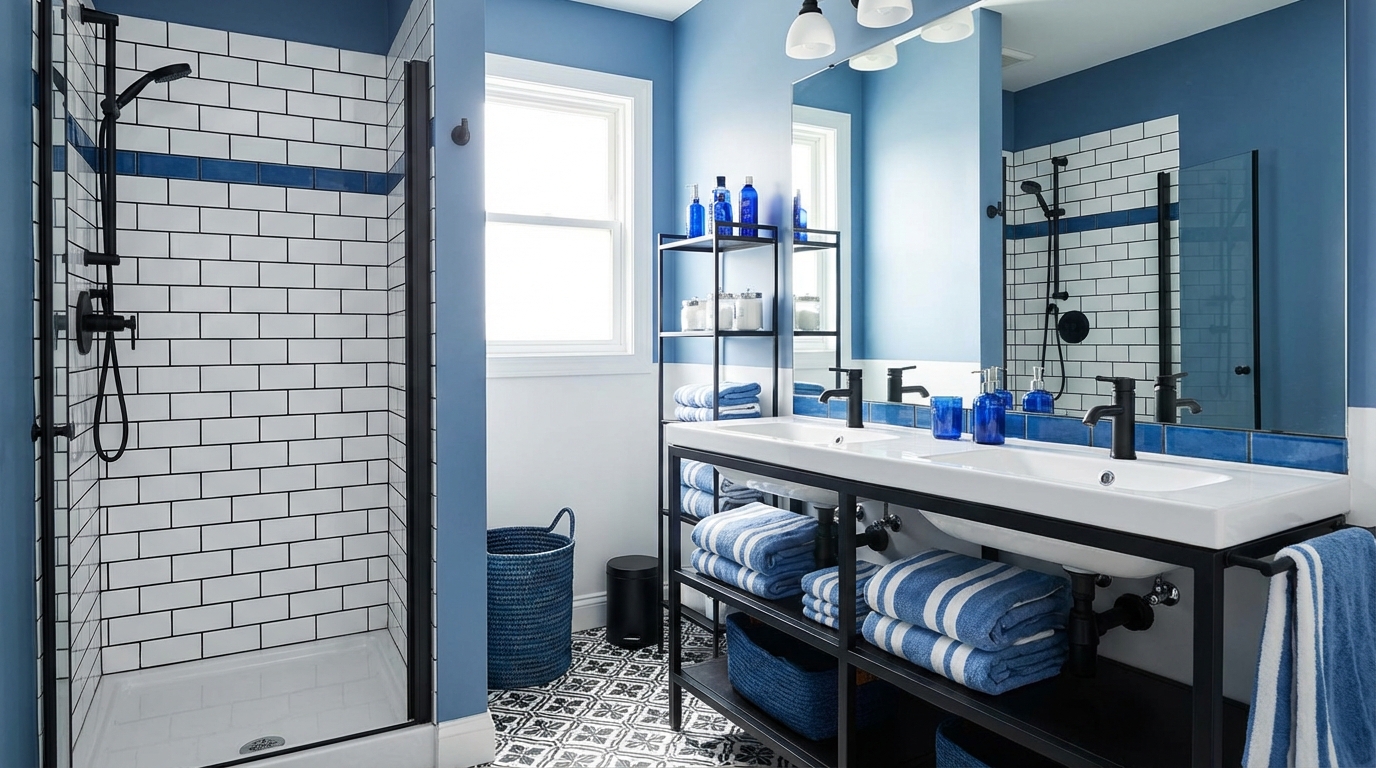
I was staring at the shower wall at 1 a.m. when it hit me: I have no idea whose hair this is, and that is terrifying. Shared bathrooms are like group projects, but with mold.
TL;DR: A shared bathroom only stays sanitary if there is a simple, visible cleaning system that everyone agrees to: daily 2-minute resets, weekly deeper tasks on rotation, clear supplies in one spot, and strict rules on trash, hair, and shared items. If it is not written, labeled, and scheduled, it will not happen.
Why Shared Bathrooms Get Gross So Fast
In theory, everyone “tries to be clean.” In practice, that means something totally different to each person. One person wipes the sink. Another only cares about the mirror. Someone thinks spraying air freshener is cleaning.
I realized during a lecture on group behavior that bathrooms are basically a small-scale social experiment. No one officially manages it, so everyone quietly hopes someone else will handle the disgusting parts.
The main reason shared bathrooms get filthy is not that people are dirty. It is that there is no clear system for what “clean” means or who does what, when.
So the real hack is not just having a magic cleaning spray. It is building a system that:
- Is simple enough that tired students will actually follow it
- Makes responsibilities obvious and visible
- Reduces how fast dirt, hair, and mold build up
The cleaning products matter. The habits matter more.
The Core System: “Reset, Rotate, Reduce”
This is the structure that keeps a shared bathroom from turning into a science experiment.
- Reset (Daily, 2 minutes): Fast wipe and tidy after use.
- Rotate (Weekly, 15-20 minutes per person): One person does a deeper clean on assigned areas.
- Reduce (Ongoing): Simple rules that prevent messes from forming in the first place.
If cleaning takes more than 2 minutes on a normal day, the system is too complicated for student life.
Let us break this down into real actions, not vague “we should clean more” things.
Step 1: Set Ground Rules Before It Gets Awkward
If you try to introduce rules after the toilet already smells, people get defensive. The best time is move-in week or right after you all notice the bathroom is getting gross and everyone half-jokes about it.
Have a 10-minute “Bathroom Summit”
Use a short, clear agenda so it does not become a complaint session.
- Agree on what “sanitary” means for your group.
- Decide what is shared and what is personal.
- Pick a weekly cleaning rotation system.
- Set some non-negotiable rules.
Ask questions like:
- “Are we OK with shoes in the bathroom?”
- “How often should trash be taken out?”
- “What makes you feel like the bathroom is actually clean?”
Write it down. Seriously. A photo of a handwritten sheet on the bathroom door beats five passive-aggressive conversations.
Define “Sanitary” in Plain Terms
For most shared student bathrooms, a sanitary baseline looks like:
| Area | Minimum standard |
|---|---|
| Toilet | No visible stains, no smell, seat and handle wiped at least weekly, bowl scrubbed weekly. |
| Sink | No pools of water, no toothpaste crust, no hair clumps, faucet wiped weekly. |
| Shower | No body hair clumps left behind, basic soap scum wiped weekly, drain not clogged. |
| Floor | No puddles, no visible trash, quick sweep or vacuum weekly, mop every 1-2 weeks. |
| Trash | Emptied before it overflows, sanitary items bagged and covered. |
“Sanitary” is not “perfectly spotless.” It means low germ risk and no obvious dirt, smell, or biological surprises.
Step 2: Build a Visible Rotation That Does Not Rely on Memory
Trusting people to “remember whose turn it is” is how you get passive-aggressive tension. Your future self is tired, stressed, and thinking about exams, not mopping.
Create a Simple Task Chart
Print or write one sheet and tape it to the back of the bathroom door or next to the light switch.
List the weekly tasks and assign one person per week:
- Toilet & trash
- Sink & mirror
- Shower & tub walls
- Floor
Example for four roommates:
| Week | Toilet & trash | Sink & mirror | Shower | Floor |
|---|---|---|---|---|
| Week 1 | Alex | Sam | Riya | Jordan |
| Week 2 | Sam | Riya | Jordan | Alex |
| Week 3 | Riya | Jordan | Alex | Sam |
| Week 4 | Jordan | Alex | Sam | Riya |
Rotate the names down each week. When you finish a task, put a simple checkmark by your name.
If the system is on the wall, you do not need to nag. The chart does the nagging for you.
Set a “Clean Window”
Agree on one regular time window when people tend to be in the room:
- Example: any time between Friday 4 p.m. and Sunday night.
The rule: finish your weekly bathroom task inside that window. No one else is your boss, but the chart will show if you never clean.
This keeps it flexible but still predictable.
Step 3: Daily 2-Minute Reset Habits
This is where most shared bathrooms fail. People think cleaning is something that happens only on “cleaning day,” while the dirt accumulates for the other six days.
The trick is micro-cleaning that is so small you have no excuse to skip it.
Sink & Counter Reset (30-45 seconds)
Every time you use the sink:
- Rinse away toothpaste instead of letting it dry.
- Splash a bit of water to clear stray soap.
- Wipe the rim and counter with a small hand towel or paper towel.
Advanced version: keep a pre-wetted disinfectant wipe pack by the sink. One swipe of faucet handles, especially during flu season, cuts down on germs.
Toilet Reset (30-45 seconds)
After using the toilet:
- Check for any marks. If present, scrub quickly with the toilet brush.
- Use a small piece of toilet paper and a bit of spray cleaner to wipe the seat if anything splashed.
- Close the lid before flushing to reduce spray.
Closing the lid before flushing is a small act that quietly protects your toothbrush.
Shower Reset (30-60 seconds)
Final 60 seconds of your shower:
- Use a cheap squeegee to pull water off walls and glass.
- Gather any stray hairs and put them in the trash, not the drain.
- Pull the shower curtain closed fully so it dries instead of molding.
Dry surfaces grow less mold. A 20-second squeegee pass saves you from scrubbing black grime later.
Step 4: Smart Product Choices For Student Bathrooms
You do not need twenty products. You need a small starter kit that works on multiple surfaces and does not require a chemistry degree.
Core Cleaning Kit
Here is a minimal setup that covers most shared bathrooms:
- All-purpose spray cleaner: For sink, counters, outside of toilet, and some floors.
- Toilet bowl cleaner: Gel or liquid that clings to the bowl.
- Glass cleaner: For mirror and glass shower doors. Or use a vinegar-water mix.
- Disinfectant wipes or spray: For high-touch areas like handles and light switches.
- Microfiber cloths: Reusable, good for mirrors and surfaces.
- Toilet brush: With a holder that does not leak.
- Small broom & dustpan or vacuum: For hair and dust.
- Simple mop or spray mop: For floors every 1-2 weeks.
- Rubber gloves: So no one can say “I do not want to touch that” as an excuse.
If you are worried about harsh chemicals, you can pick gentler versions, but still use something that kills germs.
Label Shared Cleaning Supplies
One of the quickest ways a system falls apart: no one knows who bought what, so no one wants to refill anything.
Try this:
- Make a “Bathroom Supplies” box or basket under the sink.
- Write “Shared cleaning stuff. Do not remove from bathroom.” on it.
- Agree that every person will buy or refill one thing when it runs low.
If everything belongs to “everyone,” it quietly belongs to no one. Explicit shared items prevent that.
Step 5: Detailed Weekly Cleaning Checklist
Here is what a full weekly clean looks like, broken down by area. One person might cover two areas if you have fewer people.
Toilet & Trash (10-15 minutes)
Steps:
- Pour toilet bowl cleaner around the inner rim. Let it sit for 5-10 minutes.
- While it sits, take out the trash, tie the bag, and replace the liner.
- Wipe outside of trash can with a disinfectant wipe if stained.
- Return to toilet: scrub inside the bowl thoroughly, including under the rim.
- Flush with lid closed.
- Spray and wipe:
- Flush handle
- Seat (top and bottom)
- Lid
- Base of toilet where dust and hair collect
This area has the highest germ level, so gloves are a good idea.
Sink & Mirror (10 minutes)
Steps:
- Clear the counter: move toothbrushes, soap, etc. to one side.
- Spray mirror with glass cleaner. Wipe from top to bottom with a microfiber cloth or paper towel.
- Spray sink and faucet with all-purpose cleaner.
- Scrub away toothpaste, soap scum, and buildup.
- Rinse the sink bowl with warm water.
- Dry the faucet and handles to prevent water spots.
- Wipe the counter, put items back, and toss any empty containers.
Your sink area is what guests notice first. It is also where your hands and face go, so clean here is not just about looks.
Shower & Tub (15-20 minutes)
Steps:
- Remove all bottles, razors, and personal items.
- Spray walls and tub with bathroom cleaner or a mix of vinegar and water for soap scum.
- Let it sit for 5-10 minutes to break down buildup.
- Scrub walls, corners, and tub floor with a scrub brush or sponge.
- Rinse everything with warm or hot water.
- Check the drain:
- Use a hair catcher if you have one. Empty it.
- If water is slow, pull out hair with a plastic drain tool.
- Wipe any shelves or built-in ledges so bottles are not sitting in slime.
If you clean even lightly every week, you avoid the “I need to scrub for an hour” situation.
Floor (10-15 minutes)
Steps:
- Pick up bath mats and shake them outside or over a bathtub.
- Vacuum or sweep the floor to pick up hair and dust.
- Mop with a simple floor cleaner or all-purpose cleaner diluted with water.
- Let it dry fully before putting mats back.
If your bathroom is small, a spray mop is fast: spray, mop, done.
Step 6: Control the Biggest Germ Sources
Some parts of the bathroom quietly do most of the damage.
Shared Towels: Bacteria Hotels
The innocent-looking hand towel is one of the easiest ways for germs to spread.
Better system:
- Each person has their own hand towel in a different color.
- Or use paper towels only for hands.
- Wash hand towels at least once a week in hot water.
One damp towel shared by four people is like a group chat for germs.
Toothbrush Placement
If toothbrushes live right next to the open toilet, you are not going to like the microbiology.
Better ideas:
- Keep toothbrushes in a cup inside a cabinet, or at least on the opposite side of the room from the toilet.
- Always close the toilet lid before flushing.
- Do not let toothbrush heads touch each other.
High-Touch Surfaces
Once a week, or more often during sickness season, wipe:
- Door handles
- Light switches
- Faucet handles
- Toilet flush handle
One disinfectant wipe can usually cover all of these.
Step 7: Shared Item Rules That Prevent Drama
A lot of conflict does not come from dirt itself, but from people feeling disrespected or taken advantage of.
What Is Shared, What Is Not
Make this crystal clear:
- Shared: cleaning products, hand soap, toilet paper, trash bags, air freshener.
- Not shared: shampoo, body wash, razors, loofahs, skincare, toothbrushes, hair tools, makeup, personal hygiene products.
If someone wants to share shampoo or soap with one other person, that is fine, but it should be an explicit agreement, not an assumption.
Supply Refill Rules
To avoid the “who used the last of the toilet paper” argument:
- If you use the last of something shared, replace it or send a message in the group chat saying you will buy it today.
- Keep a 1-2 roll buffer of toilet paper in the bathroom, not just in someone’s room.
- Have a small fund or digital split for basic supplies once a month.
Running out of toilet paper is not a tragedy. It is a planning error that you can fix with one simple rule.
Step 8: Mold, Mildew, and Moisture Control
Bathrooms are humid boxes. If you do not manage moisture, you get mold. That is not just ugly; some people get real health symptoms from it.
Ventilation Habits
If you have:
- Exhaust fan: Turn it on before showering and leave it on for at least 15 minutes after.
- Window: Crack it open slightly after showers to let steam escape.
Do not keep bathroom doors closed 24/7. Some airflow helps dry things out.
Textiles: Towels, Mats, Shower Curtains
Moist fabric is mold-friendly. Fix that:
- Hang bath towels spread out, not bunched up.
- Wash bath mats regularly, especially if they feel damp or smell musty.
- If you use a fabric shower curtain liner, wash it monthly.
- If you use a plastic liner, scrub or replace it when you see spots.
If your shower curtain has black spots at the bottom, that is mold, not “pattern.”
Step 9: Handling Messy Situations Without War
The real test of your bathroom system is what happens when someone messes up in an obvious way.
When Someone Leaves a Visible Mess
For example: hair all over the drain, muddy footprints, toothpaste across the counter.
Best approach:
- Address it soon, not weeks later.
- Use specific, not vague, language: “There is hair left in the drain again, can we agree to clear it right after showering?”
- Avoid blaming tone. Focus on the behavior, not the person.
If it is a repeat pattern, connect it to the system you already agreed on:
- “Our chart says whoever showers clears their hair. Can we stick to that?”
When Someone Never Does Their Weekly Task
At some point, you may notice the same person always “forgets.”
Do not ignore it. That just builds resentment.
You can say:
- “We noticed the bathroom chart checks rarely happen during your week. Is the timing not working for you? We can adjust, but it has to feel fair.”
If you stay calm and frame it as a fairness issue, most people will adjust rather than argue.
Step 10: Small Upgrades That Make Cleanliness Easier
Some cheap upgrades can reduce the cleaning workload and make the space feel less like a horror movie.
Storage and Organization
Chaos on surfaces leads to grime collecting around everything.
Helpful additions:
- Over-the-toilet shelf for extra storage.
- Small caddies or baskets for each person’s products.
- Hooks for each person’s towel, labeled by name or color.
- Shower caddy that hangs from the shower head or a tension pole shelf.
The fewer items touching direct surfaces, the easier it is to wipe them.
Hair Management
Hair is probably the number one visible problem in shared bathrooms.
Try:
- Drain hair catchers in the shower.
- Simple rule: hair that you can see is your responsibility to pick up, even if you are not sure whose it is.
- Keep a small handheld vacuum or mini broom just for bathroom hair.
Smell Control Without Masking Dirt
Air freshener only hides a problem. Still, it helps people feel better about the space.
Better combo:
- Take out trash regularly.
- Clean toilet and sink weekly.
- Use a mild air freshener or diffuser as a finishing step, not a substitute.
Step 11: A Sample Weekly Cleaning Plan for Students
Here is a realistic schedule for a four-person student apartment. Adjust to your layout, but keep the idea of splitting tasks.
| Day | Tasks | Who |
|---|---|---|
| Daily | 2-minute reset: sink wipe, shower hair removal, toilet quick check. | Everyone after their own use. |
| Friday | Empty bathroom trash. Wipe door handles and light switch. | Person on “Toilet & trash” for the week. |
| Saturday | Clean toilet fully. Scrub bowl and wipe outside. | Same person as above. |
| Saturday / Sunday | Sink, mirror, floor, and shower weekly tasks. | Assigned people as per chart. |
You cannot control everyone else’s habits, but you can design a system that makes the clean choice the easy choice.
If you treat the shared bathroom like a small shared project with clear roles, tools that live in one place, and visible expectations, it stops being a source of low-level stress. It just becomes another part of campus life that you have quietly hacked.