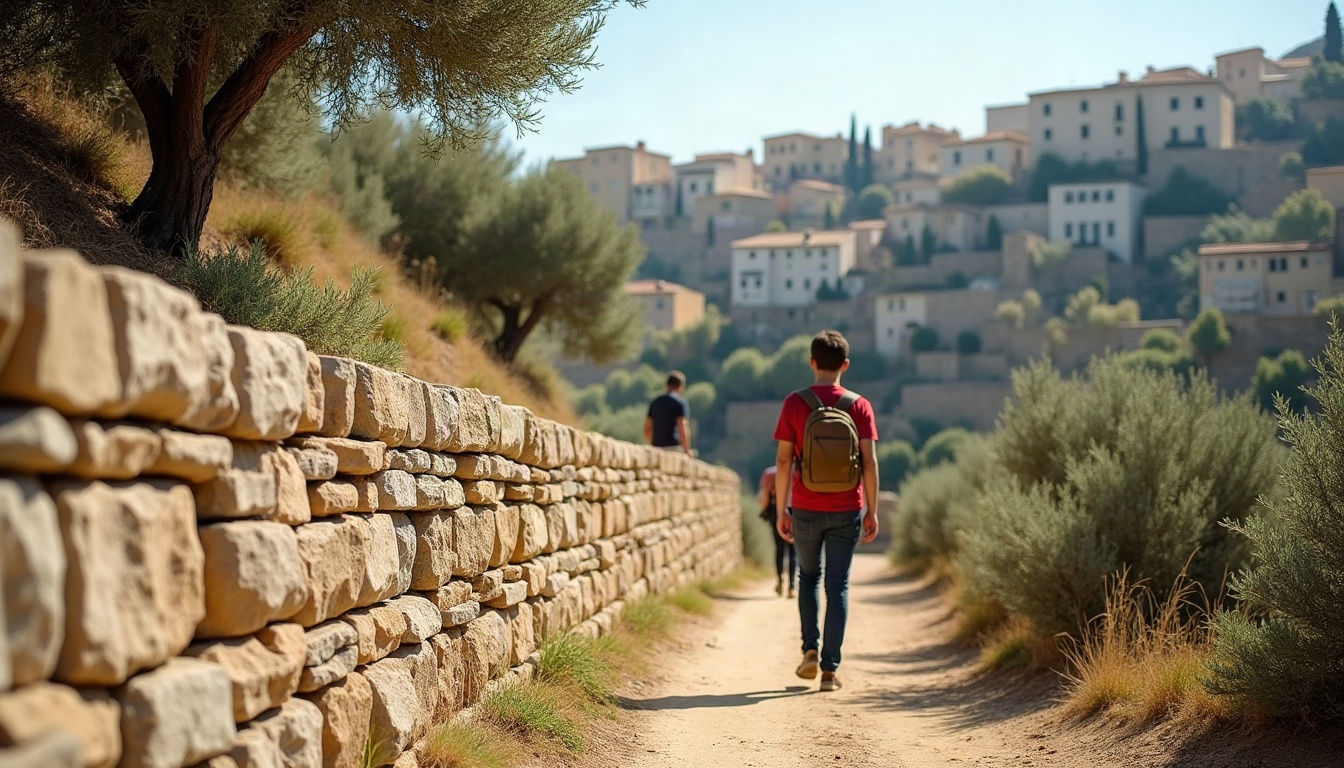
You’re on the bus back from a Friday lecture, and the hillside outside the window is stitched together with stone. Low pale walls step down through the olive trees, each one holding a strip of dusty green. Then your phone buzzes: Mom has sent a photo of the backyard fence at home, one panel leaning like it’s had a long week.
Here are 8 quick hits for reading the walls around you in Israel and for helping when a fence at home needs work. If your parents are starting to look at Highlands Ranch fence installation, the later hits give you questions to bring to the call.
1. Notice the walls on your daily route
Campus is full of them. Courtyard walls, garden walls, a low stone edge along the path to the library. Slow down for ten minutes on the way to class and just look. Some are stacked without mortar, some are bound with it, and the pale limestone turns the color of honey by late afternoon.
A little history helps. Hillside terraces held up by stacked stone walls have shaped Mediterranean farming for a very long time. The idea is simple: a wall turns a steep slope into a flat step you can plant.
Notice the details, too: the gaps where lizards sun themselves, the moss on the shady side, the way a wall bends to follow the hill instead of fighting it. Walls built to last tend to look this patient.
2. Name the job each boundary does
Pick one wall and ask what it’s for. Is it holding back soil? Marking where one garden ends and the next begins? Giving a courtyard shade and a little privacy? Good walls rarely do only one thing, and the old ones were often built for three reasons at once.
Fences work the same way, and a family choosing one should start with the job, not the style. Ask yourself what your backyard fence at home is really for. The usual jobs are:
- Privacy from the street or the neighbors
- Keeping a dog or small kids in
- Marking the property line
- Cutting down wind and noise
3. Plan a hill-town weekend around the ride
The best terraces sit outside the big cities, so pick your ride first and let it choose the destination. Here’s how the three common options stack up.
| Option | Cost band | Best for | Watch out for |
|---|---|---|---|
| Intercity bus | low | Reaching hill towns on a budget | Crowded seats before the weekend |
| Train | medium | Straight runs between big cities | Stations that sit far from the town center |
| Shared taxi (sherut) | medium | Short hops with a few friends | Agree on the route and fare before you climb in |
In most of the country, regular buses and trains pause for Shabbat, from Friday afternoon until Saturday night, so plan your return around it. Staying over? A hostel bed is the usual budget pick. Check the operators’ own apps or the station board for current times, and check official travel advisories before you go. Then watch the window on the way, because the walls start long before the village does.
Campus hack: Screenshot your return times before you leave town, so a weak signal on a hillside never leaves you guessing.
4. Ask your family what the fence has to do
Call home and ask for the job description, not the style. “What do you want it to do?” gets better answers than “What color?” Write the replies down while you talk, because the answers are the real brief. A family that says “privacy and a safe spot for the dog” has already narrowed the options before anyone opens a catalog.
Also ask what’s wrong with the current one: a lean, gaps, a gate that drags, or plain old age. Whether it’s one section or the whole line is a question for an installer who can stand in the yard. You’re gathering clues, not diagnosing from another continent, and clues are plenty useful when an installer arrives with questions of their own.
5. Walk the fence line on a video call
Ask someone at home to walk the whole line with the camera, slowly, while you narrate. Get each section, a few wide shots of the yard, and the gate from both sides. You’re the project’s note-taker now, and a good one. Ask them to film the gate swinging, too, since a gate that drags tells a story a still photo can’t.
Drop everything into one shared folder with dates on it. An installer will do the real measuring in person. Your folder just saves everyone from explaining the same thing three times.
Campus hack: Name each photo by its position, like “left-gate” or “back-corner”, so nobody has to guess which post is which.
6. Send home four questions for every installer
A good company explains the job in plain words. Ask each one the same questions so the quotes line up:
- What exactly is included, and what isn’t?
- Who handles permits and any neighborhood approvals?
- How long will the work take, and what happens if the weather turns?
- What’s the plan for the old fence?
Comparing answers beats comparing totals. A big gap between two quotes often means the quotes cover different jobs. Ask each company to put its answers in writing, then lay the pages side by side on a video call and go through them together, line by line.
7. Check the rules before anyone digs
This one is dull and saves the most grief. Ask the local building department whether a fence needs a permit and what limits apply. If the neighborhood has a homeowners’ association, ask for its rules too.
Property lines matter as well. A family should confirm where theirs really runs instead of trusting the old fence. And digging means buried utilities, which is why most places run a call-before-you-dig service that a professional installer already knows how to use. This isn’t a weekend job for you and your cousins, however handy the group chat makes everyone feel.
8. Send home photos of walls you love
Style talks go faster with pictures. Photograph three walls that feel right to you: tall and private, low and friendly, warm stone, rough texture. Send each one with a line about why.
A stone wall isn’t a wooden fence, but the questions carry over. How tall? How open? How does it look in the evening light? Your family can show the pictures to an installer and say, “More like this.” Then the installer can explain what’s possible in a backyard with its own light, wind and neighbors, which is a conversation worth having before anything is ordered.
Campus hack: Have a friend stand beside the wall, back to the camera. Suddenly the photo shows height, and height is hard to explain in words.
Your move
This week, call home and ask one question: what does the fence need to do? Write the answer down. Then pick a hillside for the weekend and screenshot your bus times.
Happy wandering, and tell Mom the leaning panel can wait for a proper look.